General Information
Species Name: Geosmithia morbida
Also Known As: Thousand cankers disease, TCD
Pathogen Type: Fungus
Organisms Affected: Walnut trees
Transmissible to Humans: No
Why is it a Concern?
TCD has killed thousands of walnut trees in the United States since its identification in 2008. While several walnut trees are susceptible to TCD, black walnuts are particularly susceptible. Trees will die over several years after being infected with TCD.
How is it Spread?
TCD is spread by walnut twig beetles. The beetles gnaw into walnut trees to feed and reproduce, transmitting TCD while doing so. The transport of beetle infested trees and wood can spread TCD.
TCD is present within the western United States. The walnut twig beetle was identified in Nebraska in 2024.
Symptoms
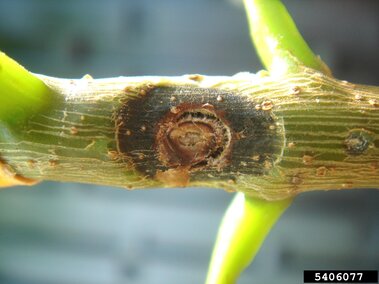
Small Cankers
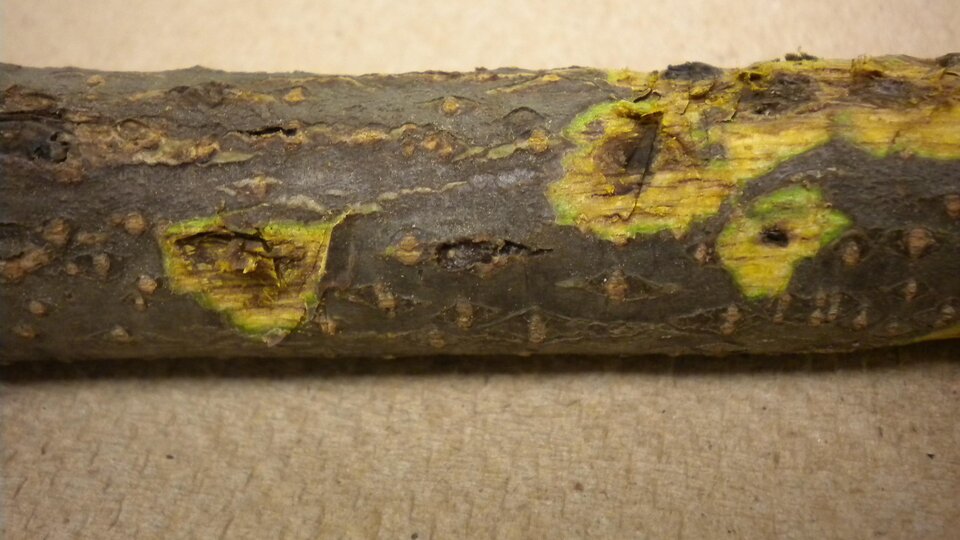
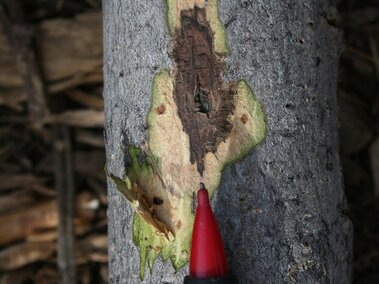
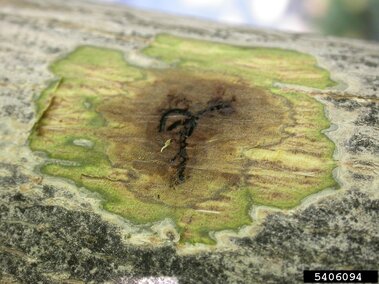
Small round or oblong cankers may occur on the outer tree bark where tree material is dying. Dark amber staining or cracking in the bark may or may not occur above the canker.
Dead Branches
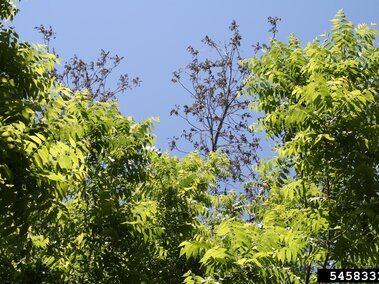
Leaves and foliage may turn yellow, become brown, and branches may die off.
Beetles
Beetle exit holes and galleries may be present on dead and dying branches.
Photos
Prevention and Control
Mechanical
Prune affected branches and properly dispose of them to reduce the spread of TCD. Ensure you are maintaining healthy trees with proper watering, fertilization, and pest management to reduce tree stress, therefore reducing susceptibility to TCD.
Cultural
Transporting firewood can accidentally facilitate the spread of TCD and other invasive species. Don't move firewood and burn it where you buy it.
Chemical
Please refer to the 2026 Guide for Weed, Disease and Insect Management in Nebraska.
What to Do if You Suspect TCD
If you suspect a tree on your property is infected by TCD, contact the Nebraska Department of Agriculture or Nebraska Forest Service. You can also report sightings to the Nebraska Invasive Species Council.
References and More Information
Colorado State University Extension
Missouri Department of Conservation
National Invasive Species Information Center
Pennsylvania Department of Agriculture
USDA Animal and Plant Health Inspection Service
University of California Statewide Integrated Pest Management Program