General Information
Species Name: Pityophthorus juglandis
Life Cycle: Complete (egg>larvae>pupae>adult); two to three generations produced annually
Activity: Adults emerge in the spring; larvae and adults can overwinter
Origin: Native
Host Species: Walnut species
Why Is It Invasive?
Walnut twig beetle is the primary vector for Thousand Cankers Black Walnut Disease (Geosmithia morbida), which is responsible for the death of thousands of walnut trees since its first detection in the United States in 2008. As walnut twig beetles feed and reproduce underneath the bark of walnut trees, they introduce spores of the fungus that causes Thousand Cankers Disease and damage and stress trees so that they are more susceptible to the disease.
What Does It Look Like?
Adult Beetle
Adults are very small, reaching only 1/16 inch in length. They are yellowish brown and have 4-6 concentric rings on the shield-like cover behind and over their head.
Larvae
Larvae are white, without legs, and C-shaped. They can be found underneath tree bark and make vertical galleries.
Eggs
Egg galleries are horizontal underneath tree bark.
Photos
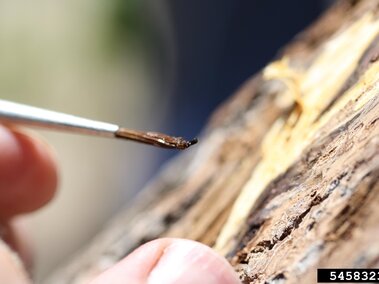
Credit: Karen Snover-Clift, Cornell University, Bugwood.org
Adult walnut twig beetle (at end of brush)
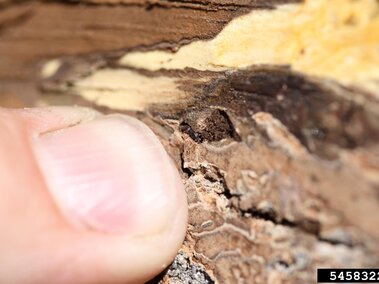
Credit: Karen Snover-Clift, Cornell University, Bugwood.org
Adult walnut twig beetle (center, in dark bark section above finger)
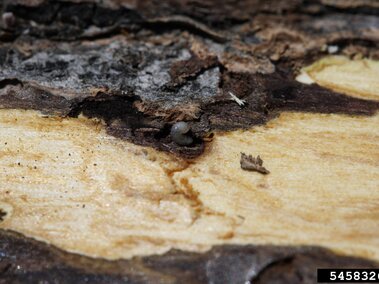
Credit: Karen Snover-Clift, Cornell University, Bugwood.org
Larva
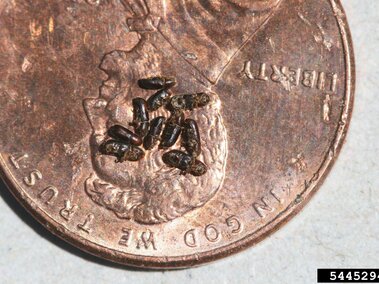
Credit: Whitney Cranshaw, Colorado State University, Bugwood.org
Adults
What Are the Signs of Infestation?
Entry Holes
Many small entry holes (as small as a pinhead) on branches and the main stem of trees.
Sawdust
Find sawdust-like debris in bark crevices or at the base of the tree.
Woodpecker Activity
Increased woodpecker activity on infested trees as they try to eat the beetles.
Signs of Thousand Cankers Disease
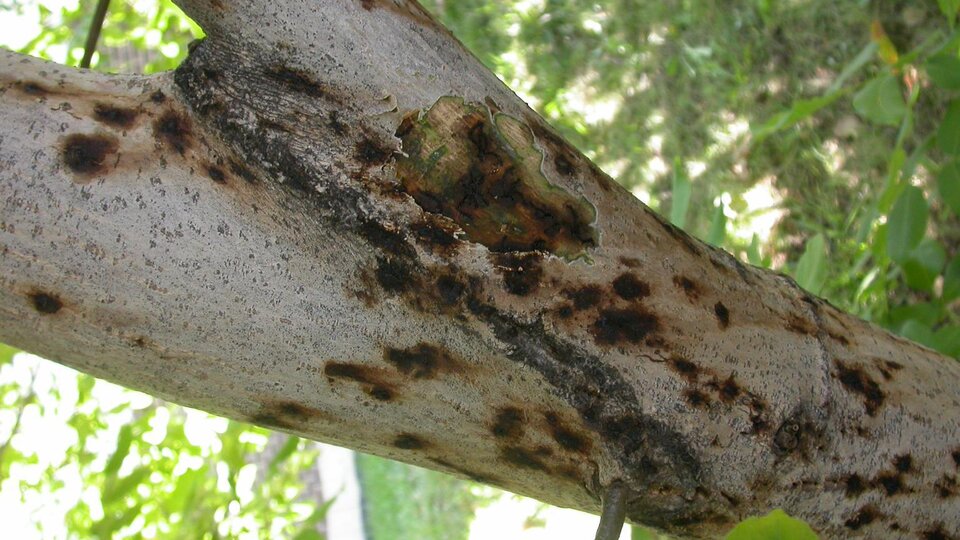
Yellowing or wilting foliage, especially in the upper canopy and general canopy decline that moves downward over time. Cankers undeath the bark.
Photos
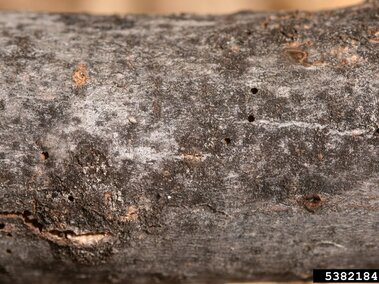
Credit: Whitney Cranshaw, Colorado State University, Bugwood.org
Entry holes
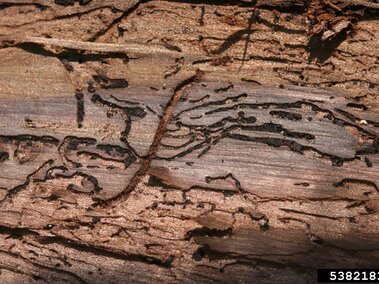
Credit: Whitney Cranshaw, Colorado State University, Bugwood.org
Larval galleries
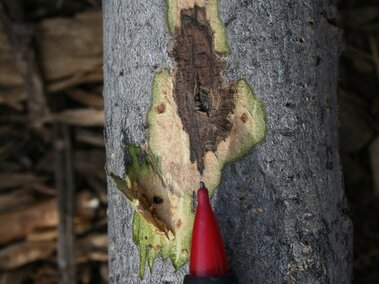
Credit: Troy Kimoto, Canadian Food Inspection Agency, Bugwood.org
Thousand Cankers Disease
Where Do They Live?
Walnut twig beetles can be found on most walnut tree species, but especially in Eastern Black Walnut (Juglans nigra). They are native to the southwestern United States but have expanded their range north. Walnut twig beetle was identified in Nebraska in 2024.
How Do They Spread?
Walnut twig beetle typically only flies short distances between trees and is transported long distances by human activity. Walnut twig beetle "hitchhikes" on firewood, wood packaging and nursery stock, which has contributed to its range expansion.
What Do I Do if I Find Them?
If you find walnut twig beetle or signs of walnut twig beetle, report it to the Nebraska Invasive Species Council. For more information on what to include in your report, check out our reporting tips.
How Do I Control Them?
Mechanical
Regularly monitor walnut trees on your property for signs of walnut twig beetle or Thousand Cankers Disease. Minimize tree stress through proper watering and mulching and dispose of pruning debris on-site.
Cultural
Do not move or transport firewood long distances and burn it where you buy it. Check nursery stock and walnut tree materials for signs of infestation before transporting them.
References and More Information
Colorado State University Extension
Cornell Integrated Pest Management
Iowa Department of Natural Resources
New York Invasive Species Information
North Carolina Department of Agriculture and Consumer Sciences
University of California Statewide Integrated Pest Management Program
Utah State University Plant Health Extension