General Information
Species Name: Lycorma delicatula
Family: Fulgoridae
Life Cycle: Egg > Nymph (4 stages) > Adult
Activity: Adults begin to appear in the late summer and lay egg masses which overwinter
Origin: China
Host Species: Spotted lanternfly can feed on almost anything, but invasive tree of heaven is its preferred host. It can do considerable damage to grapevines, black walnut, maple, fruit, sycamore, and birch trees, amongst many other plant species.
Why Is It Invasive?
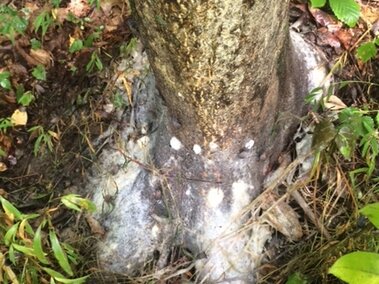
Spotted lanternflies can feed on a variety of different plant and tree species. While their feeding behaviors directly negatively impact only some plants species, like grapes, spotted lanternflies leave large quantities of honeydew where they feed. Honeydew can result in the growth of sooty mold growth on plants, which can inhibit the growth capabilities of some plants. This mold makes crops unmarketable, damaging agricultural industries. Additionally, honeydew can attract other pests, negatively impacting outdoor recreation experience and prohibiting people from recreating in areas with high spotted lanternfly populations.
What Does It Look Like?
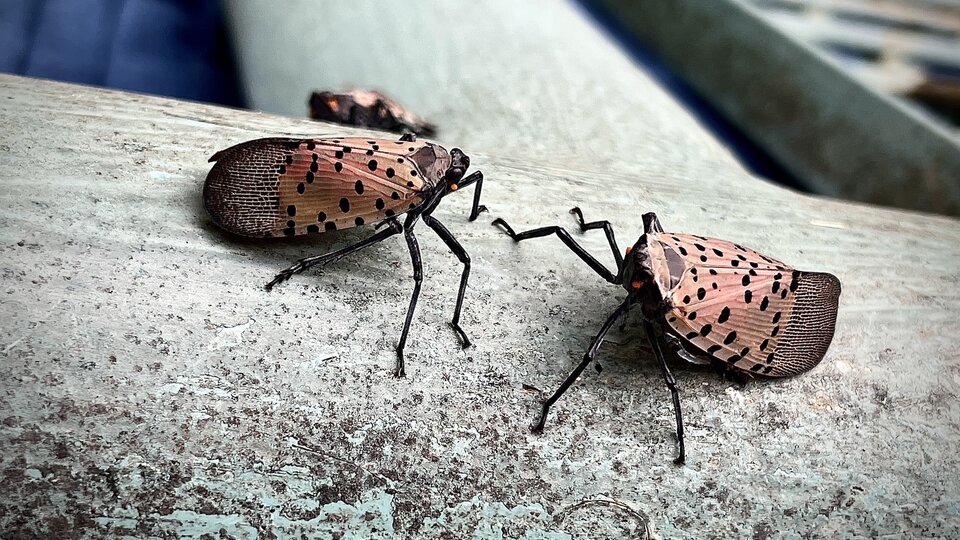
Adult Beetle
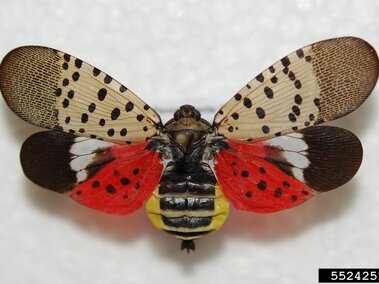
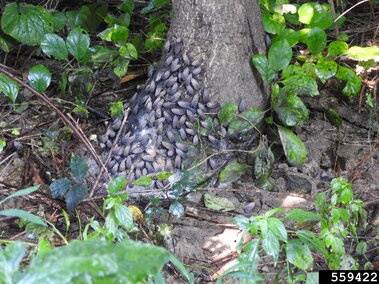
Adult spotted lanternflies are 1 inch long and 1/2 inch wide. They are known for their striking, identifiable wings. Forewings are brown with black spots at the front a band at the rear and hind wings are scarlet with black spots at the front and white and black bars at the rear. Spotted lanternfly adults have yellow abdomens with black bars. Adults feed in large swarms.
Nymph
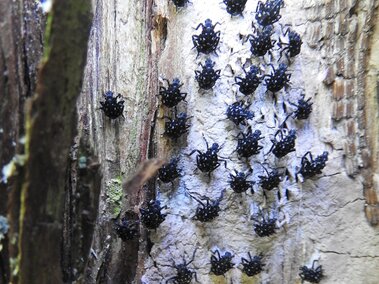
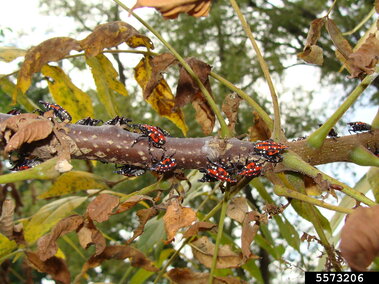
Nymphs undergo four instars, or molting phases, during their development. First through second instar nymphs are black with white spots. First instars are small, approximately 1/4 inch long, and grow slightly in size through subsequent instars. Fourth instar nymphs appear red with white spots and can be up to 3/4 inch long.
Eggs
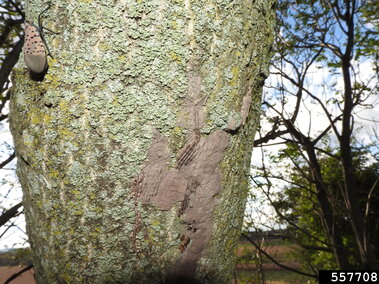
Newly laid egg masses consist of 30-50 eggs and look like wet, gray putty. They will turn dull and brown, almost appearing like a smear of mud. Masses are approximately 1 inch long and can be seen throughout the winter on smooth surfaces including trees, bricks, stones, outdoor recreation equipment, and vehicles.
Photos
Credit: Richard Gardner, Bugwood.org
First through third instar spotted lanternfly nymphs
Credit: Eric R. Day, Virginia Polytechnic Institute and State University, Bugwood.org
Third instar spotted lanternfly nymphs
Credit: Lawrence Barringer, Pennsylvania Department of Agriculture, Bugwood.org
Adult spotted lanternfly
Credit: Richard Gardner, Bugwood.org
Swarm of adult spotted lanternflies
What Are the Signs of Infestation?
Honeydew and Sooty Mold
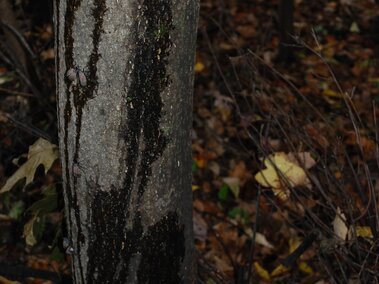
Spotted lanternflies leave behind a sugary liquid, or honeydew, when feeding. Honeydew is shiny and sticky and attracts other insects. It may also have sooty mold growth.
Fermented Odor
As honeydew ferments, it develops a vinegar-like smell.
Egg Masses
Egg masses may be seen in the early fall throughout the winter on smooth surfaces like tree bark, bricks, outdoor recreation equipment, and vehicles. Egg masses may look like small amounts of dried mud.
Photos
Credit: Richard Gardner, Bugwood.org
Spotted lanternfly egg masses
Credit: Lawrence Barringer, Pennsylvania Department of Agriculture, Bugwood.org
Mold growth on tree from spotted lanternfly honeydew
Credit: Pennsylvania Department of Agriculture , Bugwood.org
Honeydew secretions
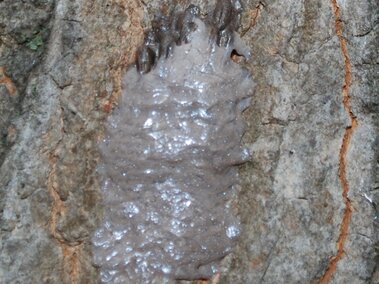
Credit: Pennsylvania Department of Agriculture , Bugwood.org
Newly laid egg mass
Where Do They Live?
Spotted lanternfly can live wherever host species are available. They are especially likely to be seen on tree of heaven plants, which is their preferred host. Spotted lanternfly is currently established in a small range in the Northeastern United States and into the Southeast. Spotted lanternfly has not been surveyed in Nebraska.
How Do They Spread?
Spotted lanternflies are moved by "hitchhiking" on plant material, outdoor recreation equipment, vehicles, and other materials. Spotted lanternflies can be transported at any life stage, but are most commonly transported as adults and egg masses.
What Do I Do if I Find Them?
If you find a spotted lanternfly or see signs of spotted lanternflies, contact the Nebraska Department of Agriculture Entomology Program. Check out our reporting tips for information on what to include in your report.
How Do I Control Them?
Mechanical
Conduct regular checks on your property and equipment for spotted lanternflies and egg masses. Look for egg masses in your trees, especially tree of heaven. If you see an egg mass on your property, smash it and scrape it into a Ziploc bag filled with rubbing alcohol or hand sanitizer before throwing it in the trash.
Cultural
Do not move or transport firewood long distances and burn it where you buy it. Keep car windows closed and park at least 15 feet away from trees while in a quarantine zone to prevent adults from landing inside your vehicle. Inspect items being moved long distances for adults, egg masses, and other signs of spotted lanternfly.
References and More Information
Cornell Integrated Pest Management
Invasive Species Information Center
Minnesota Department of Agriculture
National Invasive Species Information Center
Nebraska Department of Agriculture Entomology Program
Ohio Department of Agriculture
Pennsylvania State University Extension
USDA Animal and Plant Health Inspection Service
University of Massachusetts Extension Landscape, Nursery, and Urban Forestry Program
Washington State Department of Agriculture