General Information
Species Name: Ailanthus altissima
Also Known As: Stinking sumac, stink tree, Chinese sumac
Family: Simaroubaceae (Quassia)
Growth Form: Tree
Life Span: Perennial
Flowering Dates: May-June
Origin: Asia
Noxious: No
Why Is It Invasive?
Tree of heaven is tolerant of many environmental and soil conditions, invading both rural and urban spaces and outcompeting native species. When successfully established in urban areas, tree of heaven can damage sewers, pavements, and buildings. Tree of heaven releases chemicals into the soil which inhibit the growth of native species, further reducing area biodiversity. Additionally, tree of heaven is the preferred host of invasive spotted lantern fly.
What Does It Look Like?
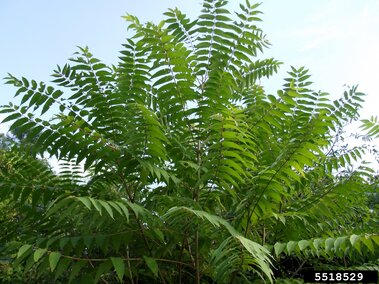
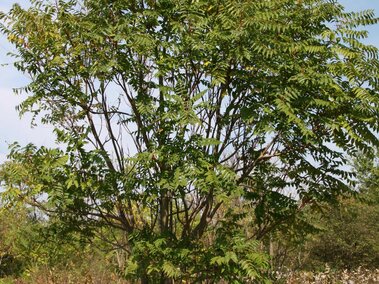
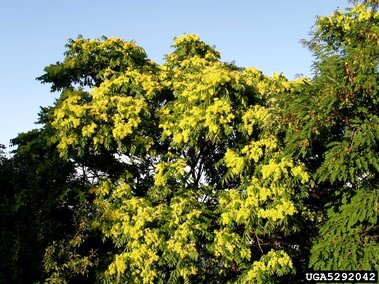
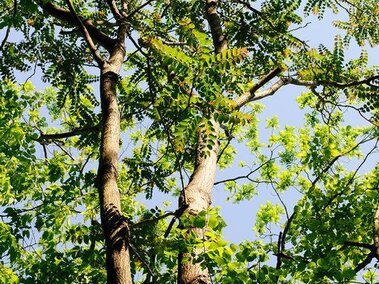
Tree of heaven is a deciduous tree that can reach up to 80 feet in height.
Flowers
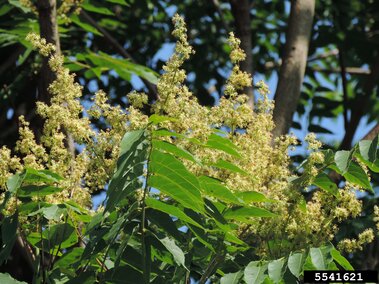
Flowers are yellowish green, small, and arranged in clusters.
Leaves
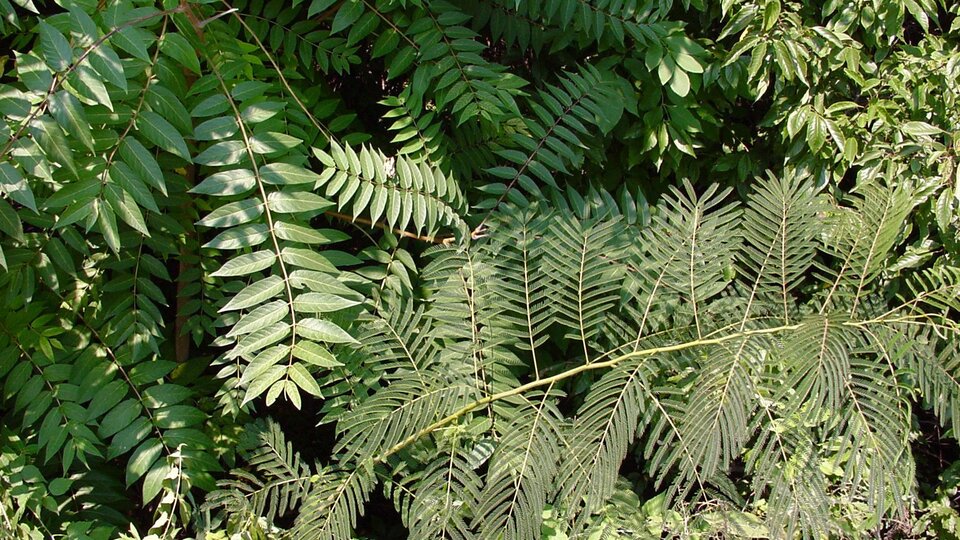
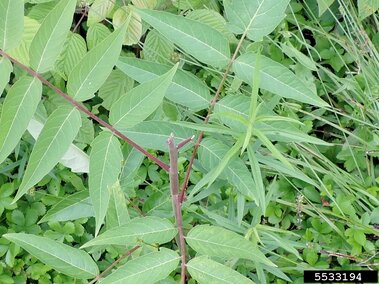
Leaves are alternately arranged about the stem. Leaves are large, growing 1-4 feet long, and comprised of 10-40 smaller leaflets. Each leaflet is 3-5 inches long with smooth, untoothed margins.
Bark
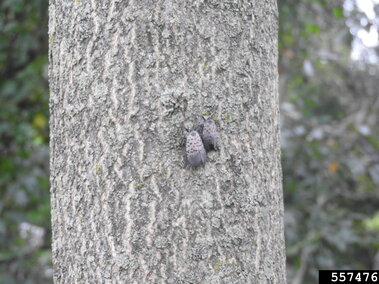
Mature tree bark is gray and textured. Twigs have v of heart-shaped leaf scars and a spongy center.
Fruits
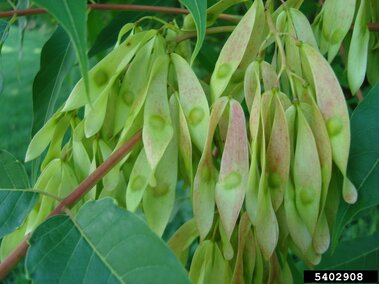
Fruit are flat, twisted samaras that hang in clusters.
Photos
Where Does It Grow?
Tree of heaven is very adaptable and capable of growing in harsh conditions. It can survive drought and does best in full sun. It can establish in both urban and rural environments. It is currently widespread across the United States and Canada.
How Does It Spread?
Tree of heaven spreads via seed, contained in samaras which can be spread by wind and water. Each tree can produce up to 350,000 samaras annually. Cut or injured tree of heaven may send up dozens of stump and root sprouts, aiding in its formation of dense stands. It was initially introduced to the United States in the late 1700s for ornamental purposes.
How Do I Control It?
Mechanical
Cutting and mowing without accompanying herbicide control are ineffective methods when managing tree of heaven, as this will produce a large number of root sprouts. Hand pulling young seedlings can be effective, but small root fragments are capable of producing new shoots.
Please contact your county weed control authority to determine appropriate removal methods.
Cultural
Do not plant tree of heaven for ornamental or other purposes.
One way that invasive plant seeds and fragments can spread is in soil. Sometimes plants are planted purposefully. You can prevent the spread of invasive plants.
PlayCleanGo: Stop Invasive Species in Your Tracks
REMOVE plants, animals and mud from boots, gear, pets and vehicles.
CLEAN your gear before entering and leaving the recreation site.
STAY on designated roads and trails.
PLANT non-invasive species.
Herbicide
Please refer to the 2026 Guide for Weed, Disease and Insect Management in Nebraska and/or contact your county weed control authority.
References and More Information
Colorado Department of Agriculture
Connecticut Invasive Plant Working Group
Minnesota Department of Agriculture
Montana State University Extension Integrated Pest Management
National Invasive Species Information Center
North Carolina State University Extension Gardener
Pennsylvania State University Extension
University of Maryland Extension