General Information
Species Name: Linaria dalmatica
Also Known As: Balkan toadflax, broadleaf toadflax, wild snapdragon
Family: Scrophulariaceae (Figwort)
Growth Form: Forb
Life Span: Perennial
Flowering Dates: June-September
Origin: East Mediterranean (Europe)
Toxic: Yes, plants contain a glucoside compound that is poisonous especially to cattle. However, generally livestock avoid them.
Noxious: No
Why Is It Invasive?
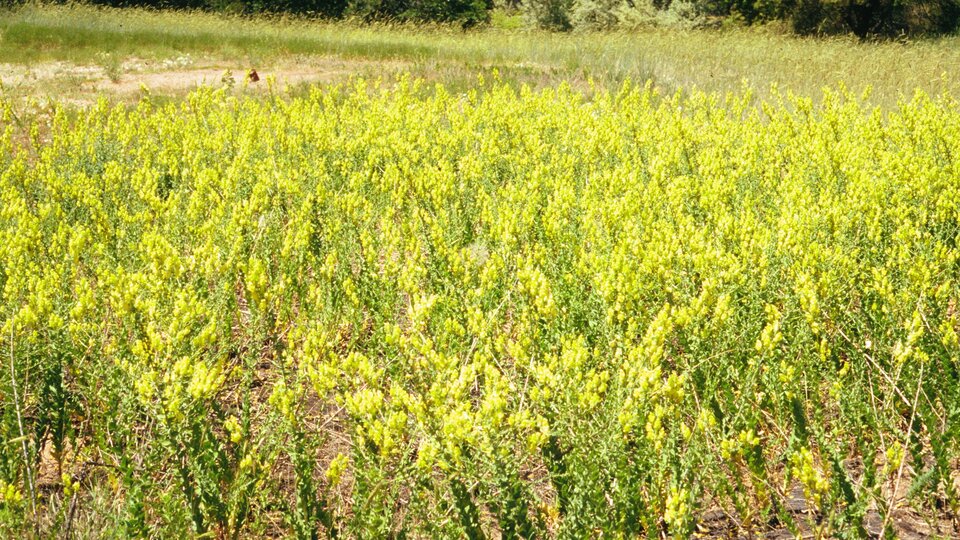
Mature plants are strongly competitive, especially with shallow-rooted perennials and winter annuals. Dalmatian toadflax causes negative impacts in pastures, rangelands, and natural areas, where it outcompetes natives or other desirable species.
What Does It Look Like?
General Characteristics
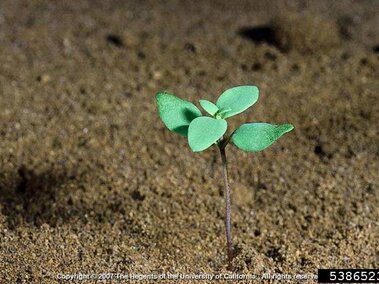
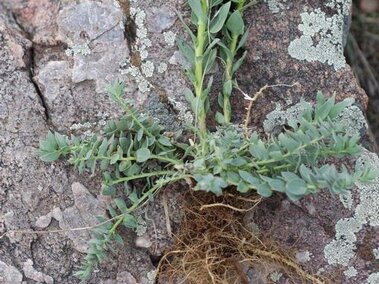
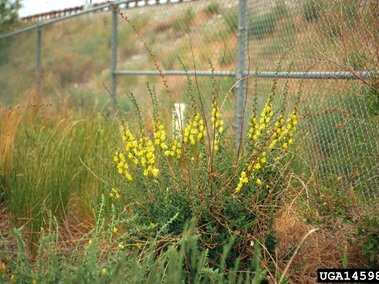
Dalmatian toadflax is a short-lived, perennial herb, 2.6 feet to 5 feet tall with light green leaves and yellow snapdragon-like flowers.
Flowers
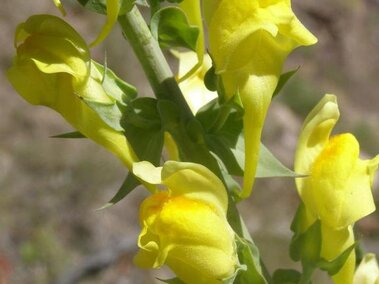
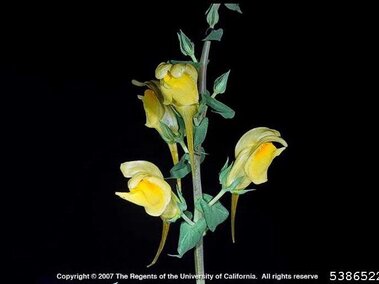
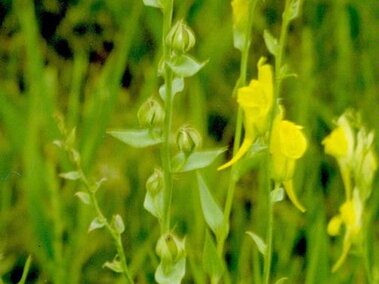
Flowers are bright yellow, tinged with orange and resemble snapdragon flowers. The petals have 2 lips. The upper lip is 2 lobed and the lower lip is 3 lobed. Individual flowers occur on long racemes.
Leaves
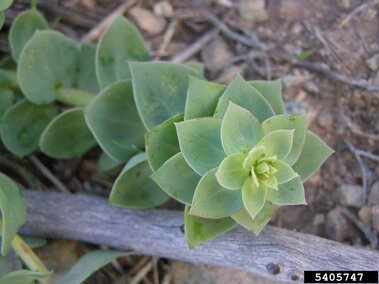
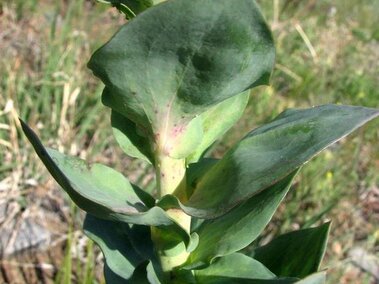
Leaves are heart-shaped, light green and waxy. They are alternately arranged and lack petioles (leave stems) and appear to clasp the stem.
Stems
Stems are stout and upright, branching toward the top.
Seeds
Capsules that are 0.28 to 0.31 inches long, egg to cylinder shaped with many small seeds.
Photos
Where Does It Grow?
In both dry and moist soils in disturbed areas, waste places, roadsides, fields, sandbars, river banks, pastures, cropland, farmsteads, shelterbelts, and fence rows.
How Does It Spread?
Dalmatian toadflax was originally introduced as an ornamental to the west coast of North America in the late 1800s. It escaped cultivation and has overtaken grasslands in pastures, rangelands, and natural areas in the west. Dalmatian toadflax can quickly colonize an area because it spreads by sprouts from the lateral roots and by seed. Over its lifetime, a single plant can produce up to 500,000 seeds that can persist in the seedbank for up to 10 years. Dalmatian toadflax flowers have both male and female parts and the species is self-compatible, meaning that a single plant can produce viable seed and start an infestation. Seed dispersal begins shortly after flowering and continues into winter. Dispersal can be by wind, water, wildlife, vehicles and equipment, forage, and livestock.
How Do I Control It?
Mechanical
Hand-pulling and digging can be effective on small patches and can result in eradication if done consistently for 5-6 years.
Please contact your county weed control authority to determine appropriate removal methods.
Cultural
Intensive clean cultivation can effectively control Dalmatian toadflax. Cultivation methods must continue for at least two years, with eight to ten cultivations in the first year and four to five in the next year.
When buying hay or forage, check to make sure it is weed-free certified. Management should include proper grazing and rotational grazing techniques that would maintain rangelands and prevent invasion. Disturbed areas should be re-seeded with desirable species to prevent spread.
One way that invasive plant seeds and fragments can spread is in soil. Sometimes plants are planted purposefully. You can prevent the spread of invasive plants.
PlayCleanGo: Stop Invasive Species in Your Tracks
REMOVE plants, animals and mud from boots, gear, pets and vehicles.
CLEAN your gear before entering and leaving the recreation site.
STAY on designated roads and trails.
PLANT non-invasive species.
Herbicide
Please refer to the 2025 Guide for Weed, Disease and Insect Management in Nebraska and/or contact your county weed control authority.
References and More Information
Alaska Natural Heritage Program - University of Alaska Anchorage
California Invasive Plant Council
Center for Invasive Species and Ecosystem Health
Colorado Department of Agriculture
Minnesota Department of Agriculture
Minnesota Department of Natural Resources
Montana Official State Field Guide
National Invasive Species Information Center
Nebraska County Designated Noxious Weeds
Nebraska Department of Agriculture
Nebraska Weed Control Association
Nebraska Weed Free Forage Program
Nevada Department of Agriculture
Oregon Department of Agriculture
Southwest Colorado Wildflowers
Stubbendieck, J., Coffin, M., & Dunn, C. (2019). Weeds of the Great Plains. Nebraska Department of Agriculture.
Texas Invasive Species Institute