General Information
Species Name: Dipsacus laciniatus
Also Known As: cut-leaf teasel, cut-leaved teasel
Family: Dipsacaceae (Teasel)
Growth Form: Forb
Life Span: Biennial
Flowering Dates: June-September
Origin: Europe
Toxic: No
Noxious: Yes. Common teasel is listed as a County Designated Noxious Weed for Lancaster, Pawnee, and Saline County. Please report to the local weed control authority if found in the following counties: Lancaster, Pawnee, and/or Saline.
Why Is It Invasive?
Cutleaf teasel can form large stands that inhibit the growth of desirable plant species especially in riparian areas. It reduces forage, degrades wildlife habitat, and competes with native species. It can invade high quality areas such as prairies, savannas, seeps, and sedge meadows.
What Does It Look Like?
General Characteristics
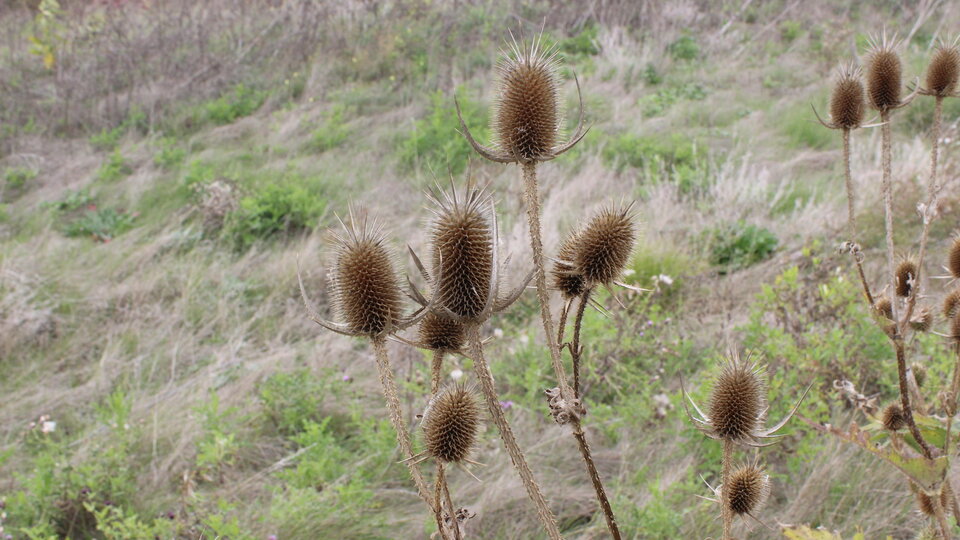
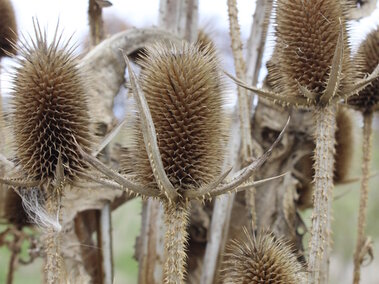
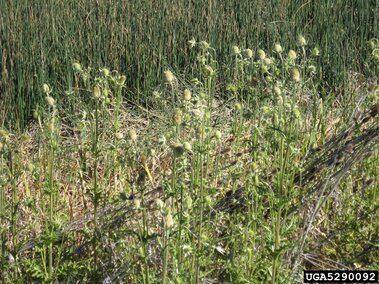
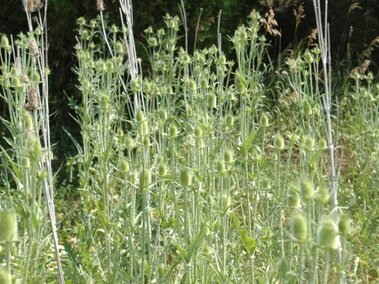
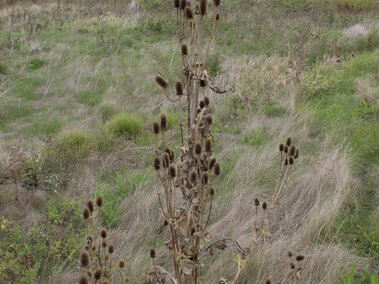
Cutleaf teasel grows as circular grouping of leaves (rosette) near the ground for one or more years and then sends up a flowering stalk up to seven feet tall. Cutleaf teasel has cylinder shaped flower heads with many small white flowers. The plant dies after setting seed. The stalks and seed heads remain upright and visible over the winter. Cutleaf teasel has a large taproot that can grow up to two feet long. Additionally, there are many fibrous roots.
Flowers
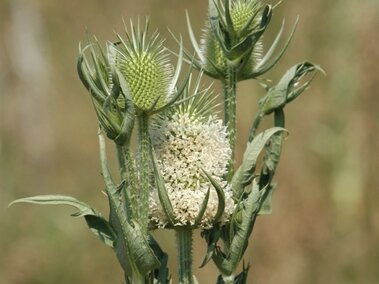
Cutleaf teasel has a cylindrical flowering head. The flowering head contains many small, white, tubular flowers. There are stiff green bracts under the flowering head. These bracts are shorter in length than the flowering head. Flowers bloom June through September.
Leaves
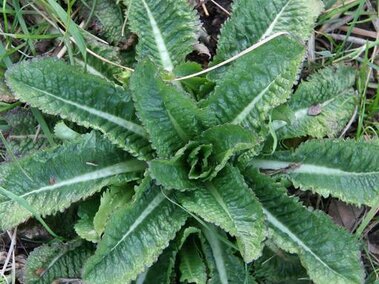
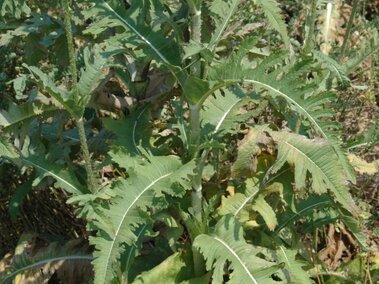
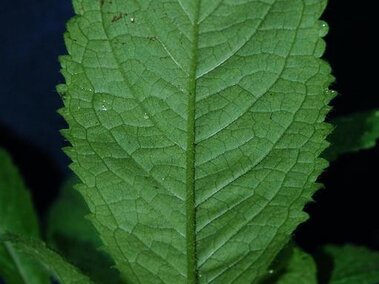
Cutleaf teasel grows a rosette of leaves near the ground for one or more years. These rosette leaves can have smooth edges and no lobes. The rosette leaves can grow up to 16 inches long and four inches wide. When the plant is ready to flower it puts up a flowering stalk that can grow up to seven feet tall. The leaves on the flowering stalk have many deep lobes extending to the mid-rib of the leaf. Small prickles line the middle of the underside of the leaf. Leaves can be up to 12 inches long. Leaves attach to the stem opposite to one another and form a cup along the stem where they connect. The cup may hold water.
Stems
The stems are round and have many small prickles.
Seeds
Each plant can produce as many as 2,000 seeds. Seeds remain viable in the soil for at least two years.
Photos
Where Does It Grow?
Cutleaf teasel grows in open, sunny habitats such as roadsides and pastures. It prefers disturbed areas, but can invade high quality areas such as prairies, savannas, seeps, and sedge meadows.
How Does It Spread?
Cutleaf teasel was brought into the US as early as the 1700’s by the European colonists that used the spiny heads on spindles to raise the nap of fabric. It is an interesting seed head that is often used in dried arrangements. In the past thirty years it has spread dramatically along transportation corridors, often on mowing equipment. Teasels are prolific seed producers with most seed falling near the parent plant. The result is expansion of existing infestations. Long range dispersal starting new infestations can occur by a variety of means. Seed can float along riparian corridors, drift with the snow, journey along transportation corridors and recreational trails from seed shed from soil on tires and vehicle undercarriages. It can also be spread on mowing equipment. Teasel has been noted in or near graveyards, spread by seed from dried floral arrangements. Birds can consume, then distribute teasel seeds.
How Do I Control It?
Mechanical
Infestation sites will need to be monitored and treated repeatedly until the seedbanks are depleted. Teasel seedbanks remain viable for a relatively short time, 3-5 years. With diligent control, eradication may be feasible within this time frame.
Hand-pulling and digging are management options for small infestations, but the large, fleshy taproots are difficult to remove. Flowers and seedheads will need to be bagged and disposed of.
Frequent mowing throughout the growing season that prevents flowering can deplete food reserves in the taproots and reduce stands over time. It is important to monitor the site and ensure that plants do not flower on short stalks. Also remove any stalks that were flattened, but not cut by the mower.
Contact your county weed control authority to determine appropriate removal methods.
Cultural
When buying hay or forage, check to make sure it is weed-free certified. Management should include proper grazing and rotational grazing techniques that would maintain rangelands and prevent invasion. Disturbed areas should be re-seeded with desirable species to prevent spread.
One way that invasive plant seeds and fragments can spread is in soil. Sometimes plants are planted purposefully. You can prevent the spread of invasive plants.
PlayCleanGo: Stop Invasive Species in Your Tracks
REMOVE plants, animals and mud from boots, gear, pets and vehicles.
CLEAN your gear before entering and leaving the recreation site.
STAY on designated roads and trails.
PLANT non-invasive species.
Chemical
Please refer to the 2025 Guide for Weed, Disease and Insect Management in Nebraska or contact your county weed control authority.
What Should I Do If I See It in Nebraska?
If you see cutleaf teasel in Nebraska, you should report it to your county weed control authority. For guidance on what information to include in your report, check out our reporting tips.
References and More Information
California Invasive Plant Council
Center for Invasive Species and Ecosystem Health
Long Island Invasive Species Management
Midwest Invasive Species Information Network
Minnesota Department of Agriculture
Minnesota Department of Natural Resources
National Invasive Species Information Center
Nebraska County Designated Noxious Weeds
Nebraska Department of Agriculture
Nebraska Weed Control Association
Nebraska Weed Free Forage Program
Oregon Department of Agriculture
Stubbendieck, J., Coffin, M., & Dunn, C. (2019). Weeds of the Great Plains. Nebraska Department of Agriculture.