General Information
Species Name: Tanacetum vulgare
Also Known As: bitter buttons, cow bitter, garden tansy, golden buttons, tansy
Family: Asteraceae (Aster)
Growth Form: Forb
Life Span: Perennial
Flowering Dates: July-September
Origin: Europe
Toxic: Yes. Eating common tansy can be toxic to humans and livestock. Cases of livestock poisoning are rare, though, because tansy is unpalatable to grazing animals. Human consumption of common tansy has been practiced for centuries with few ill effects, yet the toxic properties of the plants are cumulative and long term consumption of large quantities has caused convulsions and even death. In addition, hand pulling of common tansy has been reported to cause illness, suggesting toxins may be absorbed through unprotected skin. Wear gloves when handling common tansy.
Noxious: No
Why Is It Invasive?
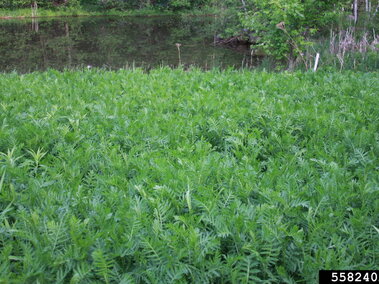
Common tansy forms dense patches in pastures and, being unpalatable to livestock, reduces pasture productivity. It degrades wildlife habitat by displacing forage plants and reducing species diversity.
What Does It Look Like?
General Characteristics
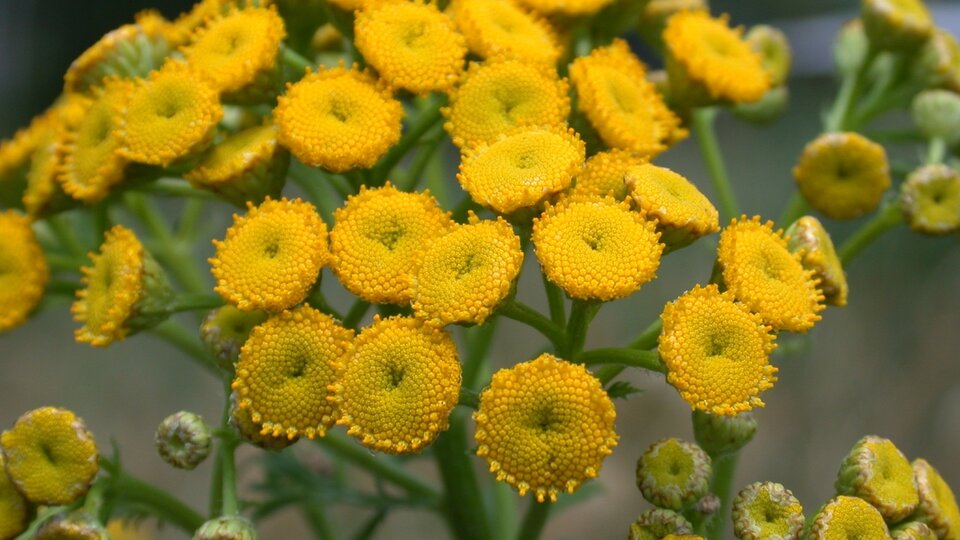
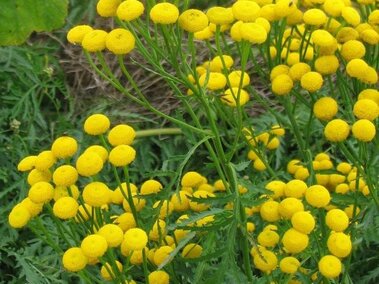
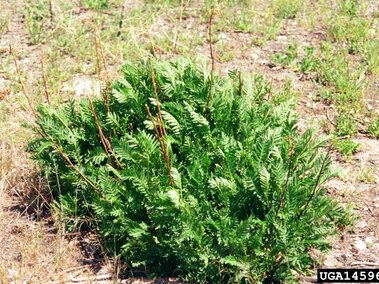
Common Tansy is an aromatic herbaceous perennial that has fern-like foliage and yellow button-like flowers. The plant grows erect and averages 1-5 feet tall. It spreads rapidly by its rhizomatous root system and prolific seed production.
Flowers
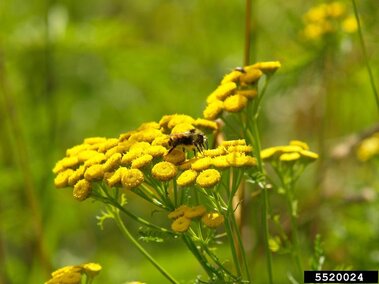
Flowerheads are numerous, button-like and yellow. They are 1/4 to 1/2 inches across in flat-topped dense clusters. Flowerheads composed of all disk flowers and are absent of ray flowers.
Leaves
Leaves are alternate and pinnately compound (leaflets arranged on both sides of a common stalk). They are deeply divided into numerous, narrow, toothed segments. Leaves become smaller towards the top of the stalk and are strongly aromatic when crushed.
Stems
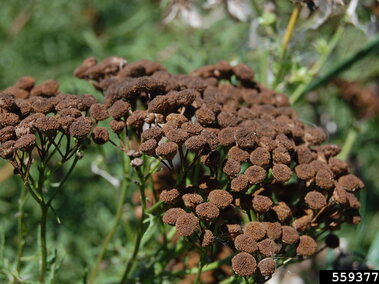
Plants have multiple stems that are brown to reddish-brown and dotted with glands.
Seeds
Seeds are small (1 to 2 mm), gland dotted and with ribs. Seeds have crown shaped pappus.
Photos



Where Does It Grow?
Common tansy is generally found along roadsides, waste areas, streambanks and in pastures. Common Tansy prefers full sun to partial shade. It grows in well-drained soils. It tolerates a variety of soils including dry and poor soils, but it actually prefers moist humus soils.
How Does It Spread?
Tansy was brought to North America by early settlers in the 1600s for medical and horticultural purposes. It was used for the treatment of constipation, hysteria, intestinal worms, rheumatism, and digestive disorders. The leaves were used to wrap corpses to prevent rapid decay. They were also used to protect meats from flies and ants. More recently, Common Tansy has been researched for use as an insecticide or mosquito repellent. Common tansy reproduces by numerous tufted seeds dispersed by wind and water. It also reproduces vegetatively by forming new plants from root fragments.
How Do I Control It?
Remove seeds from personal gear, equipment, machinery, vehicles, and animals before leaving an infested area.
Mechanical
Wear gloves when handling plants. Individual plants and small infestations can be hand-pulled (in damp soil) or dug up. Monitor and remove any resprouts. Mow or cut infestations before flowering and seed-set occur to eliminate seed production. Mowing alone will not kill plants so multiple treatments will be required to exhaust the plant's resources. Monitor treatment success continuously over successive years.
Contact your county weed control authority to determine appropriate removal methods.
Cultural
Minimize soil disturbance and re-vegetate any disturbed areas promptly. Maintain a healthy native plant community. Monitor and identify areas where invasions of common tansy are likely to occur. Burning is not recommended for controlling common tansy.
When buying hay or forage, check to make sure it is weed-free certified. Management should include proper grazing and rotational grazing techniques that would maintain rangelands and prevent invasion. Disturbed areas should be re-seeded with desirable species to prevent spread.
One way that invasive plant seeds and fragments can spread is in soil. Sometimes plants are planted purposefully. You can prevent the spread of invasive plants.
PlayCleanGo: Stop Invasive Species in Your Tracks
REMOVE plants, animals and mud from boots, gear, pets and vehicles.
CLEAN your gear before entering and leaving the recreation site.
STAY on designated roads and trails.
PLANT non-invasive species.
Chemical
Please refer to the 2025 Guide for Weed, Disease and Insect Management in Nebraska and/or contact your county weed control authority.
What Should I Do If I See It in Nebraska?
If you see common tansy in Nebraska, you should report it to your county weed control authority. For guidance on what information to include in your report, check out our reporting tips.
References and More Information
Center for Invasive Species and Ecosystem Health
Minnesota Department of Natural Resources
National Invasive Species Information Center
Nebraska County Designated Noxious Weeds
Nebraska Department of Agriculture
Nebraska Weed Control Association
Nebraska Weed Free Forage Program
North Carolina State Extension Gardener