General Information
Species Name: Imperata cylindrica
Also Known As: Cogon grass, Japanese bloodgrass, Red Baron grass
Family: Poaceae (Grass)
Growth Form: Grass
Life Span: Perennial
Flowering Dates: March-May
Origin: Southeastern Asia, East Africa
Toxic: No
Noxious: Yes. Cogongrass is listed as a Federal Noxious Weed under the Federal Noxious Weed Act, which means it is prohibited from being sold or transported into or out of the U.S. without a permit, and measures must be taken to control, eradicate, manage, or prevent its spread throughout the country.
Why Is It Invasive?
Cogongrass is an extremely aggressive invader with the capability of invading a range of sites. It forms dense, usually circular infestations that exclude all other vegetation. It spreads rapidly through scaly rhizomes and quickly becomes difficult to manage. It is also highly flammable and increases the risk of wildfires. The plant regenerates after a fire and quickly takes over an area. This grass is considered the seventh worst weed in the world and listed as a federal noxious weed by USDA Animal and Plant Health Inspection Service - Plant Protection and Quarantine.
What Does It Look Like?
General Characteristics
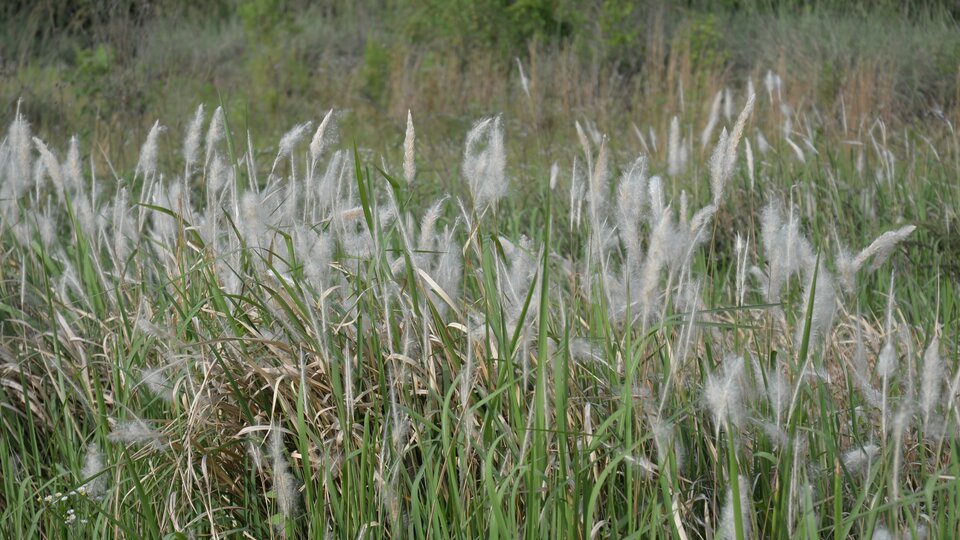
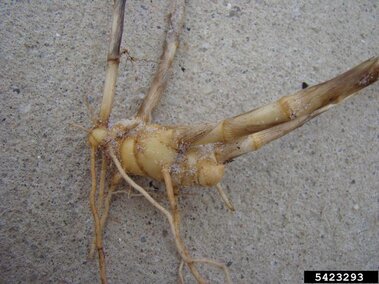
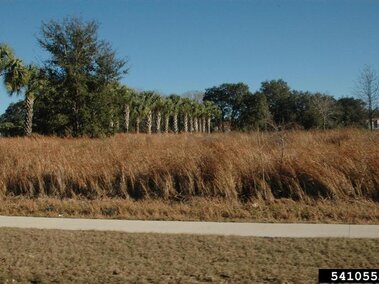
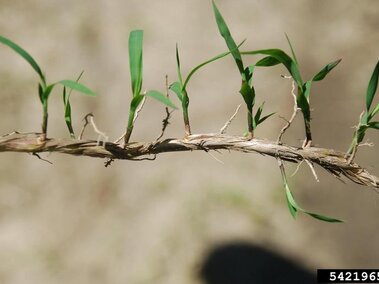
Cogongrass is a fast-growing, colony-forming grass that averages 3-4 ft tall, but can occasionally reach up to 6 ft. It is rarely seen as a single plant, as it spreads vigorously by means of rhizomes (creeping, horizontal underground stems), forming dense patches over large areas. The tough, scaly, segmented rhizomes have sharply pointed tips.
Flowers
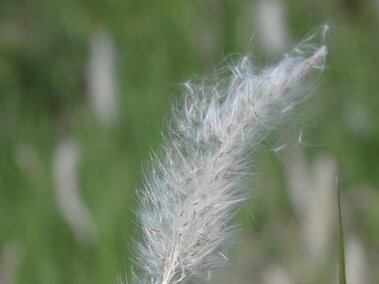
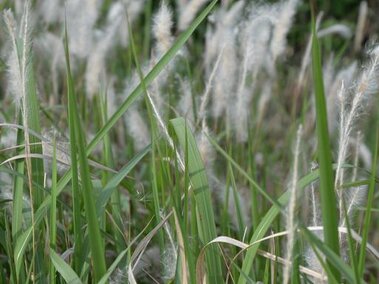
Flowering also occurs in response to frost, fire, mowing, herbicide application and other disturbances. The flowers are borne in dense, fluffy panicles that are silvery white in color and cylindrical in shape. The persistent, purplish-black stigmas are obvious amongst the white hairs.
Leaves
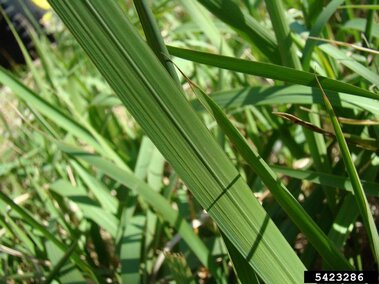
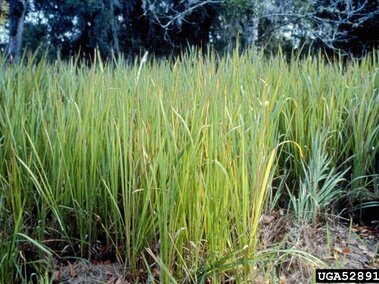
The leaves are very erect, eventually becoming matted and developing into a mass of thatch around the base of the plant. The leaves are yellowish green in color (becoming red in cool weather), often with a prominent white, off-center midrib. Leaf blades vary from 1/2 to 1 inch across, with hairy bases, finely serrated margins and sharply pointed tips. The ligule (a projection at the intersection of the leaf sheath and the leaf blade) is papery and brown with a fringed margin.
Stems
Individual plants have no aboveground stem, with the leaves arising directly from the ground. The overlapping leaf sheaths give the base of the plant a rounded appearance.
Seeds
The fluffy, plumose seedheads are easily recognized. They are silvery-white, cylindrical, and give the plant a cottony or silky look. A single seedhead measures 2 to 8 inches in length and can contain up to 3,000 seeds. The tiny seeds bear silky hairs along their margins, an aid in wind dispersal.
Photos

Where Does It Grow?
Cogongrass grows in invaded areas such as pastures, fallow fields, forests, and highway and powerline rights-of-way. Easily grown in dry to moist, well-drained soils in full sun to part shade. In warm winter areas, it naturalizes aggressively by both rhizomes and self-seeding to form dense monocultures which displace native species. It is tolerant of shade, poor soils, and drought.
How Does It Spread?
It was accidentally introduced in Louisiana in 1912 and then intentionally to Florida in the 1930s. It was used as packing material in the past and then for erosion control and animal forage. The rhizomes are extensive and can penetrate 2-4 feet deep.
How Do I Control It?
A combination of two or more control methods is the best approach when controlling cogongrass.
Mechanical
Contact your county weed control authority to determine appropriate removal methods.
Cultural
When buying hay or forage, check to make sure it is weed-free certified. Management should include proper grazing and rotational grazing techniques that would maintain rangelands and prevent invasion. Disturbed areas should be re-seeded with desirable species to prevent spread.
One way that invasive plant seeds and fragments can spread is in soil. Sometimes plants are planted purposefully. You can prevent the spread of invasive plants.
PlayCleanGo: Stop Invasive Species in Your Tracks
REMOVE plants, animals and mud from boots, gear, pets and vehicles.
CLEAN your gear before entering and leaving the recreation site.
STAY on designated roads and trails.
PLANT non-invasive species.
Chemical
Please refer to the 2025 Guide for Weed, Disease and Insect Management in Nebraska and/or contact your county weed control authority.
What Should I Do If I See It in Nebraska?
If you see common reed in Nebraska, you should report it to your county weed control authority. For guidance on what information to include in your report, check out our reporting tips.
References and More Information
Center for Aquatic and Invasive Plants
Center for Invasive Species and Ecosystem Health
Florida Department of Agriculture and Consumer Services
National Invasive Species Information Center
Nebraska County Designated Noxious Weeds
Nebraska Department of Agriculture
Nebraska Game and Parks Commission
Nebraska Weed Control Association
Nebraska Weed Free Forage Program
North Carolina State Extension Gardener