General Information
Species Name: Lyssavirus spp.
Pathogen Type: Virus
Organ System Affected: Central nervous system
Organisms Affected: Mammals
Transmissible to Humans: Yes. Rabies can be fatal to humans if is not treated promptly.
Why is it a Concern?
Rabies is a serious public health problem, killing tens of thousands of people worldwide and 1-2 people in the United States annually. Aside from affecting people, rabies can infect other mammals that people have close contact with like dogs, cats, livestock, and common wildlife. Once rabies symptoms begin to appear, it is almost always fatal.
How is it Spread?
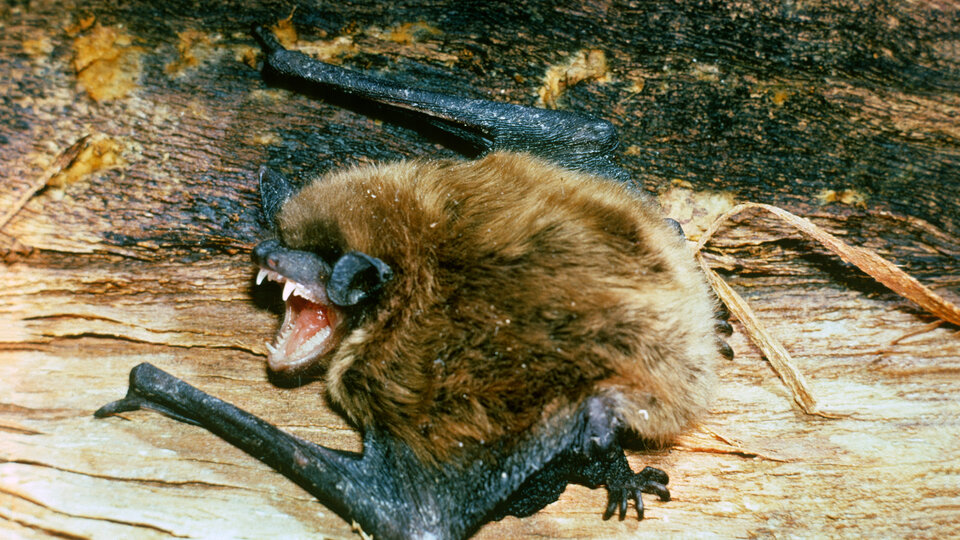
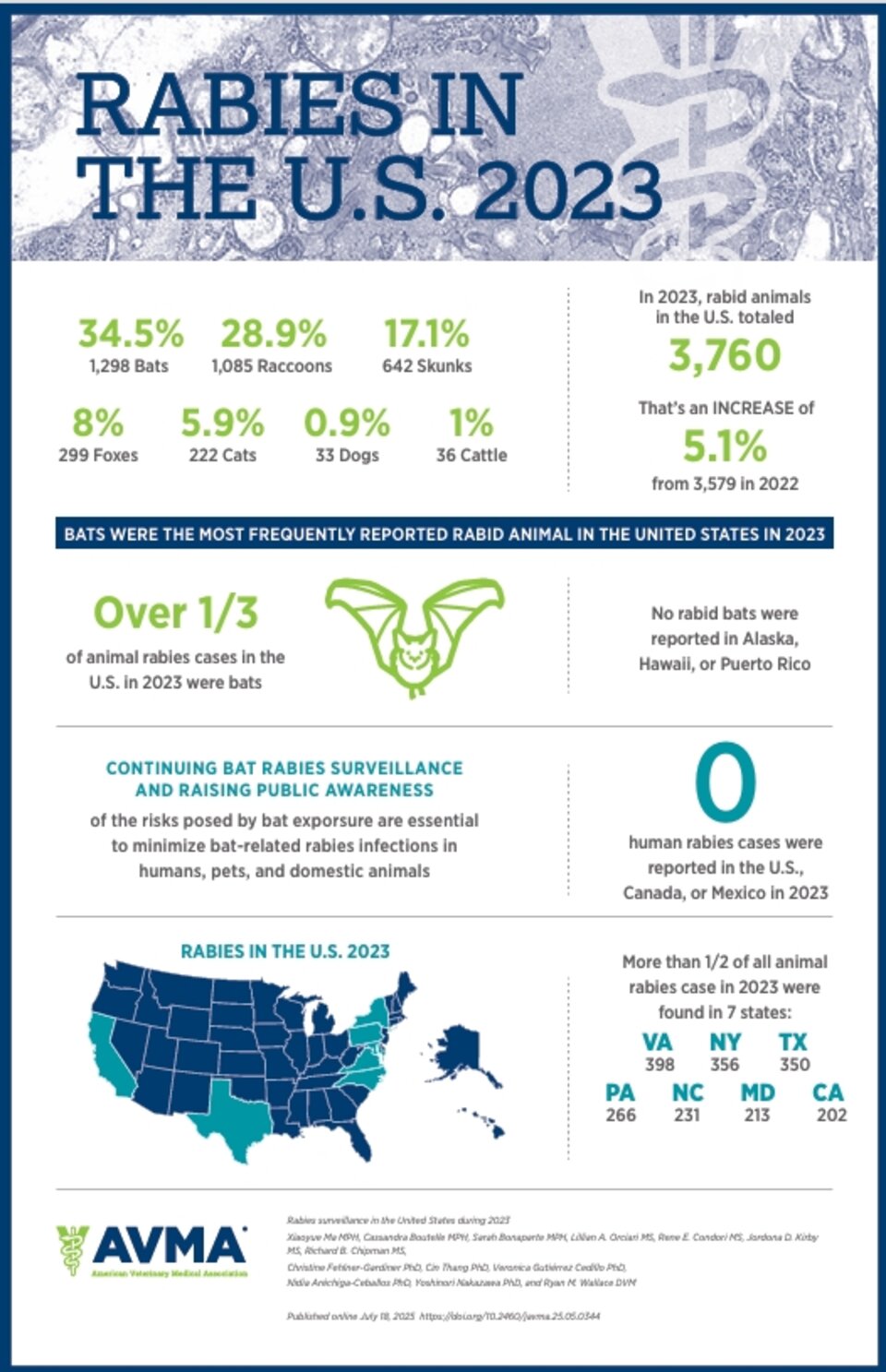
Rabies is spread by the saliva of the infected and is usually transmitted from one organism to another through a bite. It can also be transmitted when saliva from an infected individual comes into contact with an open cut or lesion, eyes, nose, or mouth or another mammal. In 99% of human rabies cases, dogs are responsible for virus transmission. Other common animals that carry rabies include bats, raccoons, skunks, and foxes.
Symptoms and Diagnosis
Incubation Period
Rabies symptoms usually begin within 2-3 months of infection. However, the incubation period for rabies can be anywhere from one week to one year, depending on the location of virus entry and viral load. Within 2 weeks of initial symptoms, more severe symptoms begin to appear.
Forms
There are two forms of rabies: furious and paralytic rabies. Furious rabies may include symptoms like hyperactivity, hallucinations, coordination loss, and fear or water or fresh air. This is the most common form of rabies. Paralytic rabies will usually last longer, causing muscle paralysis beginning at the wound site and ultimately resulting in a coma.
Initial Symptoms
Initial symptoms of rabies in humans and animals are generic and include:
Fever
Headache
Weakness
Flu-like symptoms
Discomfort, prickling, or itching at site of a bite
Advanced Symptoms
Advanced symptoms of rabies in humans and animals can be wide ranging, but include:
Anxiety
Confusion
Agitation
Hallucinations
Drooling
Aggression
Staggering
Paralysis
Seizures
Fearfulness
Fear of water or fresh air
Other species-specific symptoms include livestock exhibiting depression, self-mutilation, or increased light sensitivity. Nocturnal animals may be seen during the day.
Diagnosis
There are no tools to detect rabies infection before the onset of the disease. Rabies can only be confirmed post-mortem through microscopic examination of brain tissues.
Infographics
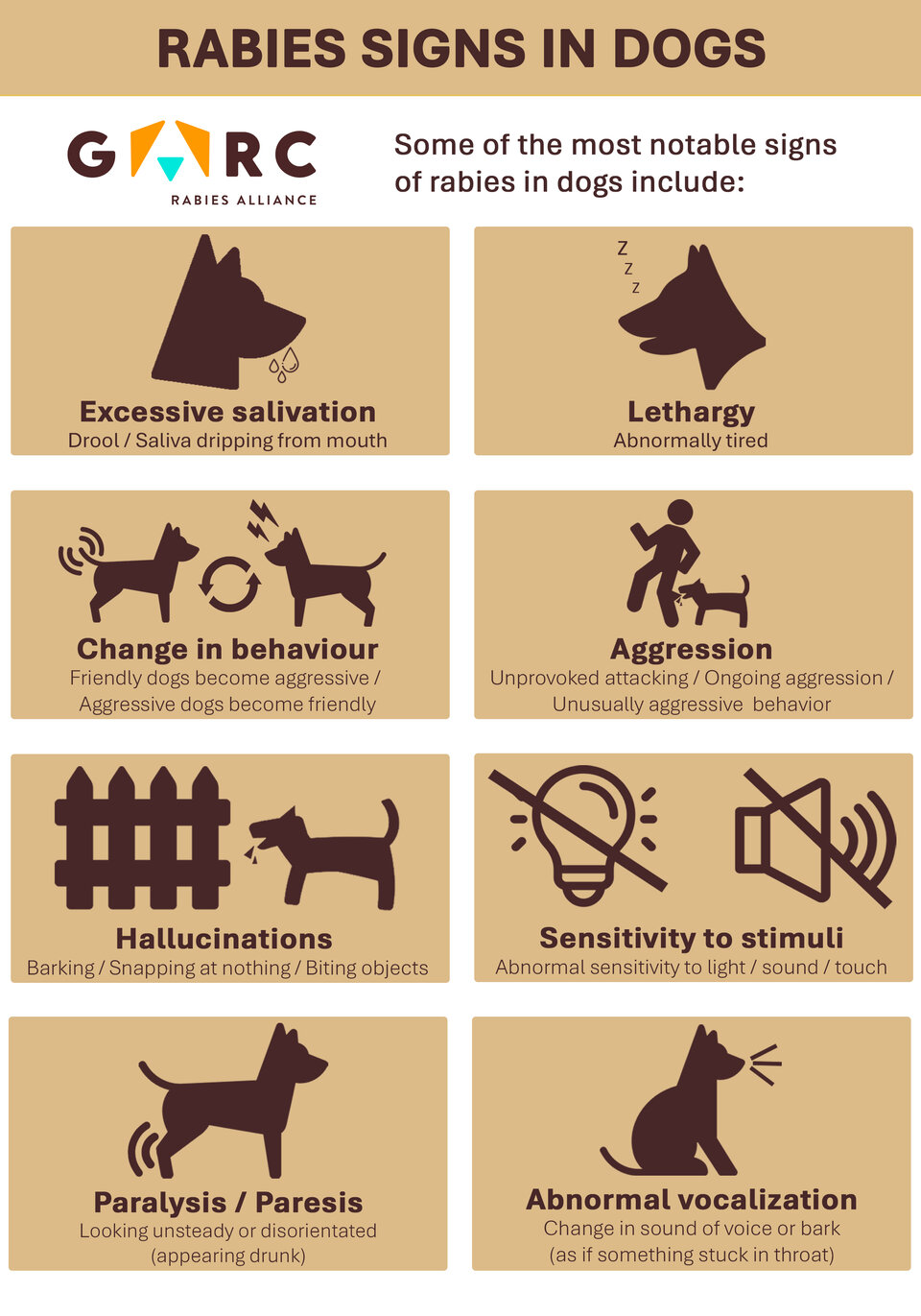
Credit: GARC Rabies Alliance
Prevention and Control
Vaccination
Rabies can be completely prevented through vaccination. Have your veterinarian vaccinate your dogs, cats, ferrets, livestock, and horses against rabies. High risk individuals (those who work with animals or travel to areas with increased rabies exposure probability) should consult a doctor about pre-exposure vaccination.
Avoid Interaction with Wildlife
Supervise pets while they are outside and avoid allowing them to come into contact with wildlife. Stay away from wildlife and do not attempt to interact with them. Do not leave food, pet food, or exposed garbage outside as it may attract wildlife to the area. Bat-proof your home and other structures.
What to Do if You Suspect Rabies
Human Exposure
If you suspect that you have been exposed to rabies, seek medical attention immediately. If you have been bitten by a domestic or wild animal, contact your local animal control authority after seeking medical attention.
Pet Exposure
If your pet has been bitten by another pet or wildlife, consult your veterinarian immediately.
Suspect Rabid Wildlife
If you suspect an animal may be rabid, do not attempt to approach it. Contact your local animal control authority immediately and keep yourself, pets, and others away from the animal.
References and More Information
American Veterinary Medical Association
Global Alliance for Rabies Control
Nebraska Department of Health and Human Services Rabies Surveillance Program