General Information
Species Name: Hypericum perforatum
Also Known As: klamathweed, Tipton weed, goatweed
Family: Clusiaceae (Waterwort)
Growth Form: Forb
Life Span: Perennial
Flowering Dates: June-August
Origin: Europe
Toxic: Photosensitization in livestock can occur upon consumption and can lead to fatality
Noxious: No
Why Is It Invasive?
St John's wort forms dense stands in disturbed areas that outcompete native vegetation and desirable forage. The plant is self-fertilizing, permitting it to spread rapidly. Single plants may produce up to 100,000 seeds annually that are viable in the soil for up to 10 years. It is tolerant of various soil types and is also drought tolerant. Additionally, it can cause photosensitization (skin sensitivity in sunlight leading to severe lesions and blisters) when consumed by livestock, which can ultimately be fatal.
What Does It Look Like?
General Description
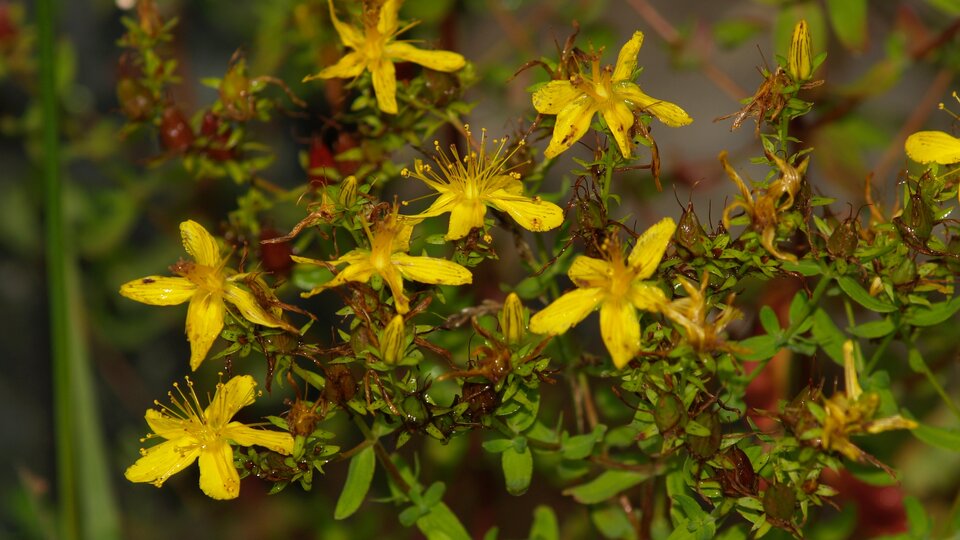
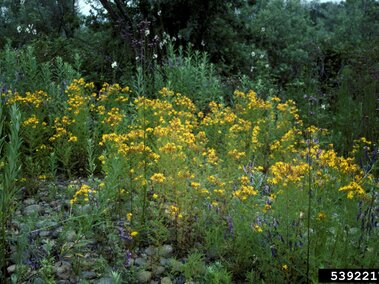
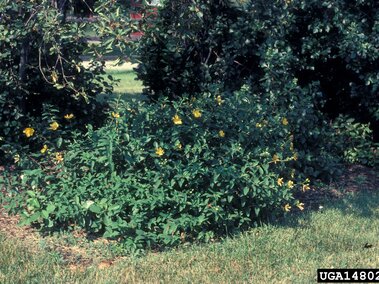
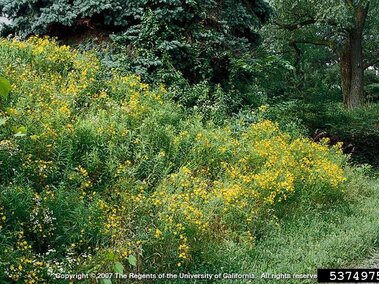
Herbaceous, upright shrub growing up to 3 feet high with bright yellow flowers during flowering season.
Flowers
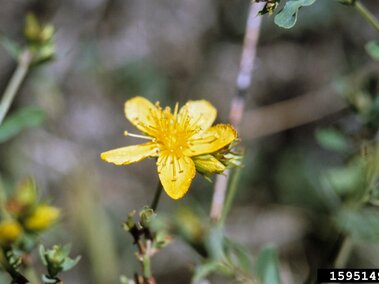
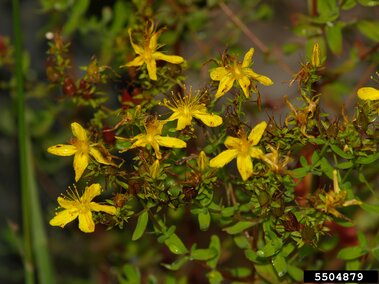
Flowers are yellow and have 5 petals with small dots around the margins. Flowers occur in clusters at the end of stems.
Leaves
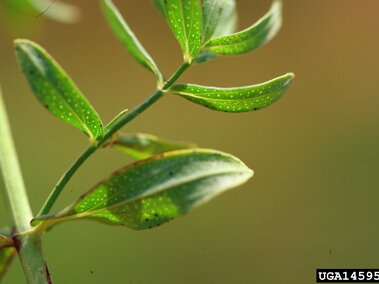
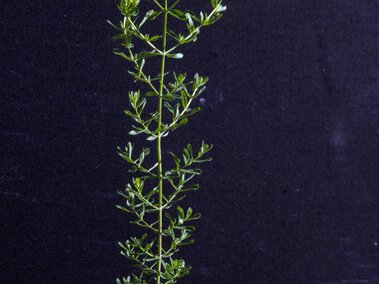
Leaves are oppositely arranged, narrow, and lance-shaped. They have entire margins and are rolled downward. Leaves have tiny, translucent or purplish-black dots.
Stems
Stems are upright and branching. They are reddish and woody at the base.
Seeds
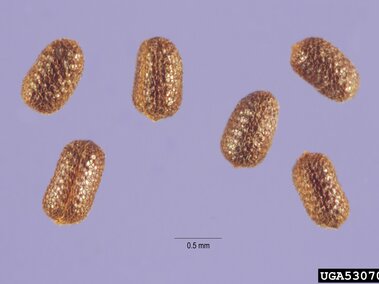
Seeds are dark brown to black, shiny, and cylindric.
Photos
Where Does It Grow?
St John's wort can be found in fields, forested areas, grasslands, pastures, and roadsides. It does best in well-drained soils, but is adapted to many soil types. It is widespread throughout North America.
How Does It Spread?
St John's wort can spread by seeds, underground rhizomes, and aboveground creeping stems. Seeds can be spread through natural and human vectors and are viable in soil for more than 10 years. St John's wort was initially introduced to North America in the 1700s for use as an ornamental and medicinal plant.
How Do I Control It?
Mechanical
Small infestations can be managed by pulling. When pulling, ensure you remove the entire plant and its roots to avoid regrowth. Bag and appropriately dispose of pulled plants. Mowing before seed formation can aid in control.
Please contact your county weed control authority to determine appropriate removal methods.
Cultural
Do NOT permit livestock to graze in areas infested with St John's wort, as it is toxic to livestock upon consumption.
One way that invasive plant seeds and fragments can spread is in soil. Sometimes plants are planted purposefully. You can prevent the spread of invasive plants.
PlayCleanGo: Stop Invasive Species in Your Tracks
REMOVE plants, animals and mud from boots, gear, pets and vehicles.
CLEAN your gear before entering and leaving the recreation site.
STAY on designated roads and trails.
PLANT non-invasive species.
Herbicide
Please refer to the 2026 Guide for Weed, Disease and Insect Management in Nebraska and/or contact your county weed control authority.
References and More Information
California Invasive Plant Council
National Invasive Species Information Center
Nebraska Weed Control Association
North Carolina State University Extension Gardener
Stubbendieck, J., Coffin, M., & Dunn, C. (2019). Weeds of the Great Plains. Nebraska Department of Agriculture.
USDA Natural Resource Conservation Service
Washington State Noxious Weed Control Board