General Information
Species Name: Elaeagnus angustifolia
Also Known As: oleaster
Family: Elaeagnaceae (Oleaster)
Growth Form: Tree
Life Span: Perennial
Flowering Dates: May-July
Origin: Eurasia
Noxious: No
Why Is It Invasive?
Russian olive is tolerant of various soil and environment types, allowing it to spread easily to different areas. It is particularly invasive to riparian areas. Once established, it outcompetes and restricts the growth of native species.
What Does It Look Like?
General Description
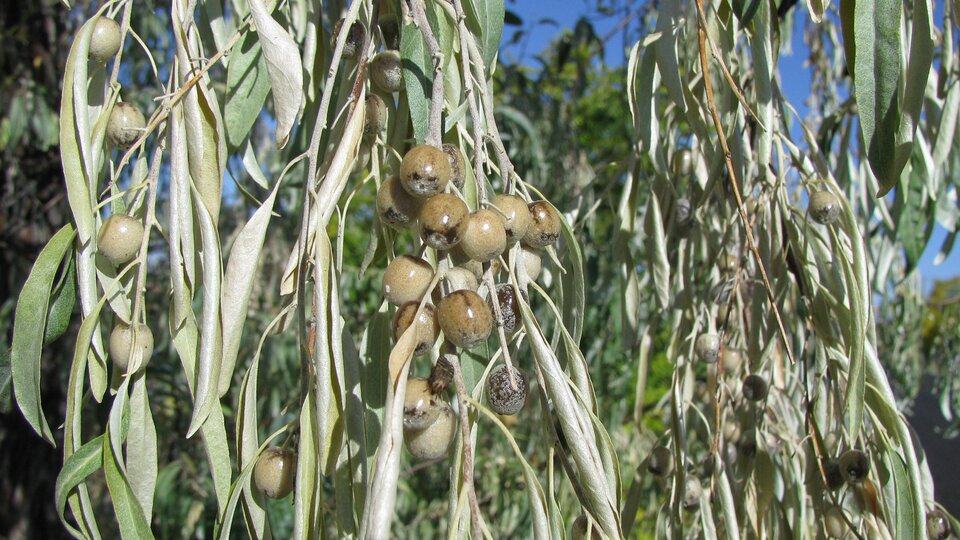
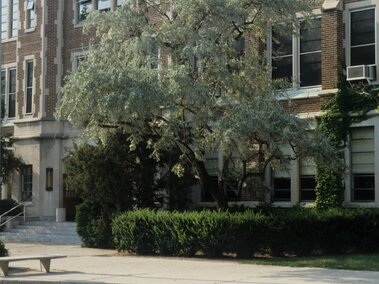
Deciduous tree that grows up to 20 feet tall with oval shaped, silvery-green fruits.
Flowers
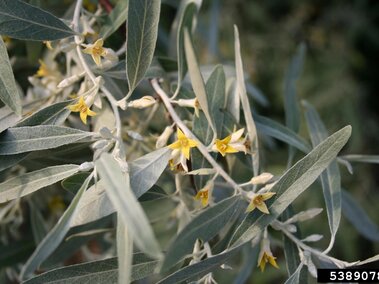
Flowers grow in clusters and are bell-shaped. They are yellow to yellowish green and very fragrant.
Leaves
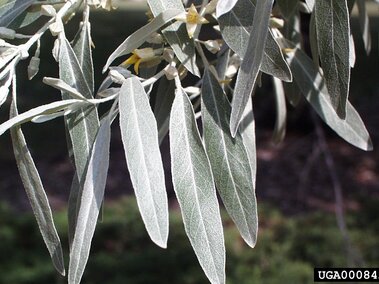
Leaves are alternately arranged, narrow and elliptic in shape. They have smooth edges and the upper leaf is grayish green and covered with silvery hairs. The understide of the leaf is silvery gray.
Stems and Bark
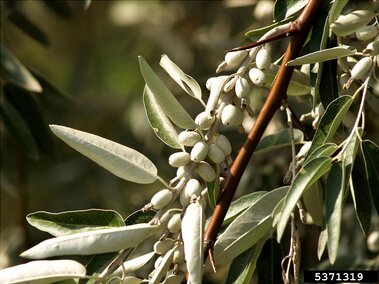
Stems are smooth, dark reddish brown, and may have thorns. younger stems may be silvery gray and covered in scales. Bark can be reddish in color and is sometimes shredding.
Fruit
Fruits are oval shaped and silvery green. They dry into a brown color and contain one seed.
Photos
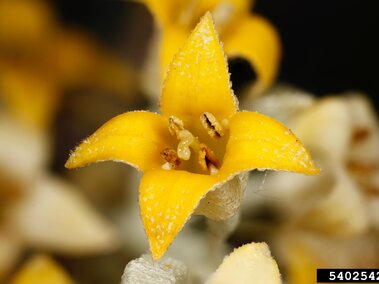
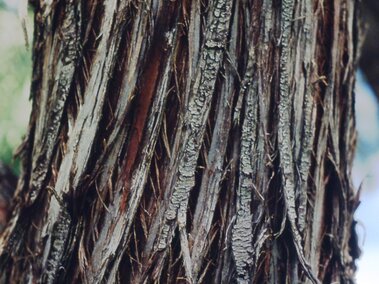
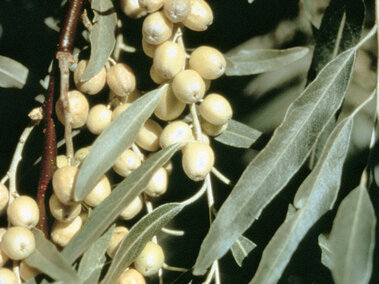
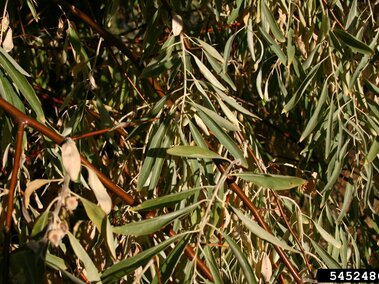
Where Does It Grow?
Russian olive can primarily be found in riparian areas and along waterways, but can adapt to many environments and soil types. It is widely established across the United States.
How Does It Spread?
Russian olive is spread by seed, which can be spread through natural vectors, like birds and wildlife, or human vectors. Cut Russian olive trees can resprout from the crown and roots. It was initially brought to the United States to be used as a horticultural plant but escaped cultivation.
How Do I Control It?
Mechanical
Manually remove seedlings and saplings, including the roots. Pulling or digging out more mature plants is possible, but labor intensive and can cause site disturbance that remaining roots may take advantage of. Cutting can suppress growth, but will not kill the plant without root removal.
Please contact your county weed control authority to determine appropriate removal methods.
Cultural
Do not intentionally plant Russian olive. Consider a native alternative instead.
One way that invasive plant seeds and fragments can spread is in soil. Sometimes plants are planted purposefully. You can prevent the spread of invasive plants.
PlayCleanGo: Stop Invasive Species in Your Tracks
REMOVE plants, animals and mud from boots, gear, pets and vehicles.
CLEAN your gear before entering and leaving the recreation site.
STAY on designated roads and trails.
PLANT non-invasive species.
Herbicide
Please refer to the 2026 Guide for Weed, Disease and Insect Management in Nebraska and/or contact your county weed control authority.
References and More Information
Colorado Department of Agriculture
Minnesota Department of Natural Resources
Missouri Department of Conservation
National Invasive Species Information Center
Nebraska Weed Control Association
North American Invasive Species Management Association Fact Sheet
North Carolina State University Extension Gardener
University of Minnesota Urban Forestry Outreach and Research
University of Nevada, Reno Extension
Washington State Noxious Weed Control Board