General Information
Species Name: Agrostis gigantea
Also Known As: black bent, carpet bentgrass, redtop bent, redtop bentgrass
Family: Poaceae (Grass)
Growth Form: Grass
Life Span: Perennial (cool season)
Origin: Eurasia
Noxious: No
Why Is It Invasive?
Since its introduction in 1800s, redtop has become widespread throughout the United States and has been adopted for many uses. However, redtop can displace and prohibit the growth of native species in areas where it is unmanaged. It is not preferred forage by livestock.
What Does It Look Like?
General Description
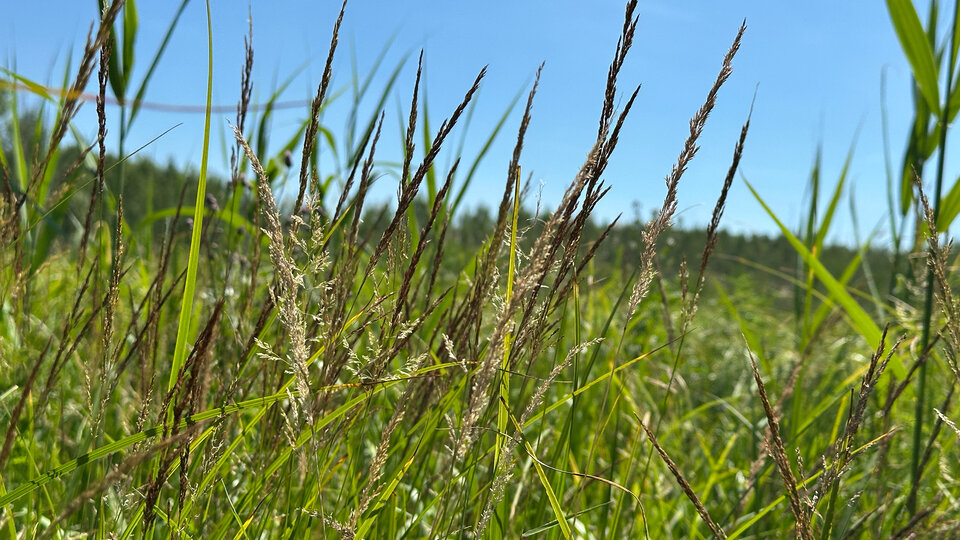
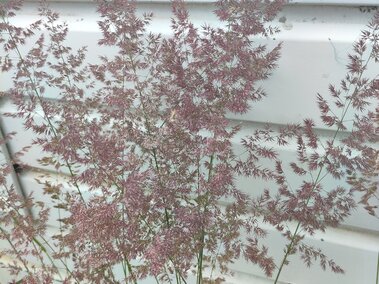
Redtop is a grass that can grow up to 4 feet tall and has a distinctive purplish-red seedhead.
Seedheads
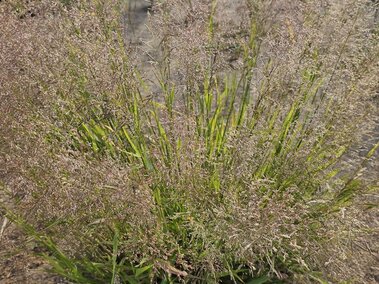
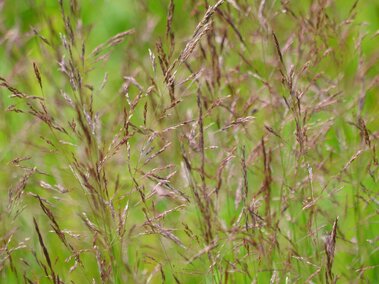
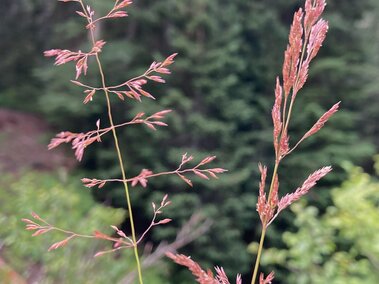
Seedheads are purplish-red, airy in appearance, and can grow 3-11 inches long. It has a pyramidal appearance, with a wider base and narrower head.
Leaves
Leaves are alternately arranged and smooth without hairs. They are narrow and 2-8 inches in length.
Stems
Stems are are upright and can reach up to 4 feet high.
Photos
Where Does It Grow?
Redtop grows best in wet to moist soils, including in grasslands, meadows, and pastures. It can often be found in riparian areas. It is widespread across the United States.
How Does It Spread?
Redtop spreads through seed and vegetatively through root systems. It was initially introduced to the United States in the 1800s and intentionally spread for use as a pasture grass and erosion control.
How Do I Control It?
Mechanical
Hand pulling and removal can be difficult due to extensive root systems of redtop, which must be removed for effective control. Continuous mowing, cutting the grass to three inches or less, may help with temporary control.
Please contact your county weed control authority to determine appropriate removal methods.
Cultural
Consistent grazing may help with temporary control, but livestock may choose other more desirable forage over redtop. Purchase only certified, weed-free hay.
One way that invasive plant seeds and fragments can spread is in soil. Sometimes plants are planted purposefully. You can prevent the spread of invasive plants.
PlayCleanGo: Stop Invasive Species in Your Tracks
REMOVE plants, animals and mud from boots, gear, pets and vehicles.
CLEAN your gear before entering and leaving the recreation site.
STAY on designated roads and trails.
PLANT non-invasive species.
Herbicide
Please refer to the 2026 Guide for Weed, Disease and Insect Management in Nebraska and/or contact your county weed control authority.
References and More Information
Great Lakes Aquatic Nonindigenous Species Information System
Nebraska Weed Control Association
Nebraska Weed Free Forage Program
Smithsonian Environmental Research Center
US Forest Service Fire Effects Information System
USDA Natural Resource Conservation Service
Yavapai County Native and Natural Plants