General Information
Species Name: Daucas carota
Also Known As: wild carrot, bird's nest
Family: Apiaceae (Carrot)
Growth Form: Forb
Life Span: Biennial
Flowering Dates: June-September
Origin: Europe
Toxic: Reports of toxicosis in cattle and horses upon ingestion in Europe; sap may cause rashes or reaction upon contact with human skin
Noxious: No
Why Is It Invasive?
Queen Anne's Lace outcompetes native plants and invades roadsides, disturbed sites, fields, and rangelands. It can be a threat to recovering prairies and grasslands.
What Does It Look Like?
General Description
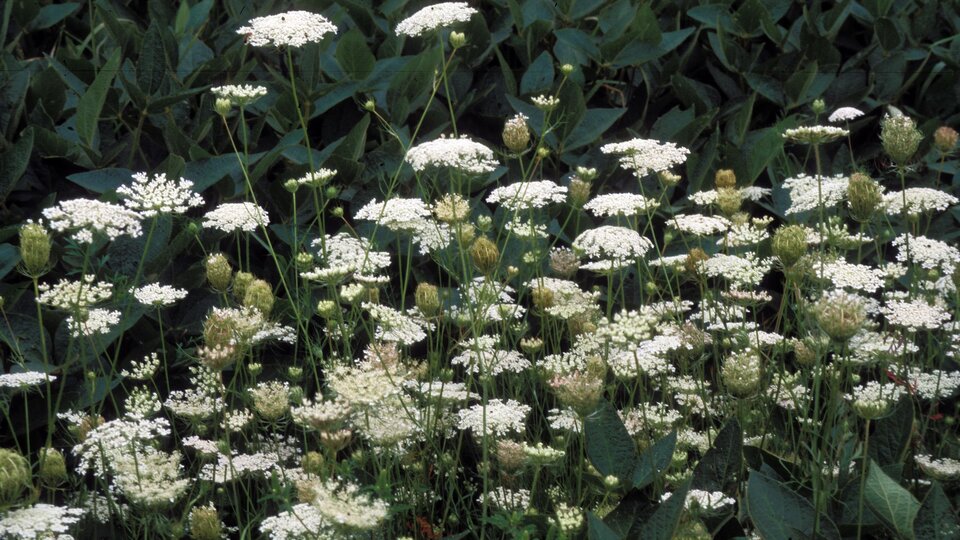
Queen Anne's Lace is an herbaceous plant that can grow up to 4 feet tall. It has a distinct carrot smell.
Flowers
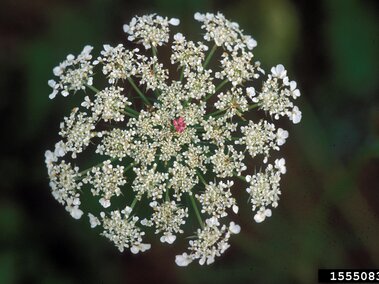
Flowers are white or yellowish to pinkish-white and have 5 petals. They are small and grow in clusters at the end of stems.
Leaves
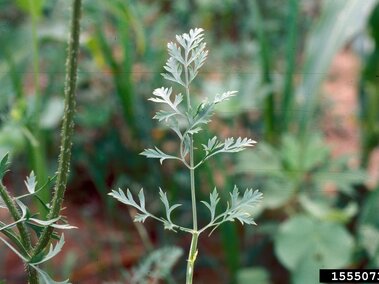
Leaves are alternately arranged on the stem and increase in size down the stem. They are fern-like and have bristly or rigid hairs.
Stems
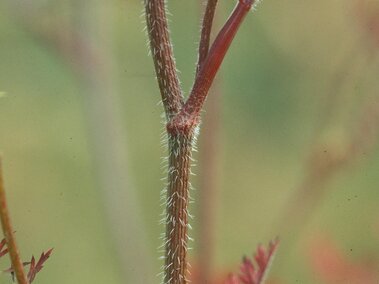
The stem is upright, solitary or mildly branching, and hollow. Stem surfaces are smooth or may have bristly, rigid hairs. Stems are reddish to purple in color.
Seeds
Seed are yellow to grayish-brown with one flattened side. The rounded side of the seed is ribbed.
Photos
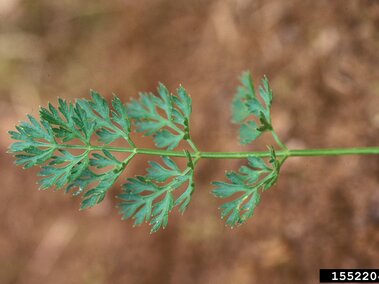
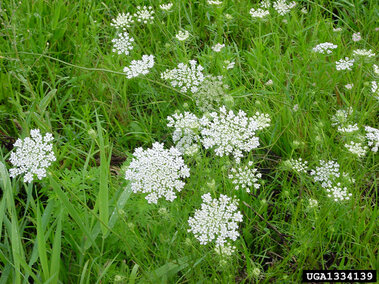
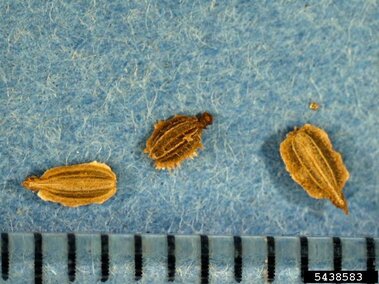
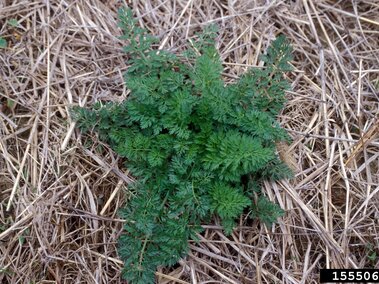
Where Does It Grow?
Queen Anne's lace is present across North America. It grows in fields, pastures, banks of streams and rivers, and disturbed areas.
How Does It Spread?
Queen Anne's lace spreads by seed and was initially introduced to North America by colonists and escaped cultivation. Seed can be spread by wind, water, and wildlife or by people during outdoor recreation.
How Do I Control It?
Mechanical
Cutting, mowing, and pulling before seeding can effectively control Queen Anne's lace. Wear gloves and other protective clothing to avoid coming into contact with the potentially toxic sap.
Please contact your county weed control authority to determine appropriate removal methods.
Cultural
One way that invasive plant seeds and fragments can spread is in soil. Sometimes plants are planted purposefully. You can prevent the spread of invasive plants.
PlayCleanGo: Stop Invasive Species in Your Tracks
REMOVE plants, animals and mud from boots, gear, pets and vehicles.
CLEAN your gear before entering and leaving the recreation site.
STAY on designated roads and trails.
PLANT non-invasive species.
Herbicide
Please refer to the 2026 Guide for Weed, Disease and Insect Management in Nebraska and/or contact your county weed control authority.
References and More Information
Minnesota Department of Natural Resources
Missouri Department of Conservation
Nebraska Weed Control Association
Nebraska Weed Free Forage Program
North Carolina State University Extension Gardener
Stubbendieck, J., Coffin, M., & Dunn, C. (2019). Weeds of the Great Plains. Nebraska Department of Agriculture.
University of Minnesota Extension
University of Wisconsin-Madison Extension