General Information
Species Name: Elymus repens
Also Known As: couchgrass, doggrass
Family: Poaceae (Grass)
Growth Form: Grass
Life Span: Perennial
Season: Cool
Origin: Eurasia
Toxic: No
Noxious: No
Why Is It Invasive?
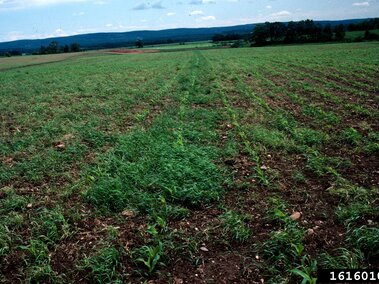
Quackgrass is highly competitive, creating problems in both urban and rural environments as it invades agricultural fields and gardens. It spreads quickly forming dense stands, reducing crop yields and displacing native and desirable vegetation.
What Does It Look Like?
General Description
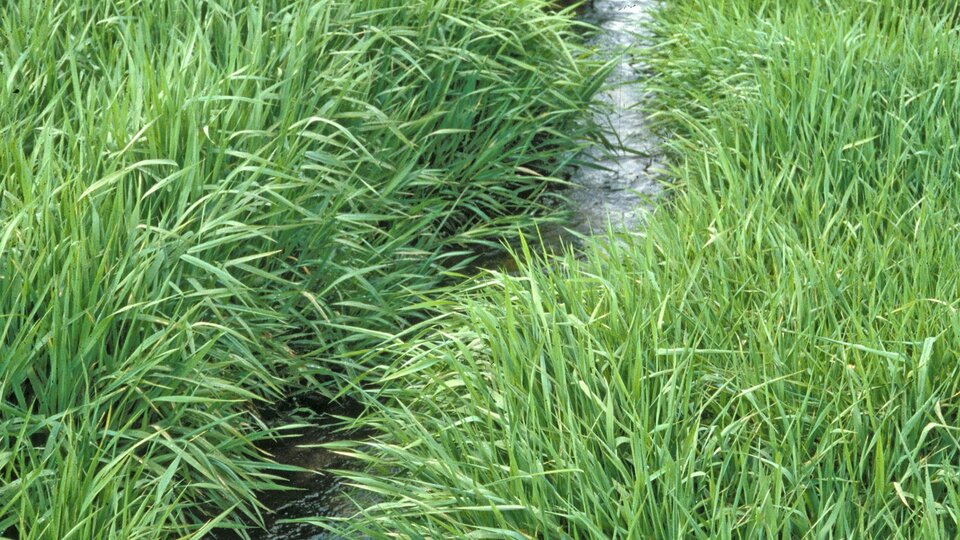
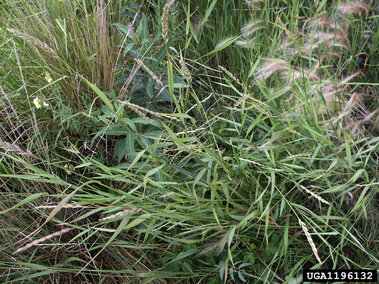
Quackgrass can grow up to 4 feet high, but is often only a few inches tall in lawns and urban environments.
Flowers
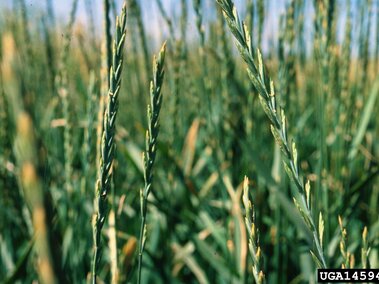
Spikelets grow in clustered, slender, upward reaching groups. Spikelets can be compact or loose. They appear somewhat like the heads of wheat and are green when young and then mature to purple or tan.
Leaves
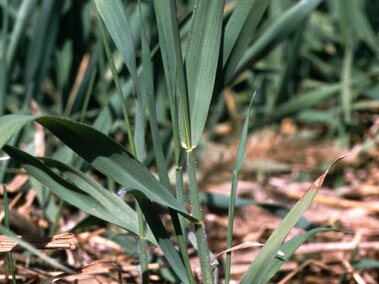
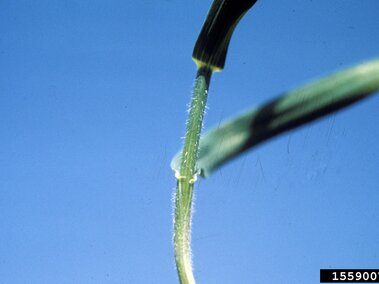
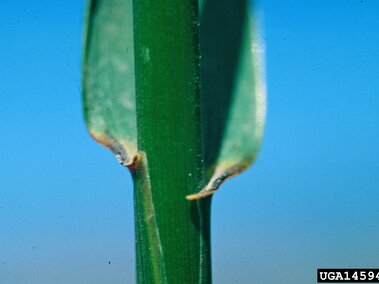
Leaves are long, narrow, and smooth without hairs or sparsely hairy. Leaves have an auricle (claw-like appendage that wraps around the stem at the base of the leaf).
Stems
Stems are upright and can reach up to 4 feet in length.
Seeds
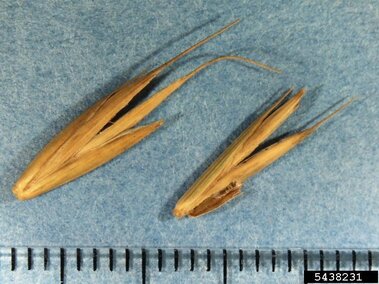
Seeds are contained in spikelets. Each stem can produce nearly 50 seeds.
Photos
Where Does It Grow?
Quackgrass grows in both urban and rural environments. It can invade gardens, lawns, and crop fields. It thrives in disturbed sites and can tolerate partial shade to full sun.
How Does It Spread?
Quackgrass can reproduce by seed but mostly reproduces via creeping rhizomes, which have been known to penetrate hard soils and grow into the tubers of other plants. Rhizomes can spread up to 5 feet away from the plant and small fragments can produce entire new plants.
How Do I Control It?
Mechanical
Hand removal is possible, but difficult due to extensive rhizome establishment. Tilling can control quackgrass if repeated from late summer until freezing temperatures. If not repeated until freezing temperatures, tilling may accidentally spread rhizomes.
Please contact your county weed control authority to determine appropriate removal methods.
Cultural
Prevent quackgrass establishment by minimizing disturbance and maintain a healthy native plant community. Grazing by livestock can help manage infestations as it is considered high quality forage.
One way that invasive plant seeds and fragments can spread is in soil. Sometimes plants are planted purposefully. You can prevent the spread of invasive plants.
PlayCleanGo: Stop Invasive Species in Your Tracks
REMOVE plants, animals and mud from boots, gear, pets and vehicles.
CLEAN your gear before entering and leaving the recreation site.
STAY on designated roads and trails.
PLANT non-invasive species.
Herbicide
Please refer to the 2026 Guide for Weed, Disease and Insect Management in Nebraska and/or contact your county weed control authority.
References and More Information
Colorado Department of Agriculture
Cornell College of Agriculture and Life Sciences
Michigan State University Extension
Montana State University Broadwater County Extension
Nebraska Weed Control Association
Nebraska Weed Free Forage Program
Stubbendieck, J., Coffin, M., & Dunn, C. (2019). Weeds of the Great Plains. Nebraska Department of Agriculture.
University of California Statewide Integrated Pest Management Program
University of Maryland Extension
University of Minnesota Extension