General Information
Species Name: Amaranthus palmeri
Also Known As: Palmer pigweed, carelessweed
Family: Amaranthaceae (Pigweed)
Growth Form: Forb
Life Span: Annual
Flowering Dates: July-October
Origin: Southwestern U.S.
Toxic: No
Noxious: No
Why Is It Invasive?
Palmer amaranth is especially invasive of crop fields and greatly reduces crop yield upon establishment. It is particularly damaging to annual crops and causes extensive damage to corn and soybean crops. Palmer amaranth is resistant to many popular herbicides, making it difficult to control.
What Does It Look Like?
General Characteristics
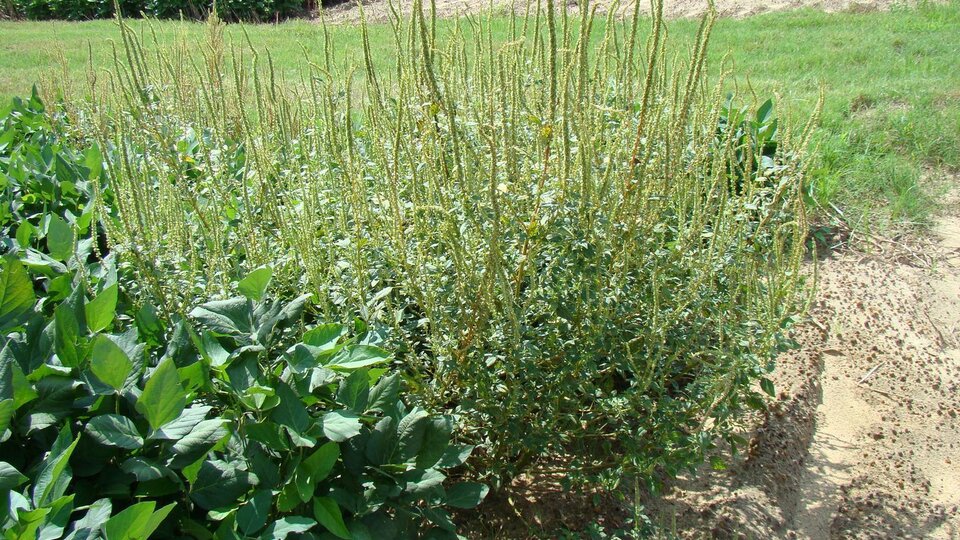
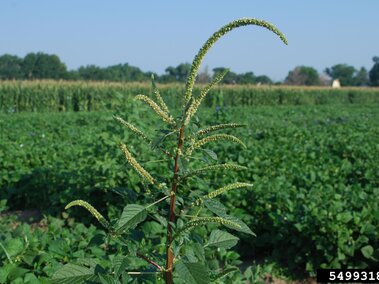
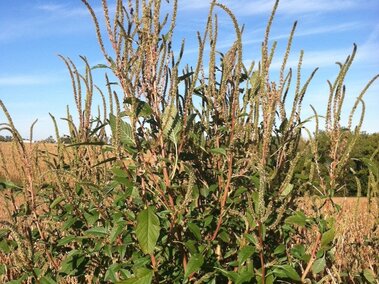
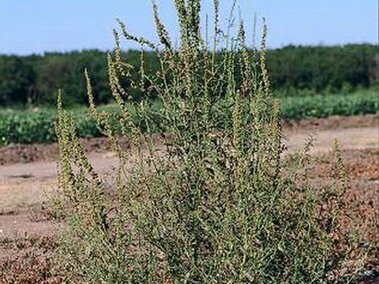
Palmer amaranth is a summer annual that can reach greater than 10 feet in height.
Flowers
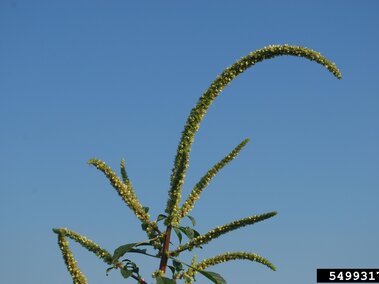
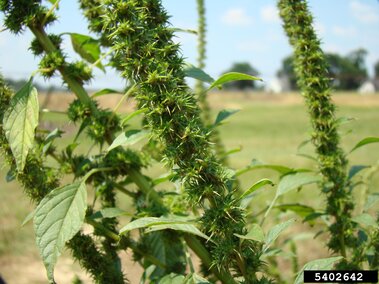
Green, flowering spikes that mature to a brown color. Female plants have spiny, sharp bracts around each small flower part, causing flowering spikes to feel sharp or rough. Flowering spikes of male flowers are soft to the touch.
Leaves
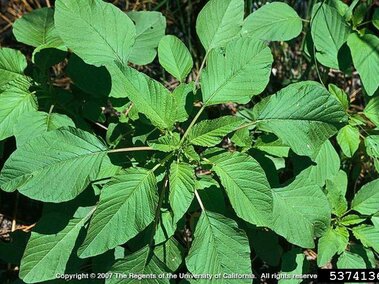
Leaves are alternately arranged and egg-shaped or oval. They are smooth and have white veins on the underside. The stem that attaches the leaf to the main stem is the same length or longer than the leaf.
Stems
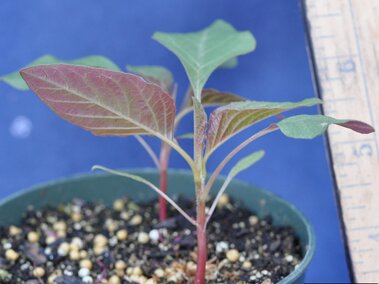
Stems are waxy, smooth, and reddish, sometimes with red stripes, They are upright and branching. Stems may appear ridged.
Seeds
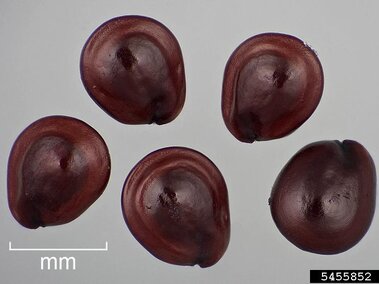
Reddish-brown and glossy. Very small.
Photos
Where Does It Grow?
Palmer amaranth is native to southwestern United States and has begun spreading northeast. It can be found in crop fields, grasslands, roadsides, rangelands, and disturbed, sunny sites. It is very drought tolerant.
How Does It Spread?
Palmer amaranth reproduces via seed, with as many as one million seeds per plant that can remain viable for up to 5 years. Seeds can spread through natural vectors or human vectors, including plowing, harvesting, and attaching to clothing, pets, and equipment. It was initially reported outside of its native range in the early 1900s and was likely introduced in contaminated seed.
How Do I Control It?
Mechanical
Mowing can be done in conjunction with other methods, but will not effectively control palmer amaranth independently. Hand weeding can be effective but tedious. If hand weeding, ensure that you bag and dispose of the entire plant to prevent seed spread. Plants laid on soil can re-root and continue to grow.
Please contact your county weed control authority to determine appropriate removal methods.
Cultural
Rotate crops so that you can use a variety of herbicides on cropland. Consider planting a cereal rye cover crop, which can suppress palmer amaranth. When buying hay or forage, check to make sure it is weed-free certified.
One way that invasive plant seeds and fragments can spread is in soil. Sometimes plants are planted purposefully. You can prevent the spread of invasive plants.
PlayCleanGo: Stop Invasive Species in Your Tracks
REMOVE plants, animals and mud from boots, gear, pets and vehicles.
CLEAN your gear before entering and leaving the recreation site.
STAY on designated roads and trails.
PLANT non-invasive species.
Herbicide
Please refer to the 2026 Guide for Weed, Disease and Insect Management in Nebraska and/or contact your county weed control authority.
References and More Information
Iowa State University Extension and Outreach
Minnesota Department of Agriculture
National Invasive Species Information Center
Nebraska Weed Control Association
Nebraska Weed Free Forage Program
Stubbendieck, J., Coffin, M., & Dunn, C. (2019). Weeds of the Great Plains. Nebraska Department of Agriculture.
University of California Statewide Integrated Pest Management Program
Washington State Noxious Weed Control Board