.jpg)
General Information
Species Name: Pseudogymnacus destructans
Also Known As: Pd.
Pathogen Type: Fungus
Organisms Affected: Hibernating bats
Transmissible to Humans: No
Why is it a Concern?
White nose syndrome effects hibernating bats, causing them to use an excess of energy and fat reserves during hibernation, resulting in their death. Bats may starve or succumb to the elements when they search for food after waking during the winter. Since the fungus' introduction to North America in the early 2000s, white nose syndrome has killed millions of bats and decreased little brown bat, northern long-eared bat, and tri-colored bat populations by more than 90% by 2018. Bats have multiple important roles in a healthy ecosystem including pollination, seed dispersal, and insect control.
How is it Spread?
White nose syndrome is spread through bat to bat contact and contact with infested areas. It can also be spread by people carrying the fungus on clothing, shoes, or gear.
Symptoms
Symptoms of infected individuals may include:
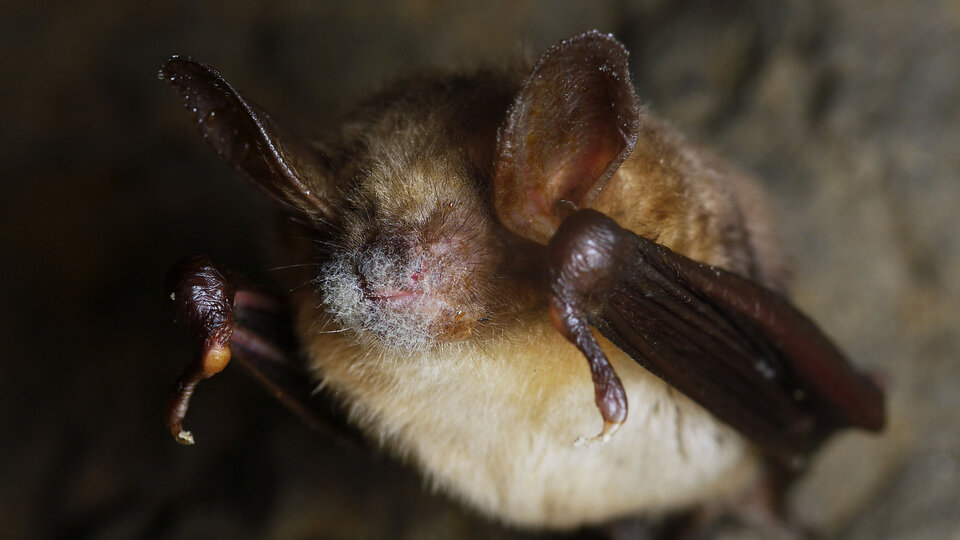
White muzzles and wings
Flying outside during the day
Flying in freezing temperatures or in the winter
Bats clustered around entrances of hibernation locations
Low body fat
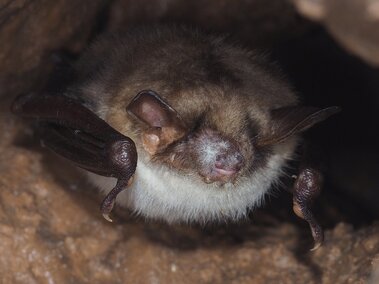
Credit: © Jakob Fahr, some rights reserved (CC-BY-NC)
Mouse-eared bat with white nose syndrome
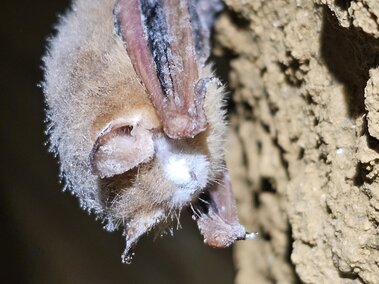
Credit: © Eric C. Maxwell, some rights reserved (CC-BY-NC-ND)
Bat with white nose syndrome
Prevention
Stay Out of Caves
Avoid entering into areas where bats may hibernate, including caves. Entering into hibernation areas can transmit white nose syndrome and disturb hibernating and vulnerable bats. Prevent pets from entering these areas.
Decontaminate Clothing and Equipment
If you do enter into a cave, decontaminate your shoes, gear and clothes as soon as possible. Do not visit another cave before decontaminating your gear.
What to Do if You Suspect White Nose Syndrome
Do not try to handle or touch bats with or without white nose syndrome. Report white nose syndrome sightings to the Nebraska Natural Heritage Project Zoologist. For information on what to include in your report, check out our reporting tips.
References and More Information
Bat Conservation International
U.S. Fish and Wildlife Service
Washington Department of Fish and Wildlife