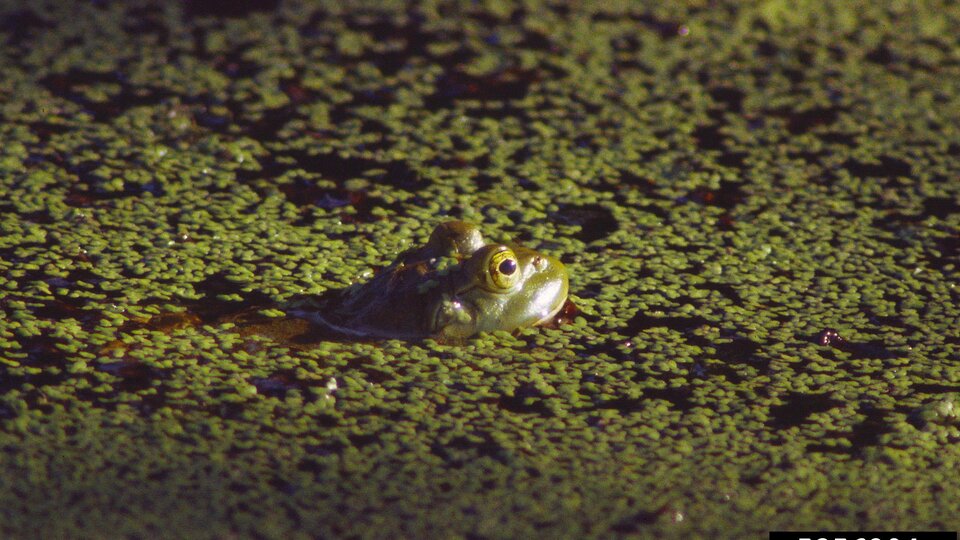
General Information
Species Name: Batrachochytrium dendrobatidis
Also Known As: Bd.
Pathogen Type: Fungus
Organ System Affected: Skin
Organisms Affected: Amphibians
Transmissible to Humans: No
Why is it a Concern?
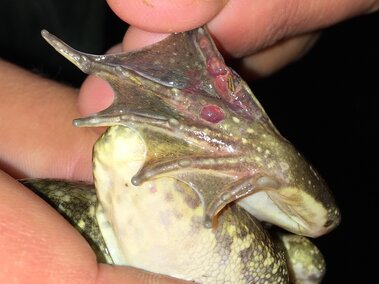
Bd. is a member of a group of fungi known as chytrids, which usually only grow underwater on dead organic matter. Bd. is the only chytrid fungus known to feed on living invertebrates. Once it is established on an amphibian it causes the disease chytridiomycosis, which prevents the animal from taking up oxygen through their skin, resulting in death. Bd. is known to infect over 500 species of amphibians and is associated with regional and mass species extinctions worldwide.
How is it Spread?
Bd. spreads through spores that are transmitted through water or mud. Amphibians in aquatic habitats that have permanent water, like ponds or bogs, are at higher risk for contracting the fungus. People can accidentally move the fungal spores on their shoes and equipment or if releasing an amphibian into an environment from which it was not harvested.
Symptoms and Diagnosis
Symptoms
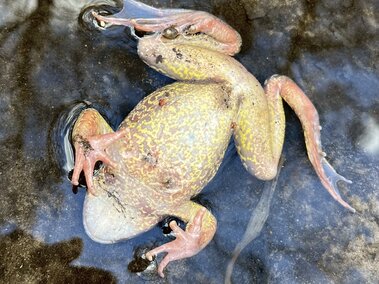
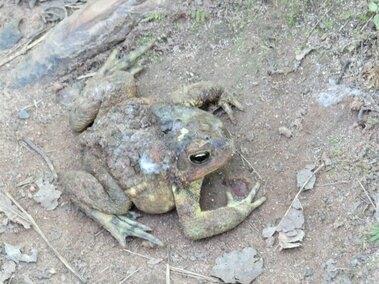
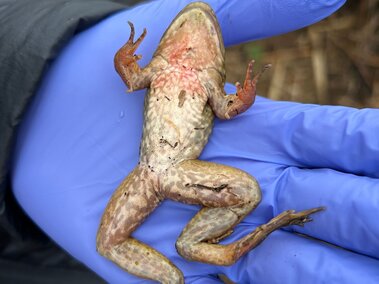
Symptoms of infected individuals may include:
Anorexia
Lethargy
Excessive shedding of skin
Red skin
Convulsions
Inability to orient into an upright position
Abnormal feeding behavior
Discoloration near mouth
Swimming in circles
Diagnosis
Diagnosis is confirmed post-mortem through histopathologic examination of tissues.
Photos
Prevention and Control
Do Not Release or Move Amphibians
Never release a captive amphibian into the wild. They can contain diseases, like Bd., and transmit them to surrounding wildlife. Don't let it loose and instead check out these rehoming resources. Do not move wild amphibians from one location to another. Dispose of bait into a garbage receptacle.
Clean Your Gear and Equipment
Pathogens and other invasive species may be moved accidentally during outdoor recreation. Follow these simple steps to avoid spreading pathogens like Bd.:
REMOVE plants, animals and mud from boots, gear, pets and vehicles.
CLEAN your gear before entering and leaving the recreation site.
STAY on designated roads and trails.
PlayCleanGo: Stop Invasive Species in Your Tracks
What to Do if You Suspect Chytrid Fungus
Captive/Domestic Amphibian
If you suspect that your domestic amphibian may have contracted Bd., quarantine that animal from other amphibians. Wear gloves and wash your hands after handling the animal. Seek medical care from a veterinarian.
Wild Amphibian
If you suspect a wild amphibian may have contracted Bd., do not try to capture or touch the animal, as this can promote spore spread. Document the location and symptoms for later reporting.
Report Suspected Infections
Report any suspected sightings of chytrid fungus to the Nebraska Invasive Species Council. For more information on what to include in your report, check out our reporting tips.
References and More Information
Australian Government Department of Sustainability, Environment, Water, Population and Communities
University of California Center for Invasive Species Research
Wisconsin Department of Natural Resources