General Information
Species Name: Leucanthemum vulgare
Also Known As: Bull daisy, button daisy, field daisy, white daisy, Marguerite
Family: Asteraceae (Sunflowers)
Growth Form: Forb
Life Span: Perennial
Flowering Date: May-September
Origin: Eurasia and Northern Africa
Noxious: No
Why Is It Invasive?
Oxeye daisy invades pastures and rangelands, reducing preferred forage and native plant growth through dense stand growth. It is not considered good forage for livestock, who may avoid it.
What Does It Look Like?
General Characteristics
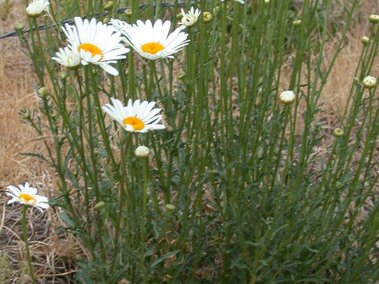
Herbaceous plant that reaches 1-3 feet tall. Emits a foul odor when crushed.
Stem
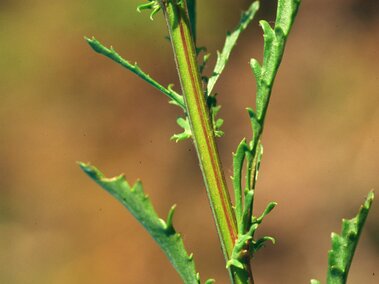
Unbranched or lightly branching near the tip, producing 1-2 flower heads. Can grow up to 3 feet tall.
Leaves
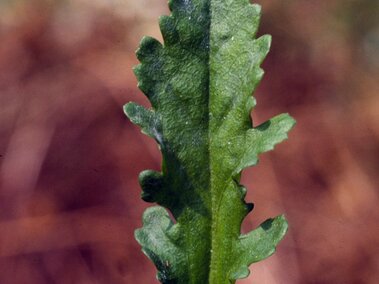
Leaves are alternately arranged and get smaller closer to the top of the stem. They are spoon-shaped, lobed, and toothed.
Flower
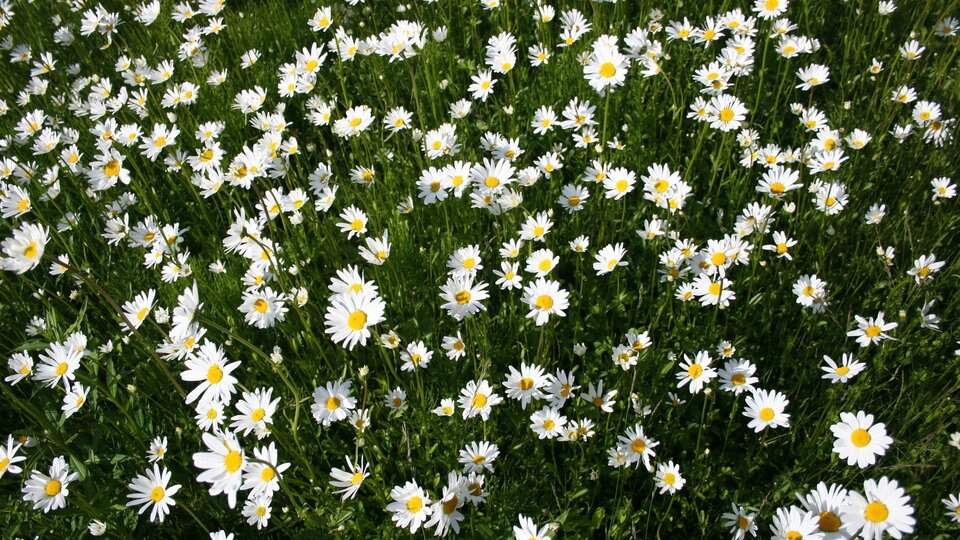
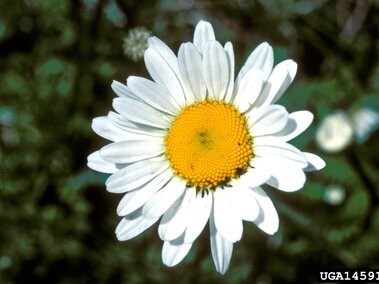
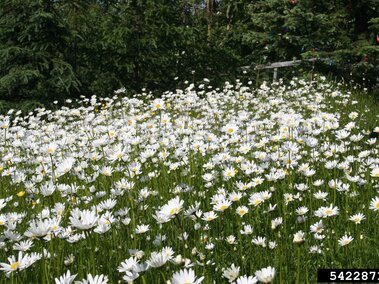
Flowers bloom throughout the summer and are white daisies with a yellow disk.
Seeds
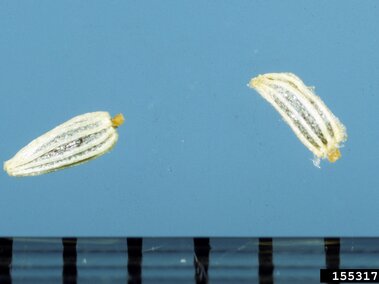
Seeds are small and may have up to 10 small ridges.
Photos
Where Does It Grow?
Oxeye daisy grows in grasslands, pastures, meadows, and roadsides. It can be found throughout all of North America. It grows in a variety of soil types but prefers heavy, moist soil. It prefers sun and has a low tolerance for shade. It is especially invasive in disturbed sites.
How Does It Spread?
Oxeye daisy was initially introduced as an ornamental plant but escaped cultivation through seed dispersal by humans and wildlife. Oxeye daisy is a prolific seed producers, with each flower head containing up to 200 seeds. Oxeye daisy can also spread vegetatively from roots and root fragments.
How Do I Control It?
Mechanical
Small infestations can be removed by hand. Ensure that you have removed as much of the root as possible, bagging the entire plant and disposing of it in a garbage receptacle. Mowing before flowering can help reduce infestations, but mowing during flowering is not recommended and can aid in seed dispersal.
Contact your county weed control authority to determine appropriate removal methods.
Cultural
Do not plant oxeye daisy for ornamental purposes. Carefully review wildflower seed packets and ensure oxeye daisy is not included. Plant a healthy community of tall perennial grasses that will shade oxeye daisy and prevent its establishment.
One way that invasive plant seeds and fragments can spread is in soil and through seed transport by people. You can help prevent invasive plant spread in a few simple steps:
REMOVE plants, animals and mud from boots, gear, pets and vehicles.
CLEAN your gear before entering and leaving the recreation site.
STAY on designated roads and trails.
PLANT non-invasive species.
PlayCleanGo: Stop Invasive Species in Your Tracks
Herbicide
Please refer to the 2026 Guide for Weed, Disease and Insect Management in Nebraska and/or contact your county weed control authority.
References and More Information
Colorado Department of Agriculture
Colorado State University Extension
North American Invasive Species Management Association Fact Sheet
Minnesota Department of Natural Resources
Montana State University Extension
U.S. Forest Service Southwest Region
University of Minnesota Extension
Washington State Noxious Weed Control Board