General Information
Species Name: Maclura pomifera
Also Known As: Hedge apple
Family: Moraceae (mulberries)
Growth Form: Tree
Life Span: Perennial
Flowering Date: May-June
Origin: Red River drainage (Texas, Oklahoma, Arkansas)
Toxic: Mildly toxic - milky sap in fruit can cause irritation to human skin upon contact
Noxious: No
Why Is It Invasive?
Osage orange can become invasive in disturbed areas and take over rangeland and pastures. It crowds out native species and prevents access to sunlight. The sticky, milky sap of Osage orange can cause irritation upon contact with skin.
What Does It Look Like?
General Characteristics
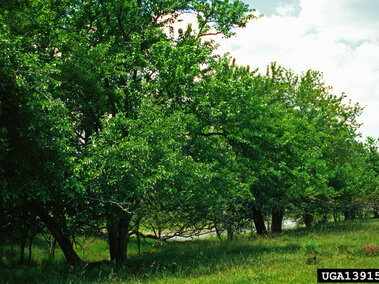
Short-trunked, densely branched, thorny tree.
Bark and Twigs
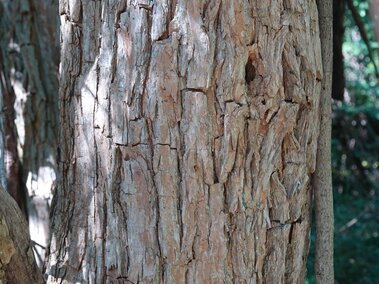
The bark is brown to orange in color and becomes deeply grooved with age. The bark often peels in long, thin strips and exposes bright orange wood. Twigs are green and turn light orange-brown with age. The twigs are slender and hairy, but become smooth as they mature, and have sharp thorns.
Leaves
Leaves are alternately arranged. They are 3-6 inches long and have complete margins. They have a dark green, shiny upper surface with paler undersides. There may be hairs along veins.
Flower
Flowers are small, greenish-yellow and grow in clusters (male) or spherical heads (female).
Fruit
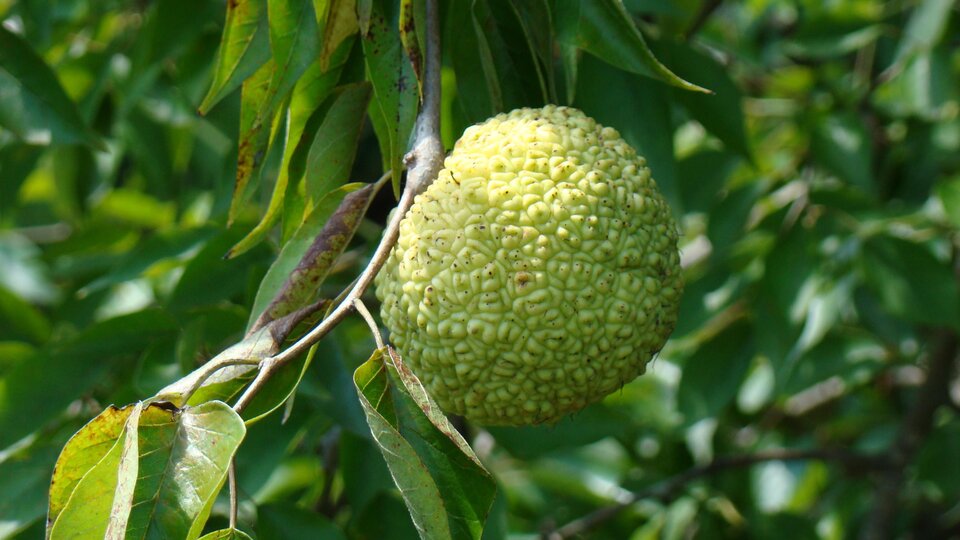
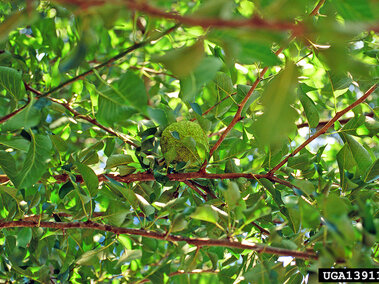
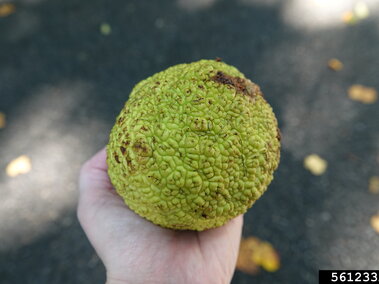
Fruits are large, yellow-green, and have a fleshy, rough texture resembling that of a brain. Numerous small, flat seeds are embedded in the fruit. Fruits have a pleasant orange or citrus smell.
Photos
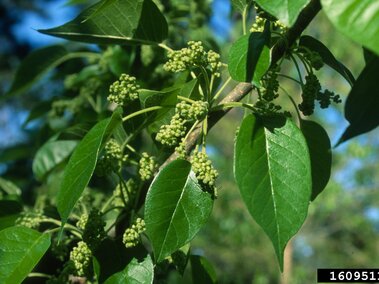
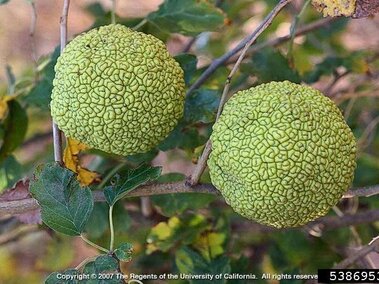
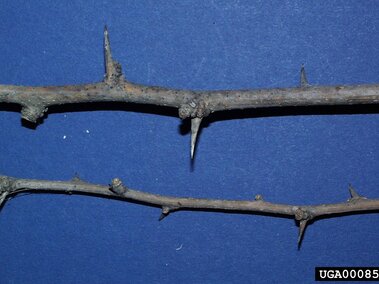
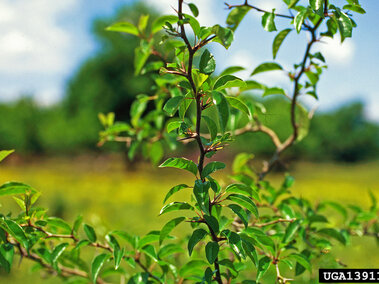
Where Does It Grow?
Osage orange can be found across the United States. It grows along fence rows, pastures, streams, forest edges, and disturbed sites. It does best in moist, well-draining soils and prefers full sun. Once established, it can tolerate a wide variety of climates.
How Does It Spread?
Osage orange spread via seeds which can be dispersed by birds and wildlife. Historically, Osage orange was spread intentionally by people for use as hedgerows or windbreaks.
How Do I Control It?
Mechanical
Selectively remove male trees on your property so that female trees will not receive pollen or fertilization. Remove fruit that has not fallen and dispose of it appropriately to prevent seed spread by wildlife.
Contact your county weed control authority to determine appropriate removal methods.
Cultural
Do not intentionally plant Osage orange. Contact Nebraska's Natural Resource Districts Tree Program for help finding a suitable alternative.
Herbicide
Please refer to the 2026 Guide for Weed, Disease and Insect Management in Nebraska and/or contact your county weed control authority.
References and More Information
Illinois Department of Natural Resources
Missouri Department of Conservation
New Mexico State University College of Agriculture, Consumer and Environmental Sciences
North Carolina State University Extension Gardener
University of Maryland Extension
USDA Natural Resources Conservation Service
University of Minnesota Urban Forestry Outreach and Research Nursery and Lab