General Information
Species Name: Rosa multiflora
Also Known As: Baby rose, Japanese rose, seven-sisters rose, rambler rose, multiflowered rose
Family: Rosaceae (Rose)
Growth Form: Shrub
Life Span: Perennial
Flowering Date: Early June
Origin: Eastern Asia
Noxious: No
Why Is It Invasive?
Multiflora rose grows quickly, spreading both vegetatively and through seed. It produces dense, thorny thickets that are impassable for humans, wildlife, and livestock and crowd out native vegetation.
What Does It Look Like?
General Characteristics
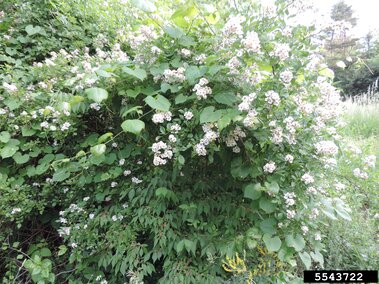
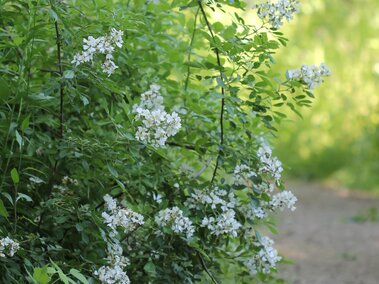
Bushy shrub with long, arching stems that grows in dense thickets.
Stems
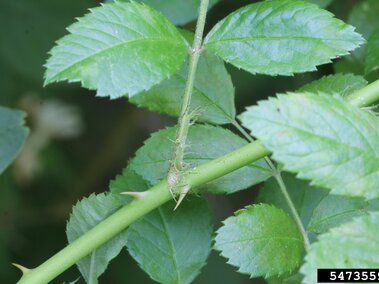
Stems are reddish or green in color and flexible. They are long and arching and covered in sharp, backward-curved thorns.
Leaves
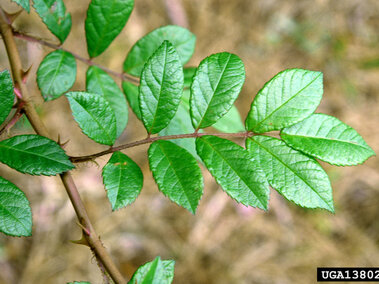
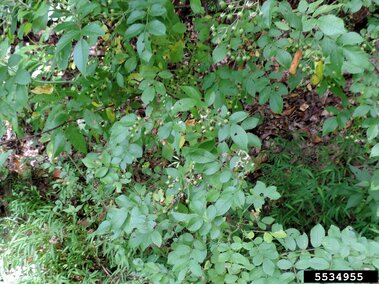
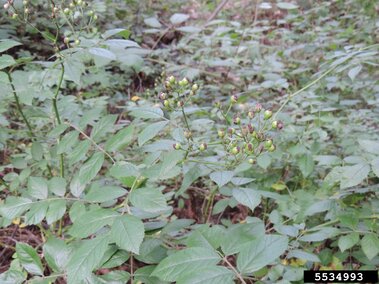
Leaves are alternately arranged, pinnately compound, and composed of 5-11 leaflets. Each leaflet is 1-2 inches long, finely toothed, and pale on the underside.
Flower
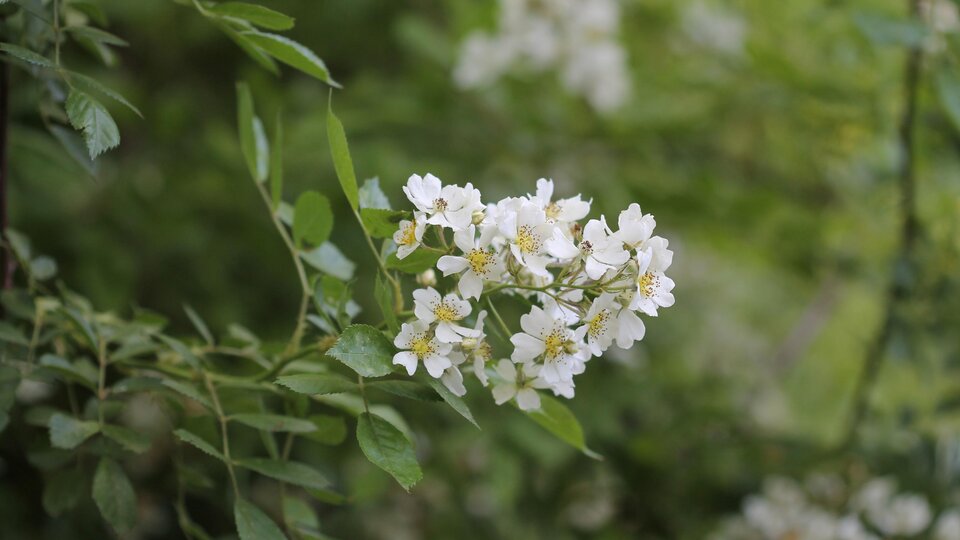
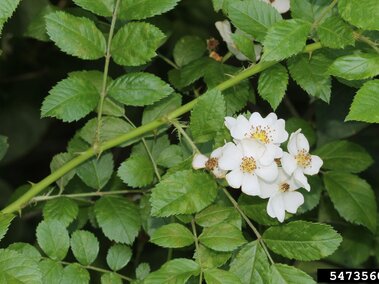
Flowers are white or pinkish, grow in clusters, and are rose scented. Flowers have 5 petals which have a notch in them, giving petals a heart-shaped appearance.
Seeds
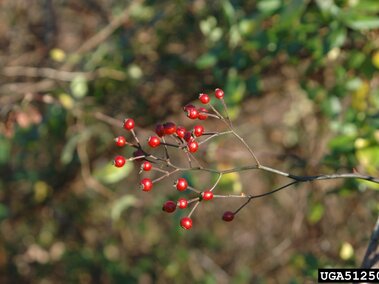
Seeds are contained in a small, brownish-red or red fruits, or rose hips.
Photos
Where Does It Grow?
Multiflora rose can be found across the contiguous United States along forest edges, in prairies, pastures, fields, and roadsides. It does best in full sun to light shade, but is tolerant of shaded areas. It will quickly invade disturbed sites.
How Does It Spread?
Multiflora rose spreads primarily by seed but can also spread vegetatively. Arching stems that make contact with the ground can take root and form a new plant. Seeds can be dispersed by birds and other wildlife and can remain viable for 10-20 years. Each plant can produce up to 500,000 seeds annually.
How Do I Control It?
Mechanical
Seedlings can be removed by hand and is best done when the soil is moist. When handling, be sure to wear a thick clothing and gloves to avoid injuring yourself on thorns. Cutting and mowing several times annually over 2-4 years can help reduce the number of plants.
Contact your county weed control authority to determine appropriate removal methods.
Cultural
Do not plant multiflora rose as an ornamental plant. Consider planting a native alternative.
One way that invasive plant seeds and root fragments can spread is in soil. Sometimes plants are planted purposefully. You can prevent the spread of invasive plants.
REMOVE plants, animals and mud from boots, gear, pets and vehicles.
CLEAN your gear before entering and leaving the recreation site.
STAY on designated roads and trails.
PLANT non-invasive species.
PlayCleanGo: Stop Invasive Species in Your Tracks
Herbicide
Please refer to the 2026 Guide for Weed, Disease and Insect Management in Nebraska and/or contact your county weed control authority.
References and More Information
Connecticut Invasive Plant Working Group
Iowa State University Extension and Outreach
Minnesota Department of Agriculture
Minnesota Department of Natural Resources
National Invasive Species Information Center
North Carolina Extension Gardener
University of Maryland Extension