General Information
Species Name: Humulus japonicus
Also Known As: Hooked hair hops
Family: Cannabaceae (hemp)
Growth Form: Vine
Life Span: Annual
Flowering Dates: July-August
Origin: Eastern Asia
Noxious: No
Why Is It Invasive?
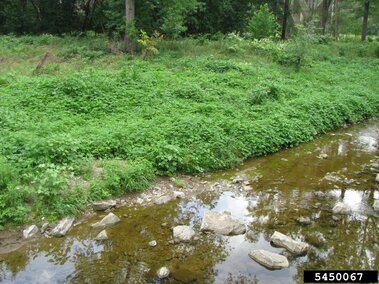
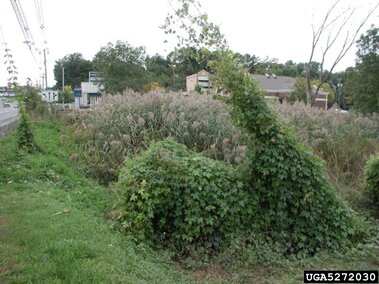
Japanese hops forms dense mats, crowding out native vegetation and outcompeting native plants for sun and space.
What Does It Look Like?
General Characteristics
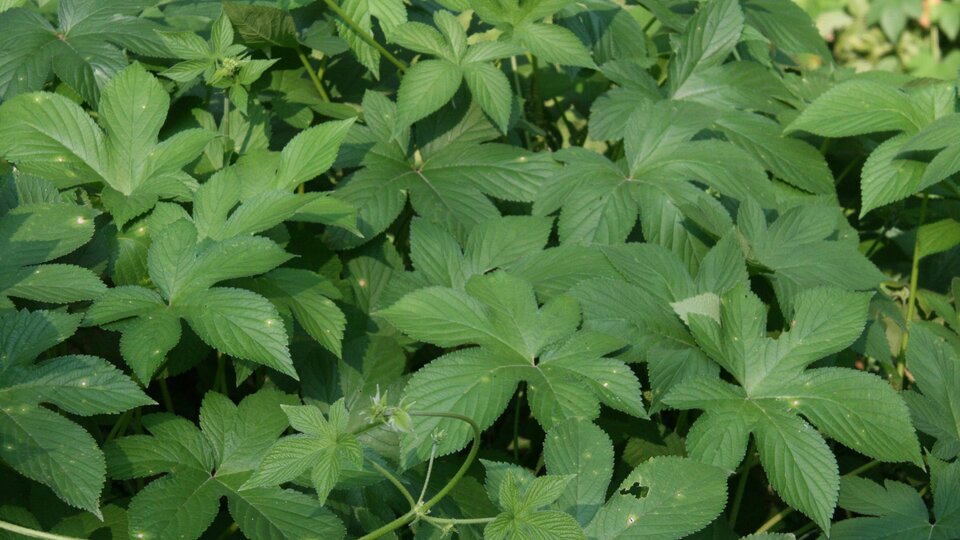
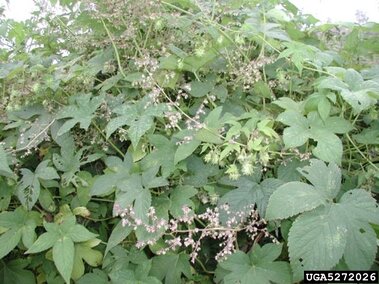
Sprawling or climbing vine with lobed leaves.
Flowers
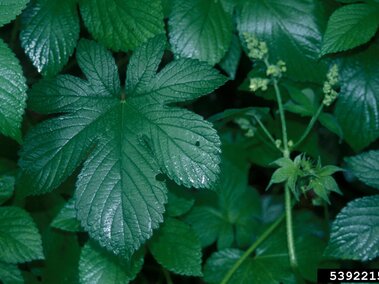
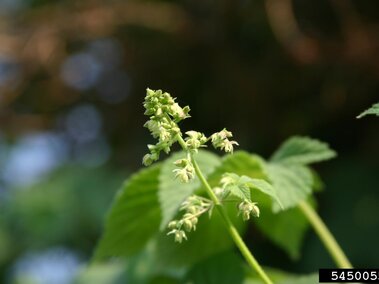
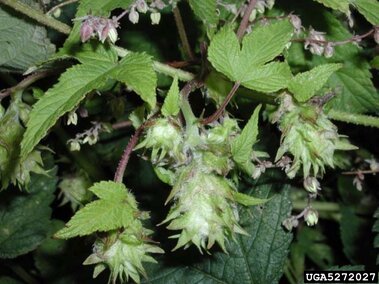
Flowers are small, green, and have five petals. Female flowers grow in spike-like clusters that hang down and male flowers grow in cone-like clusters that point up.
Leaves
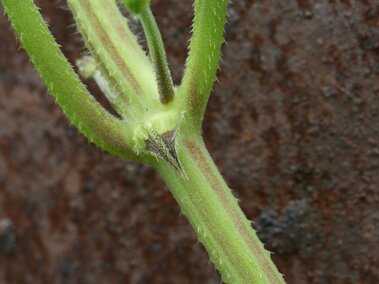
Leaves are oppositely arranged about the stem and have 5-7 lobes. They have toothed margins, are 2-6 inches long and have small, hooked hairs.
Stems
Stems are sprawling, herbaceous, and can grow up to 35 feet long.
Fruits
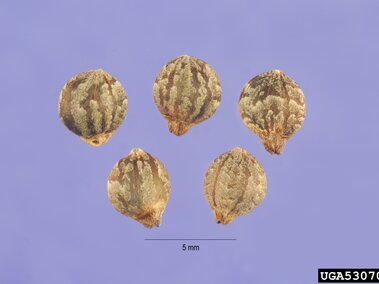
Single seeds are contained in a yellow-brown ovoid hard-covered seed.
Photos
Where Does It Grow?
Japanese hops is most successful in sunny areas in moist fertile loam soil. However, it can be successful in many soil types, invading riparian areas, disturbed sites, grasslands, hay fields, and forest edges. Japanese hops is mostly present in the eastern United States, but is encroaching further into the Midwest.
How Does It Spread?
Japanese hops reproduces by seed. Seeds can be dispersed through natural vectors like wind and water, or through human vectors by attaching to clothes, pets, and equipment.
How Do I Control It?
Mechanical
Small infestations can be controlled with persistent hand-pulling. Ensure that the entire root has been removed and continue hand-pulling until consistent colder weather. Flowering stems or stems with seeds should be bagged and disposed into a waste receptacle.
Mowing and cutting can also be successful if started in early spring and done routinely until consistent colder weather.
Contact your county weed control authority to determine appropriate removal methods.
Cultural
Do not intentionally plant Japanese hops. One way that invasive plant seeds and root fragments can spread is in soil. Sometimes plants are planted purposefully. You can prevent the spread of invasive plants.
REMOVE plants, animals and mud from boots, gear, pets and vehicles.
CLEAN your gear before entering and leaving the recreation site.
STAY on designated roads and trails.
PLANT non-invasive species.
PlayCleanGo: Stop Invasive Species in Your Tracks
Herbicide
Please refer to the 2026 Guide for Weed, Disease and Insect Management in Nebraska and/or contact your county weed control authority.
References and More Information
Illinois Nature Preserve Commission
Minnesota Department of Agriculture
Missouri Department of Conservation
New York Invasive Species Information
North Carolina State University Extension Gardener