
General Information
Species Name: Haemaphysalis longicornis
Family: Ixodidae (mites and ticks)
Life Cycle: Complete (egg>larvae>nymph>adult)
Activity: Adults emerge in Nebraska mid-May through early August.
Origin: China
Why Is It Invasive?
Asian longhorned tick is self-cloning, and females can produce thousands of eggs annually. This parasite can survive on a wide variety of hosts including humans, domestic pets, livestock, and common wildlife. Hundred of individuals can be found on a host. Asian longhorned ticks can carry zoonotic diseases that can transfer to humans including Lyme disease and Anaplasmosis. They are also know to carry the parasite Theileria, causing illness or death in cattle.
What Does It Look Like?
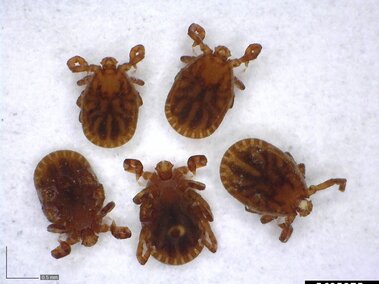
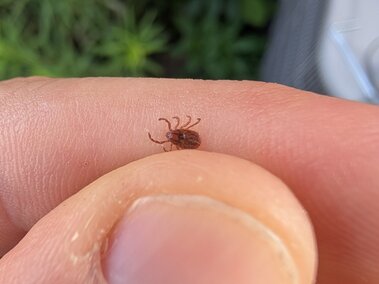
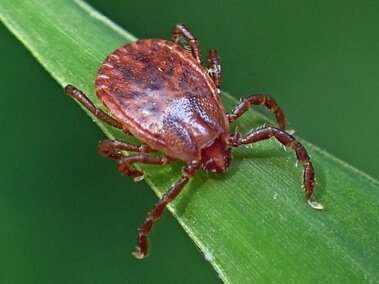
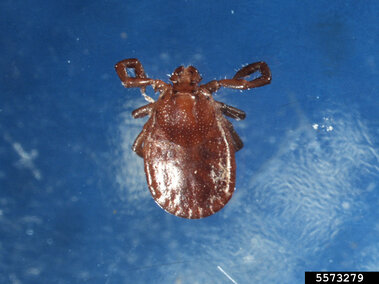
Asian longhorned tick looks similar from its larval to adult stage, except that larvae only have six legs, whereas nymphs and adults have 8. Asian longhorned ticks have no distinct markings and are a reddish-brown in color. Adults are about 0.1 inches long, with nymphs and larvae being even smaller.
Photos
Where Do They Live?
Asian longhorned ticks are most commonly found in grassy and woody areas. Their current distribution in the United States is primarily on the eastern half of of the nation, but it has been documented as close to Nebraska as Kansas. There have been no confirmed sightings of Asian longhorned tick in Nebraska.
Hosts of Asian longhorned ticks include humans, domestic cats and dogs, livestock, horses, chickens, raccoons, squirrels, rabbits, skunks, and many more.
How Do They Spread?
Asian longhorned ticks were first identified in North America in 2013. As with other ticks, Asian longhorned ticks can be spread on migrating birds they use as hosts or during the transport of infested livestock and wildlife. They can also be spread via human activities by attaching to people, pets, clothing, and equipment.
Control
It is best to prevent tick bites by taking some precautions before spending time outdoors during high tick-infestation times. Use EPA registered insect repellants containing DEET on exposed skin and clothing, following instructions carefully. Avoided heavily wooded or bushy areas and walk on trails. Make sure pets are on a veterinarian approved tick preventative program.
Upon returning indoors, check yourself, pets, and gear for ticks and promptly remove them if necessary. Remove ticks with pointy tweezer, grasping near the ticks head at the surface of the skin and pulling straight out. Monitor bite site for several days afterward.
Cattle and livestock owners should perform tick checks regularly, thoroughly inspecting animals for signs of tick infestation.
Keep grasses on your property mowed, remove areas of full, high vegetation, and remove branch piles on your property promptly.
What Do I Do if I Find Them?
If you find an Asian longhorned tick on your body or on your domestic animal, safely remove it as soon as possible. Dispose of a live tick by submersing it in alcohol, placing it in a sealed bag or container, tightly wrapping it in tape, or flushing it down the toilet.
Report tick sightings to the Tick, Tag, Go Program.
References and More Information
Michigan Department of Agriculture and Rural Development
Nebraska Department of Agriculture
Nebraska Department of Health and Human Services Vector-Borne Disease Program
Pennsylvania Department of Environmental Protection
USDA Animal and Plant Health Inspection Service
University of Kentucky Department of Entomology
University of Nebraska Institute of Agricultural and Natural Resources