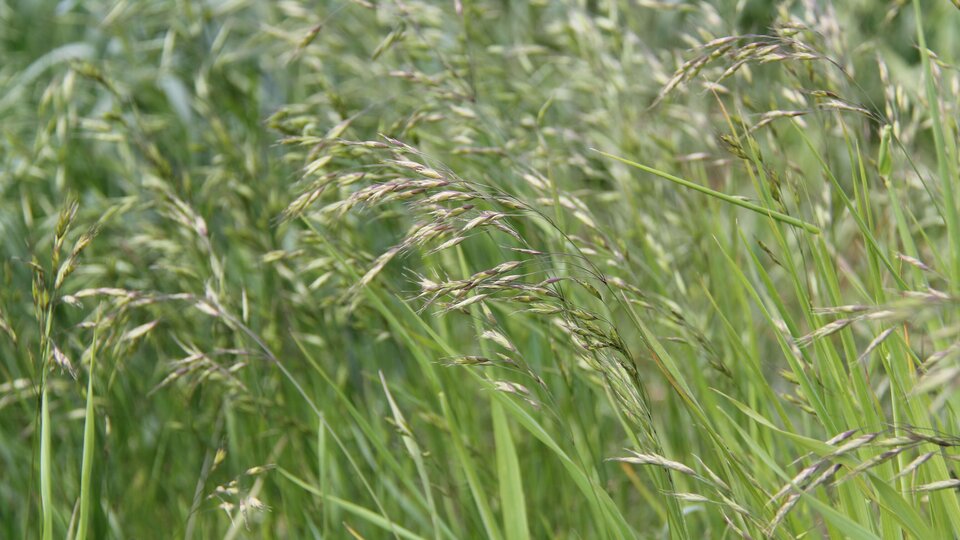
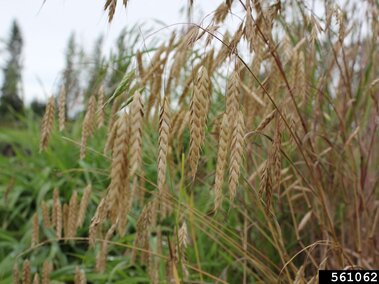
Credit: Sarah Schumacher, Bugwood.org
General Information
Species Name: Bromus japonicus
Family: Poaceae (Grass)
Growth Form: Grass
Life Span: Annual
Flowering Dates: Late Summer
Origin: Eurasia
Noxious: No
Why Is It Invasive?
Japanese brome outcompetes native grasses and plants and invades open spaces and disturbed sites.
What Does It Look Like?
General Characteristics
Japanese brome is a bunched grass that can grow up to 4 feet tall.
Flowers
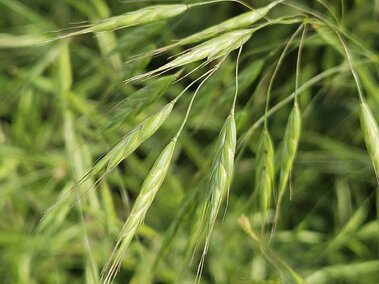
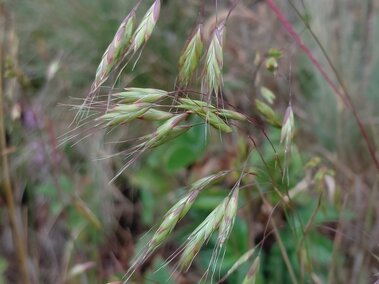
Flowers are bunched in spikelets at the top of stems and are green and red before maturing and becoming tan. Spikelets may be bent or twisted.
Leaves
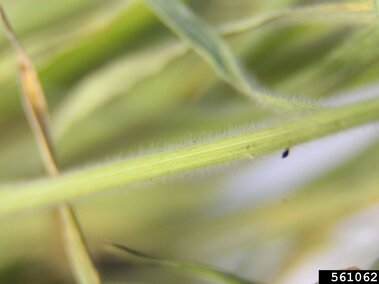
Leaves are both basal and along the stem and have small hairs along them. They are slender and long.
Stems
Stems are upright or spreading, slightly bent at the base, and have swollen, brownish nodes at the base.
Photos
Where Does It Grow?
Japanese brome grows in clay, silt and sand soil types in rangeland, pastures, croplands, and disturbed sites. It has been identified in every state within the contiguous United States.
How Does It Spread?
Japanese brome can be spread through contaminated hay and by attaching to clothes, equipment, pets, and shoes. Seeds do not fall far from the parent plant but may also be spread by birds and other wildlife.
How Do I Control It?
Mechanical
Contact your county weed control authority to determine appropriate removal methods.
Cultural
Japanese brome is highly palatable to livestock. Graze livestock heavily in the early summer to avoid seeding.
Use only weed free certified hay.
One way that invasive plant seeds and root fragments can spread is in soil. Sometimes plants are planted purposefully. You can prevent the spread of invasive plants.
REMOVE plants, animals and mud from boots, gear, pets and vehicles.
CLEAN your gear before entering and leaving the recreation site.
STAY on designated roads and trails.
PLANT non-invasive species.
PlayCleanGo: Stop Invasive Species in Your Tracks
Herbicide
Please refer to the 2026 Guide for Weed, Disease and Insect Management in Nebraska and/or contact your county weed control authority.
References and More Information
Alberta Invasive Species Council
Missoula County Department of Ecology and Extension