General Information
Species Name: Columba livia
Also Known As: Rock dove
Family: Columbidae (Pigeons/Doves)
Origin: Eurasia and northern Africa
Why Is It Invasive?
Rock pigeons have become common pests in urban areas. They establish nests on buildings and can ruin and damage infrastructure with their acidic feces. Feces can also carry diseases which can transfer to people. They are closely associated with people and urban landscapes.
Identification and Ecology
Physical Description
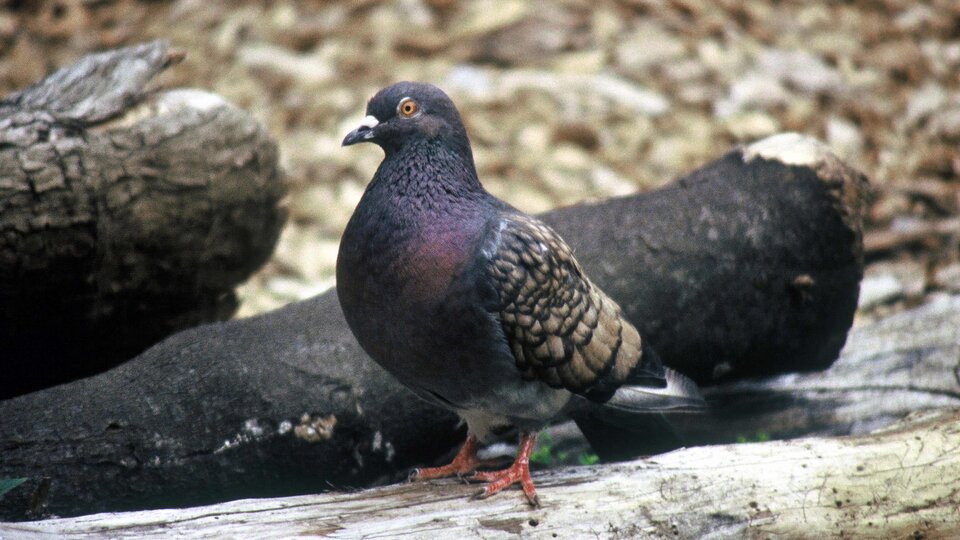
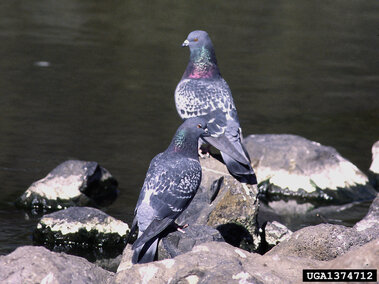
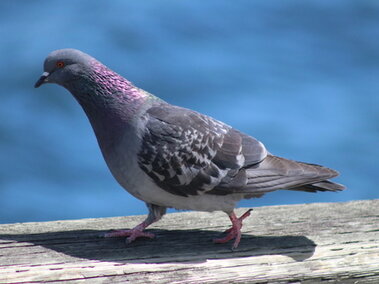
Rock pigeons have small heads, round bodies, and short wings. They can reach up to 13 inches in length. Their bodies are light gray and they have a darker head and breast, iridescent necks, and two black bands across their wings.
Rock pigeons make soft coos.
Life Cycle
Rock pigeons can live for up to 6 years in the wild. Rock pigeons can raise up to 6 clutches every year with 1-3 eggs per clutch. Incubation lasts 16-19 days and fledglings leave the nest around 1 month of age.
Behavior
Rock pigeons mate for life and mate year round. They feed in flocks, foraging on the ground and eating berries in trees. They build flimsy platform nests from twigs and straw on covered areas like window ledges and in barns.
Diet
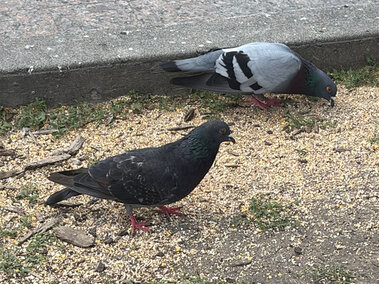
Rock pigeons that don't live in cities will consume seeds, grains, and sometimes berries. In cities, rock pigeons largely live on human foods such as popcorn, food crumbs, and other foods left behind by people.
Habitat
House sparrows will live in urban, suburban, and rural environments.
Photos

How Do They Spread?
Rock pigeons were initially introduced to North America by European settlers in the 1600s to be used for domesticated purposes including to send messages. Since its introduction, they have escaped captivity through intentional and accidental routes and naturally expanded their range in North and Central America.
Distribution
Rock pigeons are widespread across the United States and North and Central America.
Control
Cultural
Refrain from feeding rock pigeons or leaving food out that may attract them. Clean the surrounding area after eating outside, removing crumbs and other debris, and dispose of food and food containers in tightly closed waste bins.
Mechanical
Modify habitats around your home to prevent rock pigeons from nesting. Use mesh netting with 1/2 inch or smaller openings to close access to lofts, barns, and other open areas or alongside buildings with ledges and other nesting sites. The use of "porcupine spikes" on flat edges can help prevent pigeons from nesting their. When building, slope exterior surfaces to discourage rock pigeons from nesting there.
Persistently destroy and dispose of established nests. Frightening devices are typically not successful long-term as rock pigeons will become accustomed to noises, flashes, and predator statues.
References and More Information
Connecticut Department of Energy and Environmental Protection
Missouri Department of Conservation
Texas Invasive Species Institute