General Information
Species Name: Anoplophora glabripennis
Also Known As: ALB, starry sky beetle
Family: Cerambycidae (Longhorn beetles)
Life Cycle: Complete (egg > larvae > pupae > adult) Eggs hatch in small egg niches in trees and then burrow under the bark and into the tree as larvae, where they overwinter.
Activity: Adults emerge in in late spring or early summer
Origin: Asia
Why Is It Invasive?
ALB larvae bore deep into trees, causing damage from which they cannot recover. This can cause safety hazards from falling branches, limbs, and entire trees as the tree dies. ALB has a wide host range with maple, boxelder, elm, horse chestnut, buckeye and birch some of the most ideal hosts for them in North America.
What Does It Look Like?
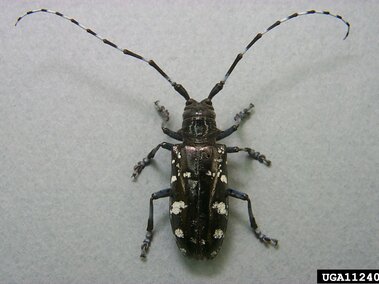
Adult Beetle
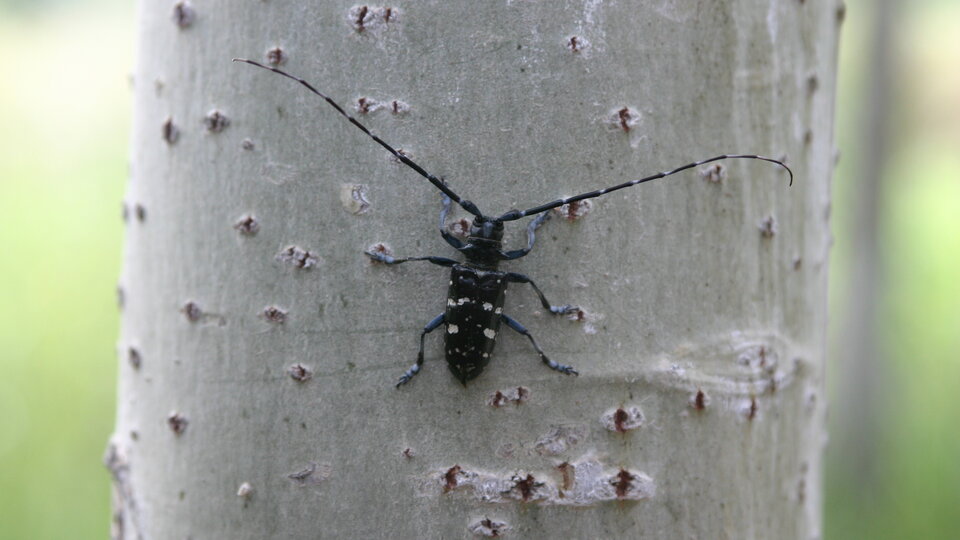
Adult beetles are large, with bodies that range from 1-1.5 inches long and antennae that can be as long as 3 inches. They have shiny, black bodies that with irregular white spots and blue tinted feet. Antennae have alternating and black and blue-tinted white bands.
Larval Stage
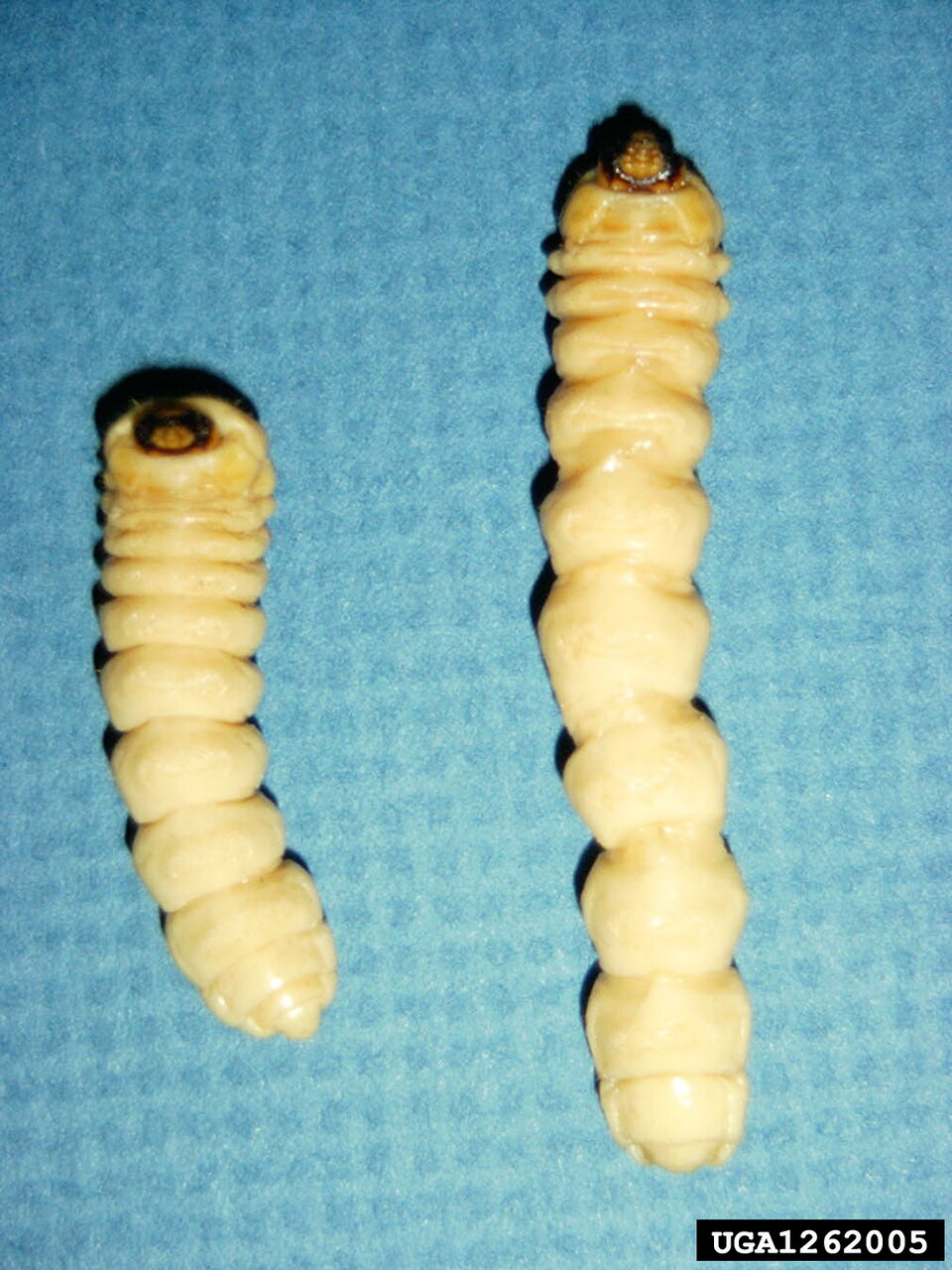
In the larval stage, ALB can reach 2.5 inches long and are creamy white. They have a brown hardened "plate" on the first segment of their body.
Pupae
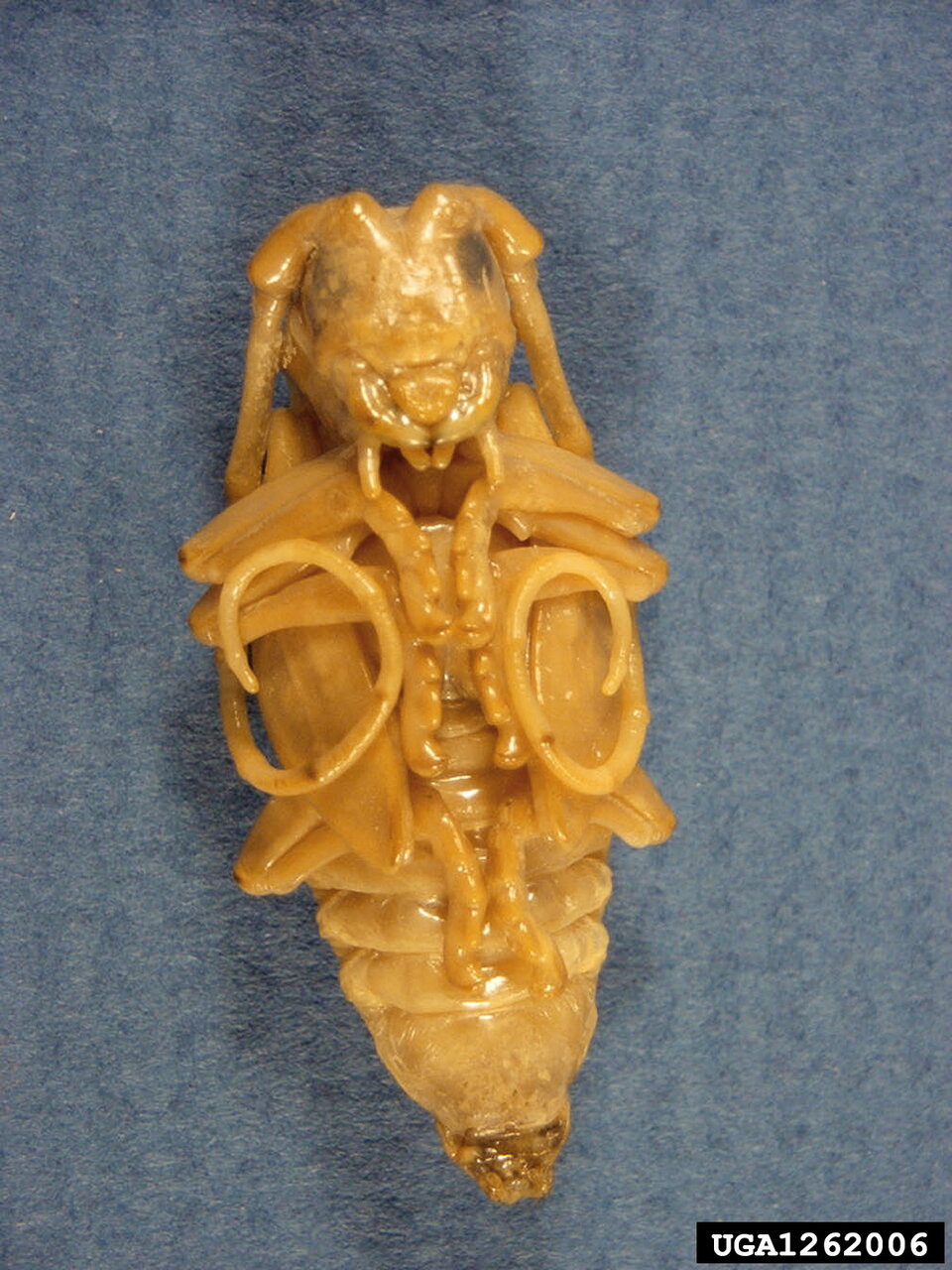
Pupae are typically not seen, as they are deep inside the wood of trees where they create tunnels that can only be seen if the tree is dissected.
Eggs
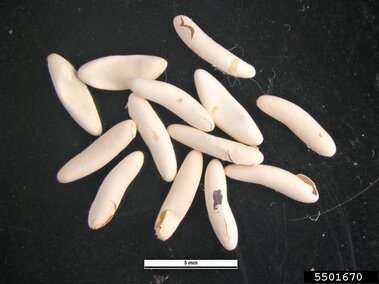
Eggs are small, white, and cylindric like a grain of rice. They can be found in egg caches which the adult female has bored into a tree.
Photos
Credit: Pest and Diseases Image Library (PaDIL) , Bugwood.org
ALB Eggs
Credit: Michael Bohne, USDA Forest Service, Bugwood.org
ALB Larvae
Credit: Michael Bohne, USDA Forest Service, Bugwood.org
ALB Pupa
What Are the Signs of Infestation?
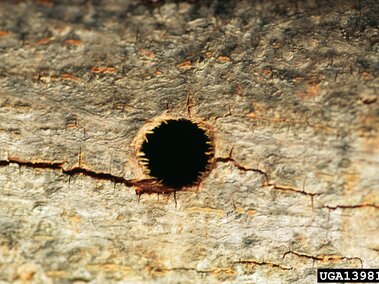
Exit Holes
As adults emerge after overwintering, exit holes 1/2 wide and at least 1 inch deep are created. Host trees will have exit holes in the late spring and early summer as adults emerge.
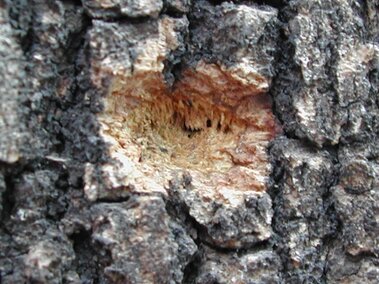
Egg Laying Sites
Round, 1/2 inch wide depressions will be on the bark of host trees that serve as egg nesting sites.
Sap Discharge
Sap may ooze from exit holes and egg laying sites.
Sawdust
Sawdust may collect at the base of trees as adults emerge or larvae burrow into trees.
Unhealthy Tree
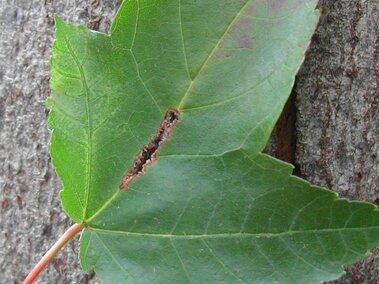
Dropping of limbs or branches and leaves that turn yellow prematurely or have chewed veins may indicate ALB infestation.
Tunneling
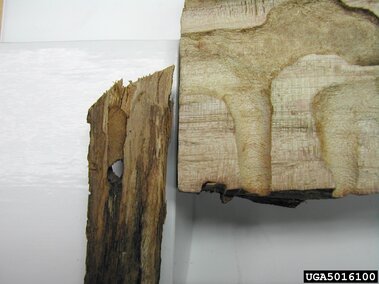
Tunnels in the wood may be seen on cut or fallen branches and firewood.
Photos
Credit: Steven Katovich, Bugwood.org
Exit Hole
Credit: Pennsylvania Department of Conservation and Natural Resources - Forestry , Bugwood.org
Egg Laying Site
Credit: Pennsylvania Department of Conservation and Natural Resources - Forestry , Bugwood.org
Leaf Damage from ALB
Credit: Pennsylvania Department of Conservation and Natural Resources - Forestry , Bugwood.org
ALB Larvae Tunnels
Where Do They Live?
ALB will live wherever their host species are available. Their preferred host species include maples, elms, buckeyes, horse chestnuts, and birches. In the United States, ALB has been documented in New York, New Jersey, Massachusetts, Ohio, North Carolina, and Illinois.
How Do They Spread?
ALB spread through contaminated firewood that is moved from one location to another. It can also spread via other wooden material, like pallets, during transport.
What Do I Do if I Find Them?
If you see an ALB or signs of ALB infestation, report it to the Nebraska Plant Pest Program.
How Do I Control Them?
Cultural
Don't move or transport firewood from infested areas to reduce the spread of ALB. Firewood can harbor larvae and facilitate the spread of the pest. Consider planting tree species that are not susceptible to ALB when planting new trees on your property.
Chemical
Please refer to the 2026 Guide for Weed, Disease and Insect Management in Nebraska, contact your county weed control authority, or find a certified Nebraska arborist.
References and More Information
Connecticut Department of Energy and Environmental Protection
Minnesota Department of Agriculture
National Invasive Species Information Center
Nebraska Department of Agriculture Plant Health
New York State Department of Environmental Conservation
Ohio State University Extension
USDA Animal and Plant Health Inspection Service
USDA Forest Service Eastern Region and University of Vermont
USDA Forest Service Northeastern Area State and Private Forestry
University of Kentucky Department of Forestry and Natural Resources