General Information
Species Name: Passer dometicus
Family: Passeridae (Old World Sparrows)
Origin: Eurasia and northern Africa
Why Is It Invasive?
House sparrows outcompete native birds and are territorial and aggressive towards other birds, sometimes directly attacking them. They may damage structures by building nests in locations like building crevices, rain gutters, or exhaust fans and vents. They may also prevent recreational bird watching by directly attacking native species at baths and feeders.
Identification and Ecology
Physical Description
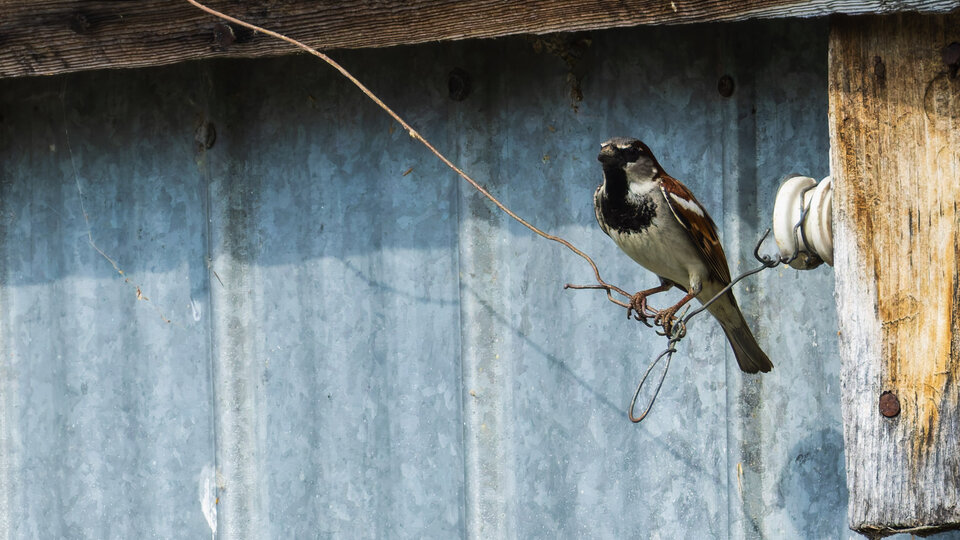
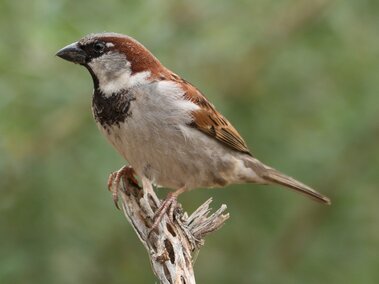
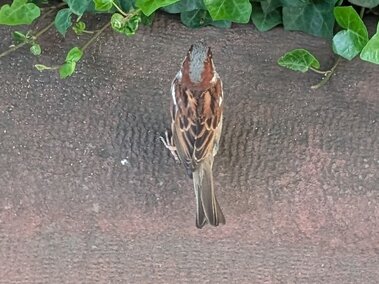
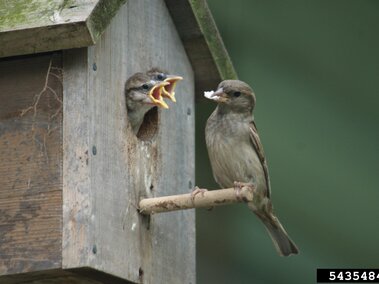
Males have chestnut backs and chestnut wings with black patterning, a gray crown, black eyes and black bills. Their heads are black and they have a whitish gray cheek. Their bellies are grayish tan and they have a black throat. Females are similar but have darker wings, a yellowish bill, an a pale eyebrow.
House sparrow calls are shrill, monotonous, noisy, and chirpy.
Life Cycle
House sparrows can live up to 5 years. Females can produce 2-3 broods per year, laying 2-7 eggs per brood. The incubation period lasts 10-13 and fledglings leave the nest at 14-17 days.
Behavior
House sparrow nest May through July and create nests in small, tight spaces. They will often breed in small colonies. House sparrows are known to direct attack other birds and be very territorial. They will forage by hopping on the ground and will crowd human occupied spaces scavenging for crumbs of food.
Diet
A house sparrow diet mostly consists of seeds but may also include insects or crumbs of human food.
Habitat
House sparrows will live in urban, suburban, and rural environments.
Photos
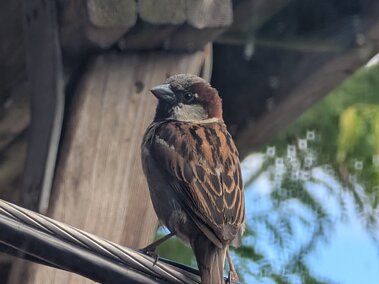
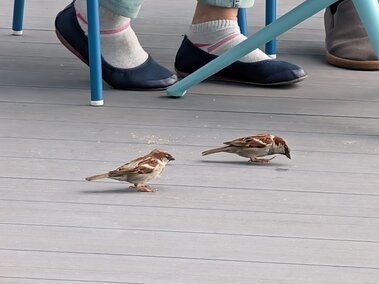
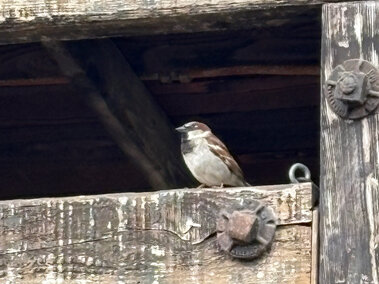
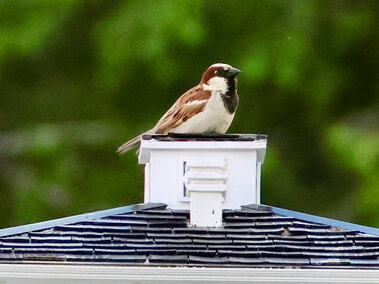
How Do They Spread?
House sparrows were initially introduced to the United States in the 1800s to control pests, unsuccessfully. They spread throughout the continent through natural expansion after several intentional introductions.
Distribution
House sparrows are widespread across the United States and North and Central America.
Control
Cultural
Modify habitats around your home to prevent house sparrow nesting by keeping lawns shortly cut and gardens well managed. If you feed birds, avoid feeding millet and shelled sunflower that house sparrows prefer.
Mechanical
Persistently destroy and dispose of established nests. Repair holes greater than 3/4 inch, as sparrows can enter small opening. Use flat signs on buildings to avoid providing roosting sites and screen in heaves. Use ledge protectors covering entire ledges.
Frightening devices such as tape, balloons, birds of prey statues, and alarm calls may work temporarily but are usually not viable long term solutions as the house sparrows become accustomed to them. Use of avicides is not recommended since other native birds can come into contact with them.
References and More Information
All About Birds Cornell Lab of Ornithology
Illinois Department of Natural Resources
Missouri Department of Conservation