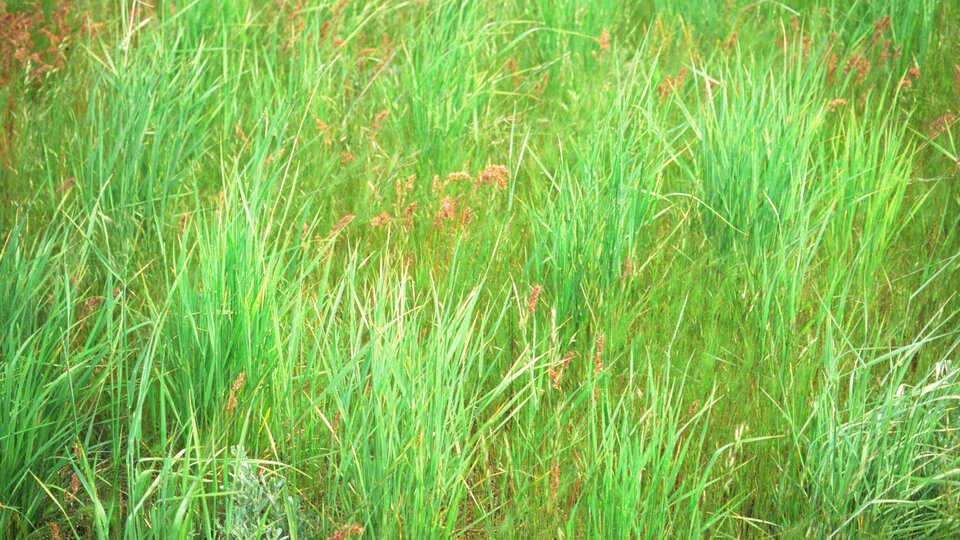
General Information
Species Name: Thinopyrum intermedium
Family: Poaceae (Grass)
Growth Form: Grass
Life Span: Perennial
Flowering Dates: June-August
Origin: Eurasia
Noxious: No
Why Is It Invasive?
Intermediate wheatgrass can dominate in grass communities and can live up to 50 years, slowly spreading vegetatively. It can spread into neighboring plant communities and disrupt ecosystems.
What Does It Look Like?
General Characteristics
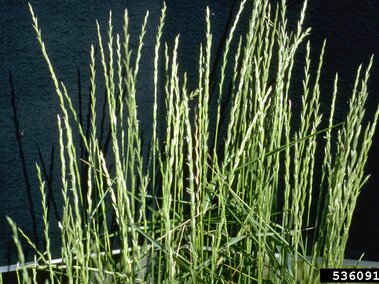
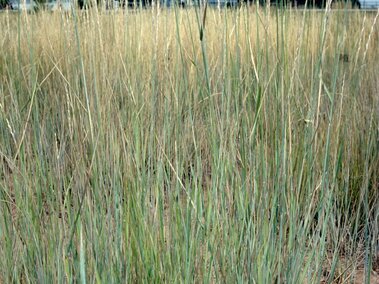
Bunched grass that can grow 3-4 feet tall.
Flowers
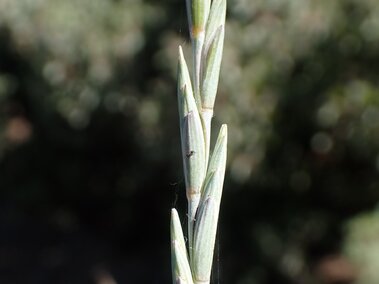
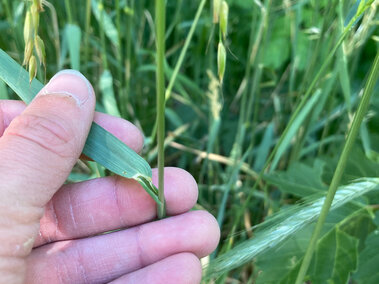
Spikelets are erect and 4-8 inches long
Leaves
Leaves may have small hairs and are rolled.
Stems
Stems are upright, bunched, and bluish-green
Photos
Where Does It Grow?
Intermediate wheat grass grows in pastures, agricultural fields, roadsides, and disturbed sites. It is widely dispersed across North America.
How Does It Spread?
Intermediate wheat grass was initially introduced to the United States in the 1930s to be used as a forage crop, as it is highly palatable to livestock. Since then it has continued to be introduced as a foraging product. It spreads naturally through a creeping root system and very little via seed distribution. Intermediate wheatgrass vegetative spread is slow, but this plant can live more than 50 years, permitting it ample time to expand its range.
How Do I Control It?
Mechanical
Contact your county weed control authority to determine appropriate removal methods.
Cultural
Intermediate wheatgrass is highly palatable to livestock. Utilize grazing to control and potentially eradicate intermediate wheatgrass, as healthy stands will not survive extensive grazing.
Use only weed free certified hay.
One way that invasive plant seeds and root fragments can spread is in soil. Sometimes plants are planted purposefully. You can prevent the spread of invasive plants.
REMOVE plants, animals and mud from boots, gear, pets and vehicles.
CLEAN your gear before entering and leaving the recreation site.
STAY on designated roads and trails.
PLANT non-invasive species.
PlayCleanGo: Stop Invasive Species in Your Tracks
Herbicide
Please refer to the 2026 Guide for Weed, Disease and Insect Management in Nebraska and/or contact your county weed control authority.
References and More Information
Nebraska Weed Control Association
Nebraska Weed Free Forage Program
USDA NRCS Intermediate Wheatgrass: An Introduced Conservation Grass for Use in Montana and Wyoming