General Information
Species Name: Streptopelia decaocto
Family: Columbidae (Pigeons and Doves)
Origin: Eurasia
Why Is It Invasive?
Eurasian collared doves successfully colonize areas and reproduce quickly, potentially displacing native birds. These birds succeed well in rural and suburban areas and can become a nuisance due to noisiness and defecation. They have been documented damaging crops and causing minor damage to infrastructure with nests and defecation. Eurasian collared doves can spread disease-causing parasite Trichomonas gallinae to humans and pets.
Identification and Ecology
Physical Description
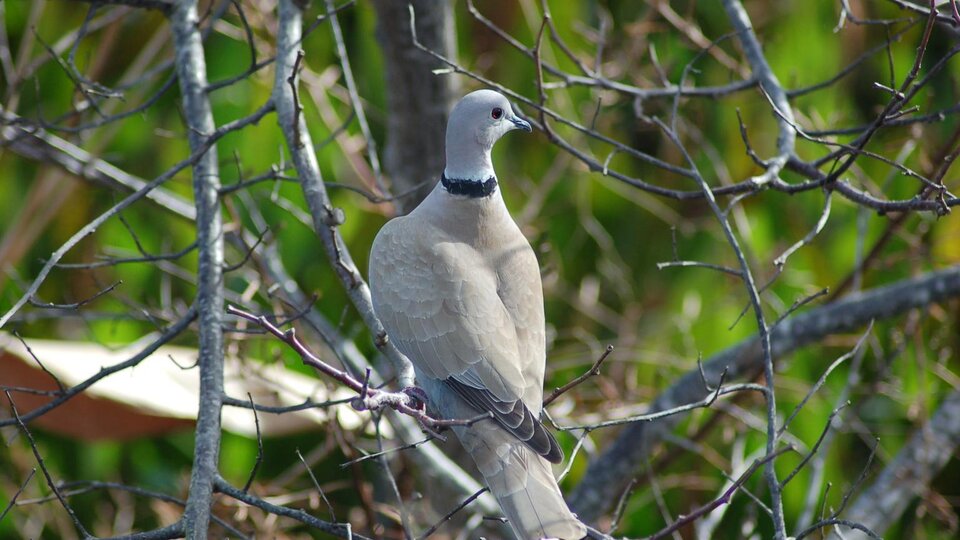
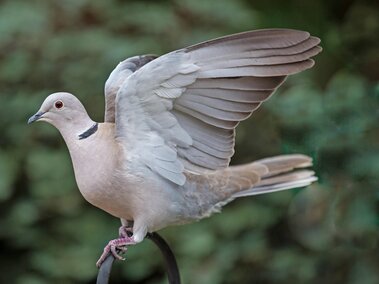
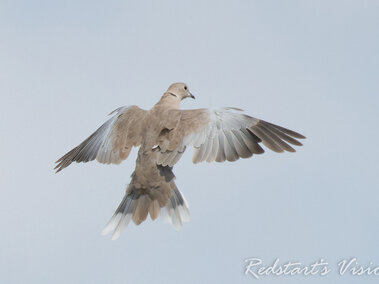
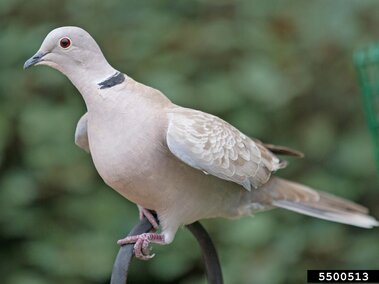
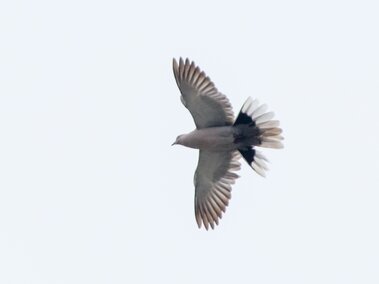
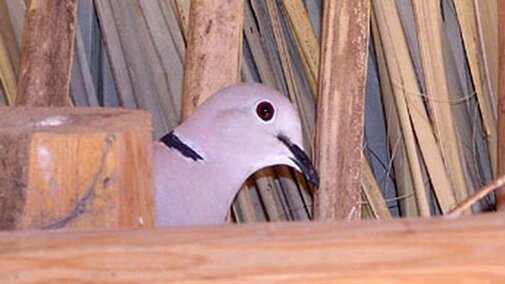
Eurasian collared doves are chunky, grayish tan birds that have a black "collar" on the upper back for which they are named. They have whiteish patches at the end of their tail feathers and have black-tipped wings. They have short legs and heads and reach 11-12 inches in length. Eurasian collared doves have black bills and deep red eyes.
The call of the Eurasian collared dove is three notes, sounding like a somewhat deep "cuh-COO-coo" and is often repeated incessantly.
Life Cycle
Eurasian collared doves live 1-3 years and leave their nests as fledglings around 17 days old. Clutches typically contain 1-2 eggs but can have as many as 6. Incubation lasts 14-19 days. Eurasian collared doves can have as many as 3 broods per year.
Behavior
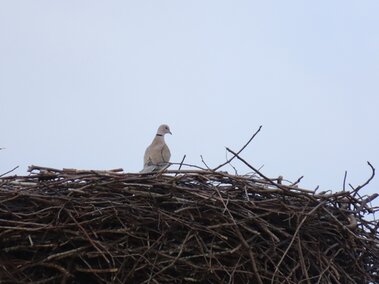
Eurasian collared doves roost communally, often in bars, trees, and city parks, building nests of twigs, grasses, and other materials. Eurasian collared doves are very territorial and will engage in fierce fights with rivals. They are monogamous.
Diet
Forage on the ground for seeds, grains, and will consume berries and small invertebrates.
Habitat
Eurasian collared doves can be found in both rural and suburban areas. They avoid heavily forested areas and highly urbanized areas.
Photos
How Do They Spread?
Eurasian collared doves were originally identified in southern Florida in the 1980s. This population dispersed from the Caribbean after an introduction event in the Bahamas. By the turn of the 21st century, they had reached as far west as Oregon. These birds have spread of their own accord since arriving in the United States and may have also been introduced in some areas for hunting purposes.
Distribution
Eurasian collared doves are widespread across the United States.
Control
Cultural
Avoid holding or touching Eurasian collared doves to protect yourself against potential disease.
Mechanical
Eurasian collared doves can be harvested year-round in Nebraska. Contact your local government authority to determine appropriate harvesting methods.
References and More Information
Alabama Department of Conservation and Natural Resources
Invasive Species List of California
Missouri Department of Conservation
Nebraska Game and Parks Commission