General Information
Species Name: Lepidium draba
Also Known As: whitetop, whiteweed, heartpod hoarycress
Family: Brassicaceae (Mustard)
Growth Form: Forb
Life Span: Perennial
Flowering Dates: April-July
Origin: Eurasia
Noxious: Yes; hoary cress can be mildly toxic when consumed in large quantities by livestock. Milk or meat may be tainted up to 1 week after exposure.
Why Is It Invasive?
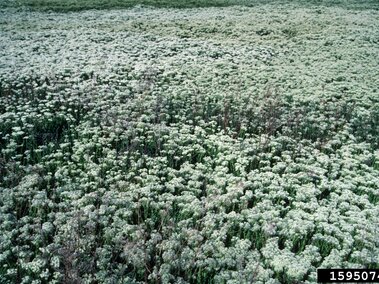
Hoary cress outcompetes native vegetation, displaces desirable plants and forage, and may increase erosion. It can also reduce crop yields or reduce crop value and hosts several crop pests. Consumption of hoary cress by meat or milk production animals can be tainted up to 1 week after exposure.
What Does It Look Like?
General Characteristics
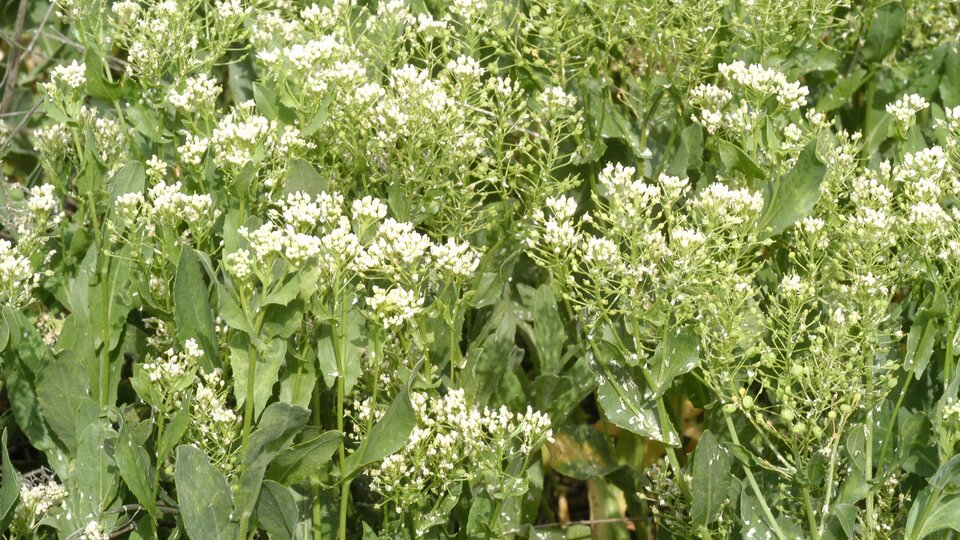
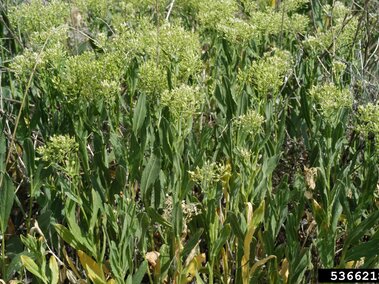
Hoary cress grows 2-3 feet tall and can either be covered in small hairs or be hairless.
Flowers
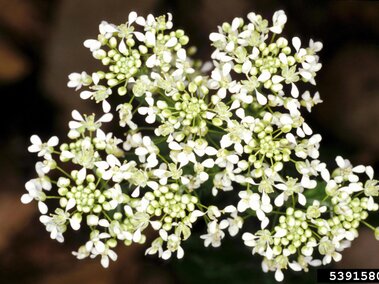
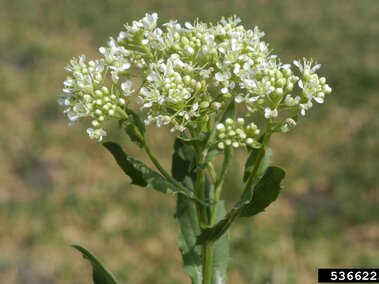
Flowers have small, white, and have 4 petals. Flowers grow in clusters and appear somewhat "flat-topped".
Leaves
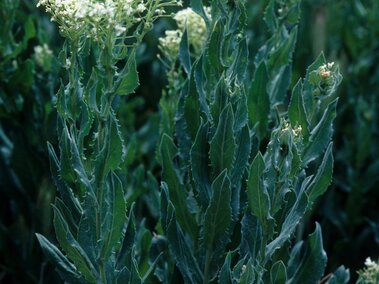
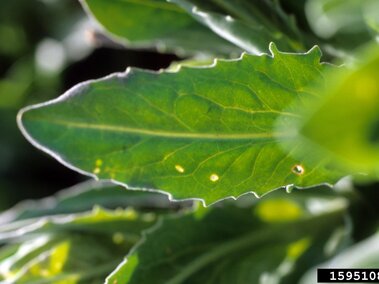
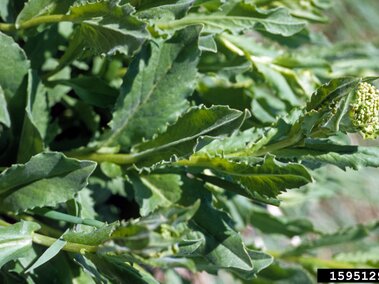
Leaves are alternately arranged and are oblong or lanceolate. They are bluish-green in color and may be slightly toothed or smooth.
Stems
Stems are upright and branching towards the top. They are covered in small hairs.
Seeds
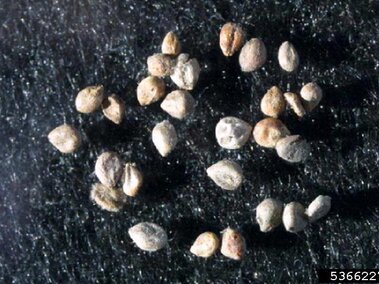
Seeds are reddish-brown, slightly flattened, oval, and rough
Photos
Where Does It Grow?
Hoary vetch can be found in pastures, grain fields, roadsides, ravines, and meadows. It is particularly invasive in disturbed sites and is widely established across the United States.
How Does It Spread?
Hoary seed reproduces via seed and vegetative reproduction through root fragments. Seeds can be spread through natural and human vectors and root fragments can be spread in contaminated soils. The roots of hoary cress are extensive and spread expansively underground.
How Do I Control It?
Mechanical
Mowing several times before flowering stresses the plant and can cause it to die off. Because of its extensive root systems, mechanical removal is not always effective.
Contact your county weed control authority to determine appropriate removal methods.
Cultural
Permitting goat and sheep grazing can help reduce hoary cress biomass. Cattle are usually not well-suited as they do not graze as close to the ground, do not typically select broadleaf plant for grazing, and some cases of toxicosis after mass consumption of hoary cress have been documented.
Use only weed free certified hay.
One way that invasive plant seeds and root fragments can spread is in soil. Sometimes plants are planted purposefully. You can prevent the spread of invasive plants.
REMOVE plants, animals and mud from boots, gear, pets and vehicles.
CLEAN your gear before entering and leaving the recreation site.
STAY on designated roads and trails.
PLANT non-invasive species.
PlayCleanGo: Stop Invasive Species in Your Tracks
Herbicide
Please refer to the 2026 Guide for Weed, Disease and Insect Management in Nebraska and/or contact your county weed control authority.
References and More Information
Colorado Department of Agriculture
North American Invasive Species Management Association Fact Sheet
Ohio State University Extension Pesticide Safety Education Program
Stubbendieck, J., Coffin, M., & Dunn, C. (2019). Weeds of the Great Plains. Nebraska Department of Agriculture.
Texas Invasive Species Institute