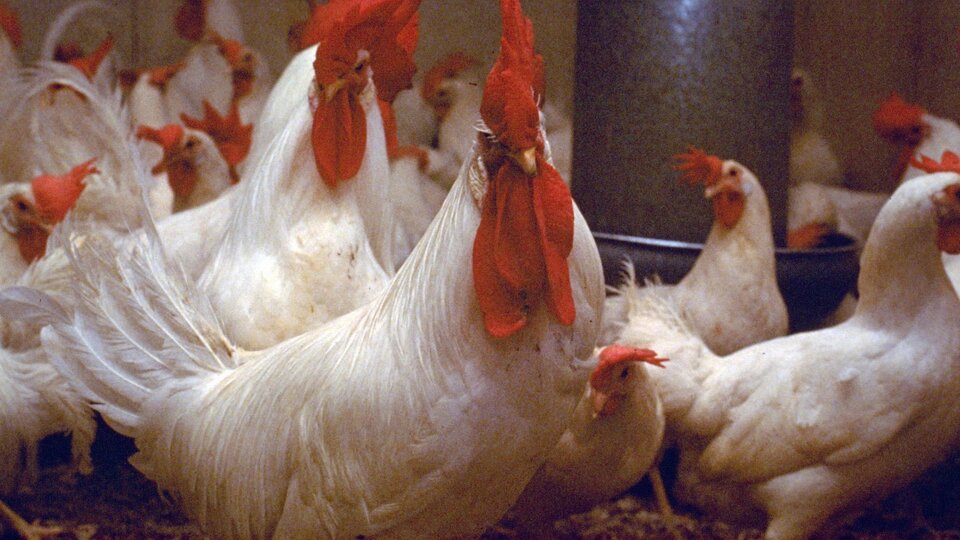
Credit: N.A. Irlbeck, Bugwood.org
General Information
Species Name: Alphainfluenzavirus influenzae
Also Known As: Bird flu, avian influenza A
Pathogen Type: Virus
Organ System Affected: Multiple, but primarily respiratory, gastrointestinal, and cardiovascular
Organisms Affected: Birds, some mammals including humans
Transmissible to Humans: Yes, in some rare cases humans can contract avian influenza.
Why is it a Concern?
Avian influenza can cause major problems within the poultry industry as it can eliminate entire flocks in a matter of days. This can negatively effect trade and the global economy. It spreads rapidly through bird-to-bird contact and via contaminated surfaces. It can also be transmitted to cattle, domestic cats, and wildlife. Rare cases of avian influenza can spread to humans.
How is it Spread?
Avian influenza spread through direct bird-to-bird contact and from contact with contaminated surfaces. It can be spread through saliva, nasal discharge, eye discharge, and feces. It can also be spread through airborne secretions.
Symptoms and Diagnosis
Incubation Period
Avian influenza symptoms will typically begin within 2-14 days after exposure.
Forms
Within avian influenza A are subtypes. There are 5 subtypes known to have caused human infection (H5, H6, H7, H9, and H10).
Avian influenza may be low pathogenicity avian influenza (LPAI) or highly pathogenic avian influenza (HPAI). LPAI strains will cause few or no symptoms naturally occur in birds worldwide. However, some LPAI strains may become HPAI in poultry. HPAI strains are deadly to domestic poultry, can eliminate flocks within a matter of days, and cause more severe symptoms than LPAI.
Symptoms in Birds
LPAI symptoms may include:
Nasal discharge
Sneezing
Anorexia
Ruffled feathers
Decreased egg production
No symptoms
HPAI symptoms may include:
Sudden death with no prior signs
Low energy
Anorexia
Purple discoloration or swelling of various body parts
Hemorrhages on legs or feet
Decreased egg production or soft or misshapen eggs
Nasal discharge, coughing, sneezing
Lack of coordination
Diarrhea
Symptoms in Humans
Symptoms in humans may include:
Conjunctivitis
Mild to high fever
Cough
Sore throat
Runny or stuffy nose
Muscle or body aches
Headaches
Fatigue
Shortness of breath or difficulty breathing
Seizures
Diagnosis
There are multiple types of tests that can be performed to confirm avian influenza in both animals and people including immunoassays, RNA detection, and virus isolation. Contact the Nebraska Department of Agriculture to request avian influenza testing for domestic birds. Contact your medical provider regarding human avian influenza testing options.
Photos
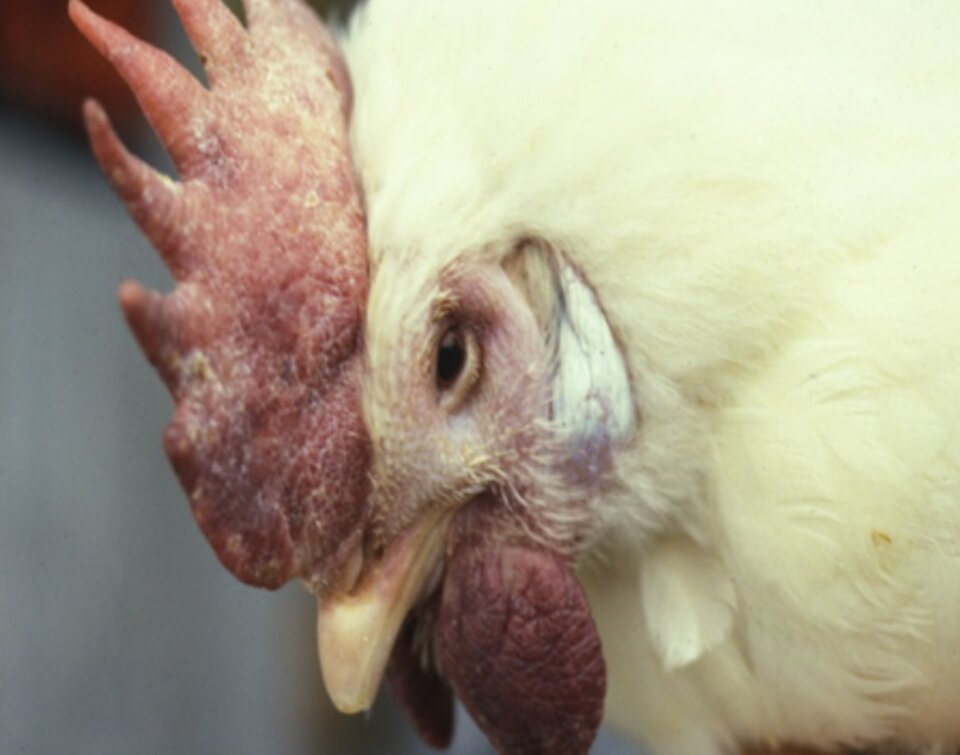
Credit: USDA file photo, public domain via Wikimedia Commons

Symptoms of HPAI in poultry include swollen wattles and combs.
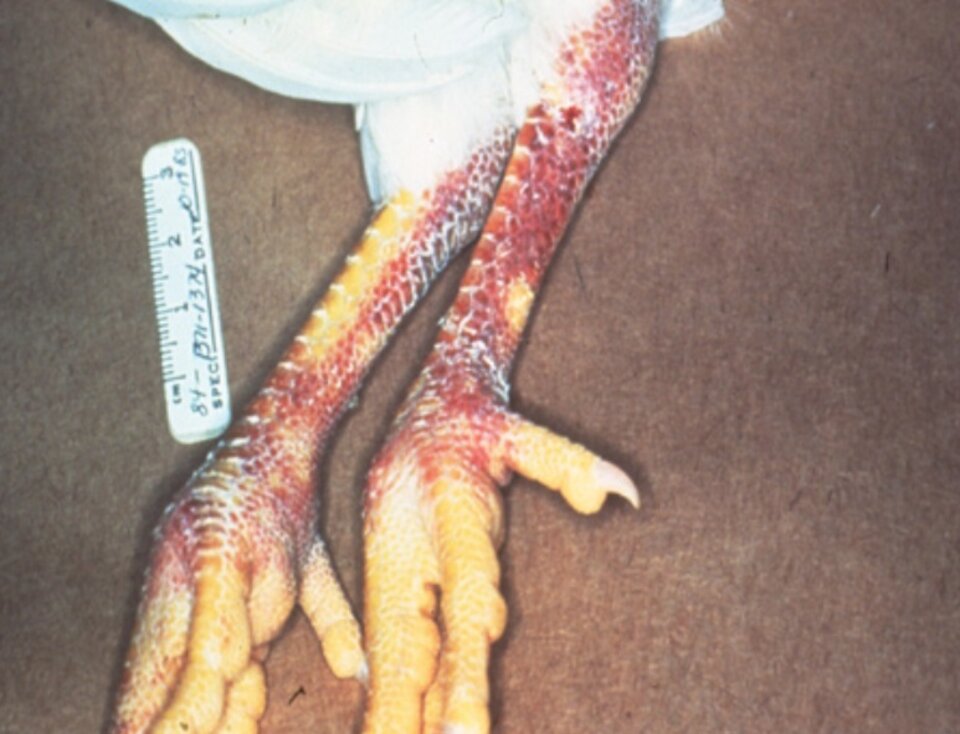
Credit: USDA file photo, Public domain, via Wikimedia Commons

Symptoms of HPAI in poultry include hemorrhaging and discoloration of legs and other body parts.
Prevention and Control
Practice Good Biosecurity
Defend the Flock and practice good biosecurity to protect your poultry and reduce the risk of infectious disease transfer onto or outside of your property. Practice good personal hygiene by washing your hands frequently when interacting with domestic poultry and other animals.
Avoid Sources of Exposure
Do not interact with sick or dead wild birds, domestic birds, or other animals and only observe them from a distance. Wear PPE if you must interact with or come into close contact with them. Do not consume raw milk or milk products and cook poultry, eggs, and beef to a safe internal temperature.
The public should avoid interacting with poultry farms, live poultry markets, and areas where poultry may be slaughtered.
What to Do if You Suspect Avian Influenza
Domestic Animals
If your domestic poultry are showing signs of avian influenza, you should contact the Nebraska Department of Agriculture immediately.
If your livestock, domestic cats or birds, or other domestic animals are showing symptoms of avian influenza, contact your veterinarian immediately.
Quarantine any symptomatic animals and those they may have come into contact with. Use personal protective equipment when handling the animal(s), limit your exposure, practice good personal hygiene, and disinfect potentially contaminated surfaces.
Human Exposure
If you have been exposed to avian influenza or are showing symptoms, contact your health provider immediately.
Wildlife
If you suspect a wild animal is showing symptoms of HPAI, report avian influenza to Nebraska Game and Parks Commission.
References and More Information
American Veterinary Medical Association
Canadian Food Inspection Agency
Cornell University College of Veterinary Medicine
Nebraska Department of Agriculture
Nebraska Game and Parks Commission
U.S. Centers for Disease Control and Prevention
USDA Animal and Plant Health Inspection Service