General Information
Species Name: Dasypus novemcinctus
Origin: North America
Why Is It Invasive?
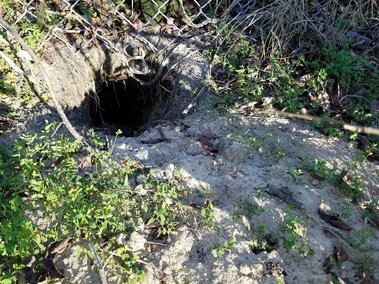
The ecological impacts of nine-banded armadillos aren't well known yet, but they are known to damage property as a result of their burrowing and foraging habits. They dig shallow holes to find insects, dig underground burrows, and can dig into gardens, flower beds, and lawns. They may pose property damage and damage tree roots and ornamental plants. Nine-banded armadillos may also pose a risk to vehicles and are commonly seen on roadsides after being hit by cars. They are known carriers of leprosy.
Identification and Ecology
General Characteristics
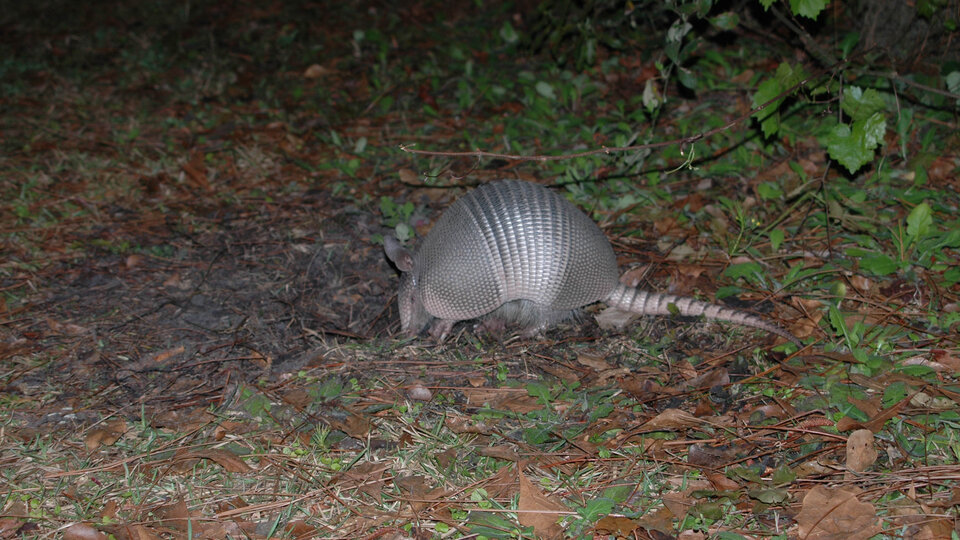
Nine-banded armadillos are the only armadillo found in the United States. While they can be seen during the day, they are more active at night.
Size
Full grown adults can reach nearly 3 feet in length including their tails and weigh 11-14 pounds.
Armor
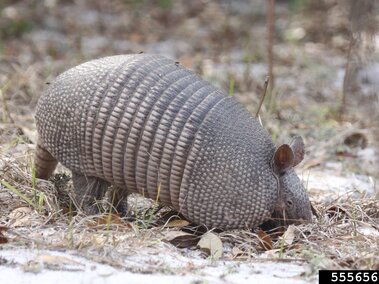
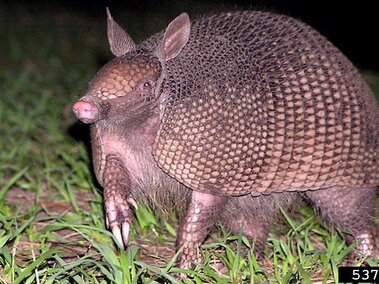
Nine-banded armadillos hardened plates of skin to protect their bodies like armor. They have two large plates with nine moveable bands between them. Their tail and head are also covered in plates. There may be hair between the plates as there is hair on their soft bodies underneath.
Other Physical Features
Small, angular head with narrow ears. Short legs and toes with claws. Mottled dark brown to yellowish-white in color.
Life Cycle
Breeding occurs in the summer and a set of quadruplets are born 7-8 months later in the spring. Newborn nine-banded armadillos have no shells but are both with their eyes open. They are weaned at 3 months of age and become sexually mature at 12-15 months. Nine-banded armadillos can survive 12-15 years in the wild.
Behavior
Nine-banded armadillos dig small holes while foraging for food. They are primarily nocturnal but can be seen during the daytime. Nine-banded armadillos have poor eyesight and may jump into the air when frightened.
Diet
Primarily insects and invertebrates, occasionally fruit or fungi
Habitat
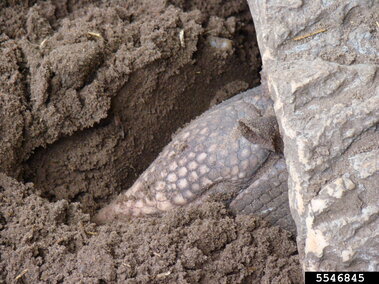
Nine-banded armadillos will develop burrows and prefer warm, wet climates. They can be found in various terrestrial habitats but prefer bushy, wooded areas like forests.
Photos
How Do They Spread?
Nine-banded armadillos have naturally begun to expand their range north as temperatures warm due to climate change.
Distribution
Nine-banded armadillos can be found in South and Central America, the southern United States, and expand as far north as Nebraska and Illinois.
Control
Mechanical
Barriers can be put around small areas to help prevent armadillo introduction. Because nine-banded armadillos can dig and burrow, it is best to put the barrier in at an angle and bury a portion underground. Harass burrows by shining a bright light on them or putting a radio near the hole with the exit unblocked so that the animal can vacate. Trapping is not advised.
Contact your local animal control for assistance removing a nine-banded armadillo from a human-occupied area.
What Should I Do if I See A Nine-Banded Armadillo in Nebraska?
Report nine-banded armadillo sighting to the Nebraska Invasive Species Council. Check out our reporting tips. Do not approach the armadillo or attempt to touch it. Contact your local animal control if there is a nine-banded armadillo in a human-occupied area.
References and More Information
Florida Fish and Wildlife Conservation Commission
Indiana Department of Natural Resources
Missouri Department of Conservation