General Information
Species Name: Vicia villosa
Also Known As: winter vetch
Family: Fabaceae (Bean)
Growth Form: Forb
Life Span: Annual
Flowering Dates: April-August
Origin: Europe
Toxic: Yes. Cattle and horses grazing on hairy vetch may incur dermatitis, eyelid swelling, and diarrhea. Consumption of small quantities has been implicated in some cattle deaths.
Noxious: No
Why Is It Invasive?
Hairy vetch is a sprawling vine that can grow up to 12 feet long, outcompeting and crowding out native vegetation. It is considered good forage for deer and some livestock, but can be toxic to cattle and horses.
What Does It Look Like?
General Characteristics
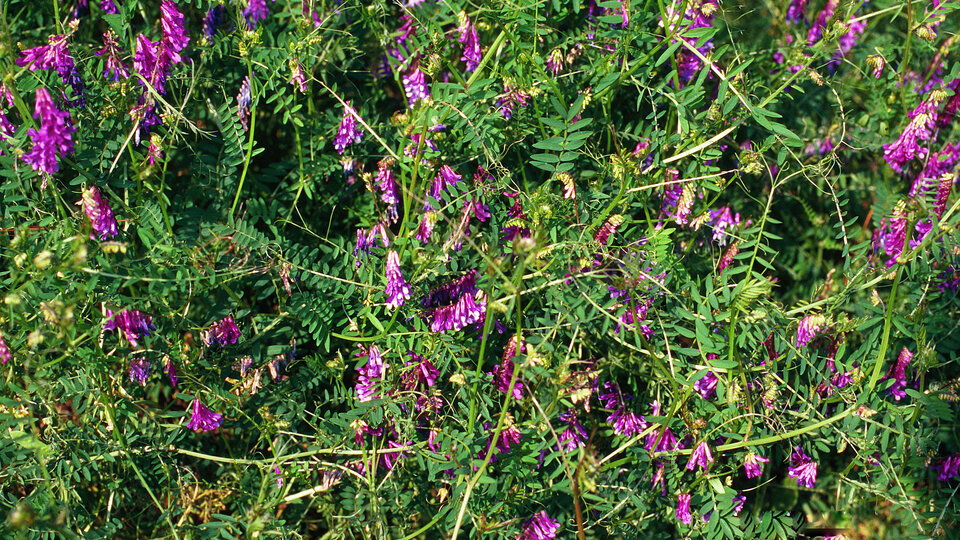
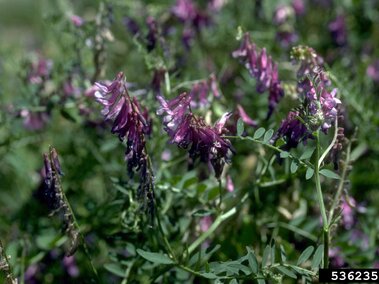
Hairy vetch is vine-like and sprawling with a silvery green appearance.
Flowers
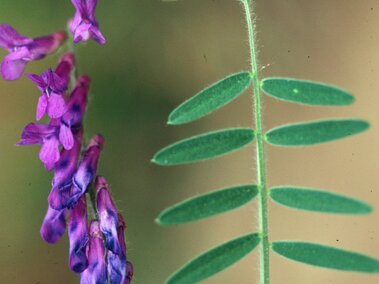
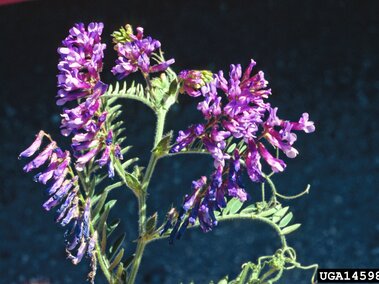
Flowers are bluish-purple and may have white centers. They have 5 petals and grow in lined clusters at the top of stems.
Leaves
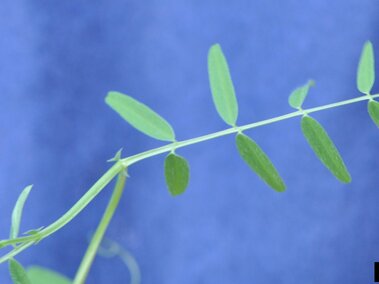
Leaves are alternately arranged and pinnately compound with 10-24 leaflets. Leaf surface is covered in long, silvery hairs.
Stems
Stems are scrambling or climbing, growing up to 12 feet long.
Seeds
Seeds are spherical, slightly flattened, smooth and dark brown. Seeds grow in flatted, oblong seed pods in groups of 3-5.
Photos

Where Does It Grow?
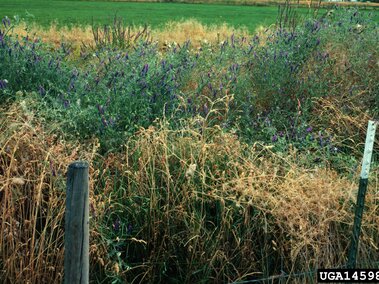
Hairy vetch grows in open spaces including pastures, roadsides, and fields. It tolerates a wide variety of soils and is cold tolerant, surviving in freezing temperatures. It is distributed across all states in the United States.
How Does It Spread?
Hairy vetch spreads through seeds, which can remain viable for more than 5 years. It has historically been used as forage and a winter cover crop.
How Do I Control It?
Mechanical
Close mowing can be done at peak flowering to kill plants.
Contact your county weed control authority to determine appropriate removal methods.
Cultural
Livestock grazing can be utilized as a management for hairy vetch, which is considered good forage for most livestock. If allowing cattle to graze on pastures with hairy vetch, watch cattle closely and promptly remove individuals with skin lesions, weight loss, diarrhea or anorexia.
Herbicide
Please refer to the 2026 Guide for Weed, Disease and Insect Management in Nebraska and/or contact your county weed control authority.
References and More Information
Hairy Vetch Cover Crop Fact Sheet for Iowa
Mississippi State University Extension
Natural Resource Conservation Service Plant Guide
North Carolina Extension Gardener
Plants of Texas Rangelands Virtual Herbarium
Stubbendieck, J., Coffin, M., & Dunn, C. (2019). Weeds of the Great Plains. Nebraska Department of Agriculture.