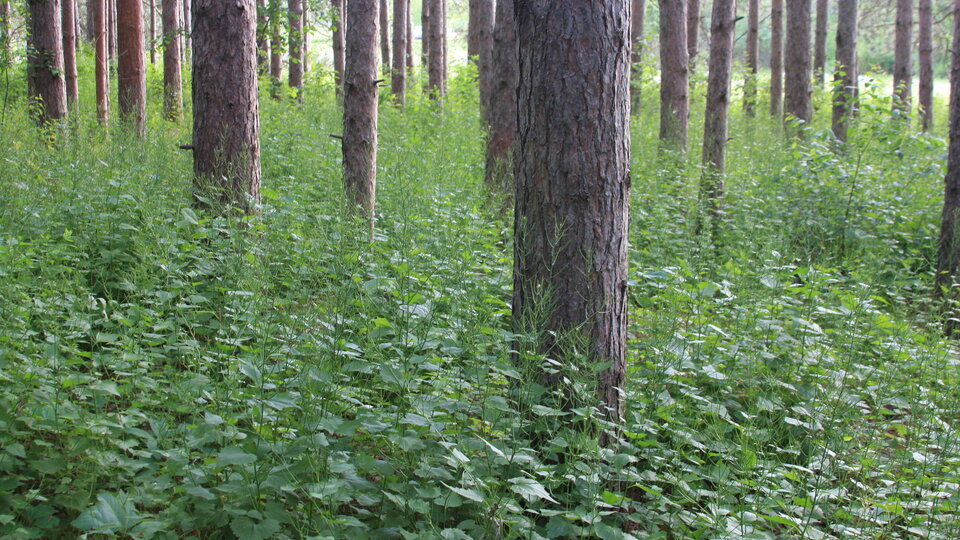
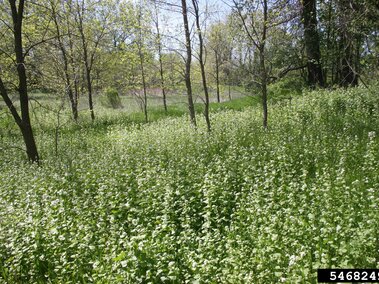
Credit: Steven Katovich, Bugwood.org
General Information
Species Name: Alliaria petiolata
Also Known As: hedge garlic, sauce-alone, jack-by-the-hedge, poor man's mustard, jack-in-the-bush, garlic root, garlicwort, mustard root
Family: Brassicaceae (Mustard)
Growth Form: Forb
Life Span: Biennial
Flowering Dates: April-June
Origin: Europe
Toxic: No
Noxious: No
Why Is It Invasive?
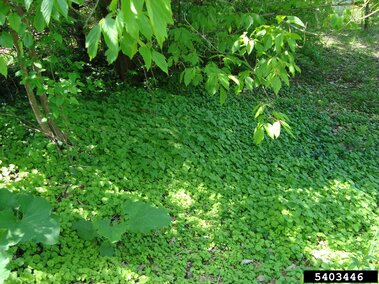
Garlic mustard begins growing early in the season and forms dense patches, crowding out native or desirable vegetation. It also produces chemicals that inhibit the growth of other plants.
What Does It Look Like?
General Characteristics
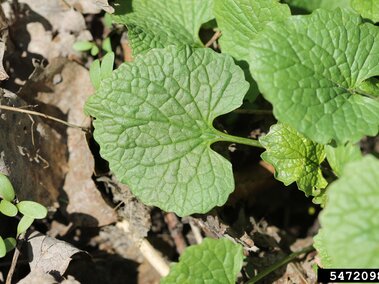
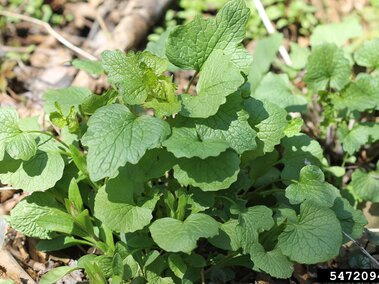
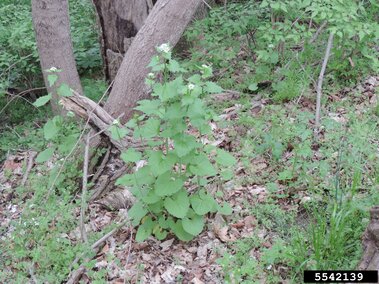
In its first year, garlic mustard appears as a low-growing rosette. By its second year, garlic mustard produces tall stems and flowers. The plant emits a strong garlic odor when damaged.
Flowers
Small, white flowers with four petals. Flowers grow in clusters at the end of stems.
Leaves
Rosette leaves are kidney-shaped. In its second year, garlic mustard leaves are alternately arranged and heart shaped with finely toothed margins.
Stems
Stems are erect and may be single or branching, growing between 1-4 feet tall.
Seeds
Seeds are black, cylindrical, and ridged
Photos
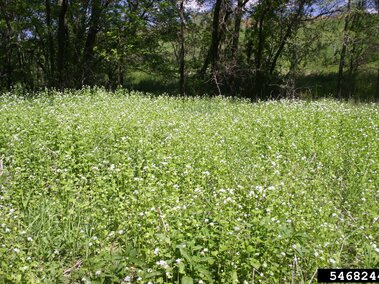
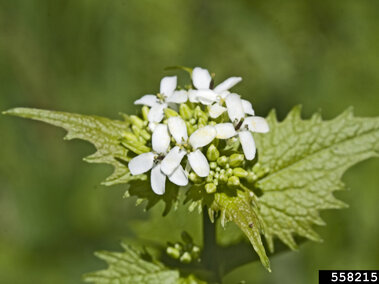
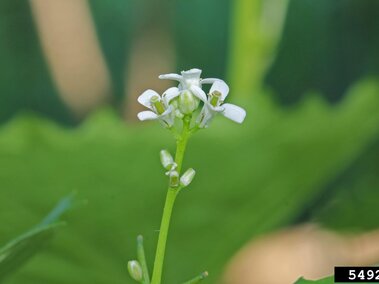
Where Does It Grow?
Garlic mustard grows in forests, floodplains, field, and roadsides. It does well in a range of light conditions and is intolerant of acidic soils. It is widely dispersed throughout most states in the United States, including Nebraska.
How Does It Spread?
Garlic mustard was first discovered in the United States in 1868 and was intentionally introduced for food and medicinal uses. Garlic mustard reproduces via seeds, which are light enough to be carried by the wind. Seeds can also spread through human vectors, like attaching to clothes, pets, or in contaminated soil movement. Seeds can remain viable for up to 5 years.
How Do I Control It?
Garlic mustard control may take several years to be effective. Priority should be focused on preventing seed development and spread until the seed bank is depleted.
Mechanical
Hand pulling can be an effective control method if done before seeding. Pulling after seeding can increase seed dispersal. If hand pulling, be sure to remove the tap root and bag plants before placing them in a garbage receptacle.
Contact your county weed control authority to determine appropriate removal methods.
Cultural
One way that invasive plant seeds can spread is in soil. Sometimes plants are planted purposefully. You can prevent the spread of invasive plants.
REMOVE plants, animals and mud from boots, gear, pets and vehicles.
CLEAN your gear before entering and leaving the recreation site.
STAY on designated roads and trails.
PLANT non-invasive species.
PlayCleanGo: Stop Invasive Species in Your Tracks
Herbicide
Please refer to the 2026 Guide for Weed, Disease and Insect Management in Nebraska and/or contact your county weed control authority.
References and More Information
Michigan State University Extension
Minnesota Department of Agriculture
Minnesota Department of Natural Resources
Missouri Department of Conservation
Nebraska Weed Control Association
North American Invasive Species Management Association Fact Sheet
Stubbendieck, J., Coffin, M., & Dunn, C. (2019). Weeds of the Great Plains. Nebraska Department of Agriculture.