General Information
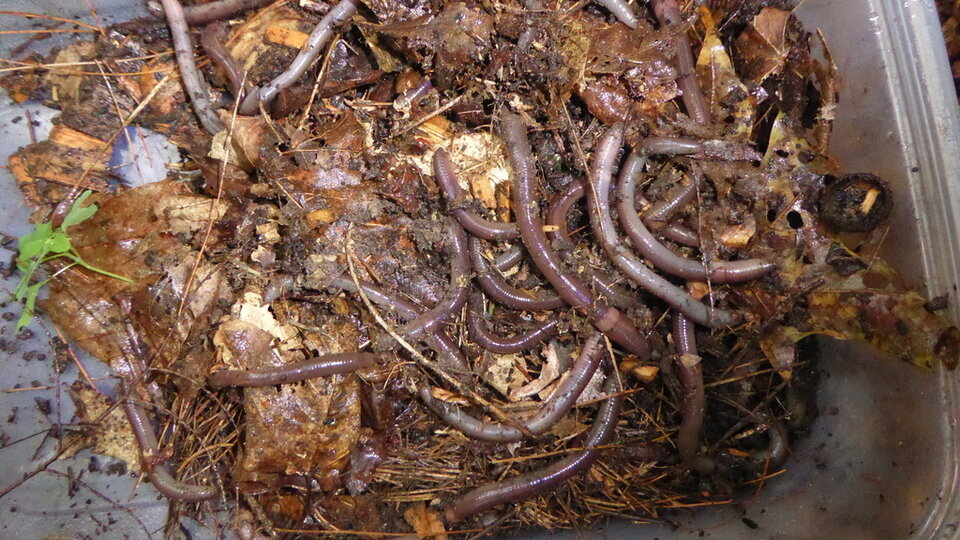
Species Name: Amynthas spp.
Also Known As: Asian jumping worm, Asian crazy worm, Alabama jumper
Family: Megascolecidae (Earthworms)
Life Cycle: Jumping worms live for one season, hatching in late spring and dying by the end of summer; jumping worms self-clone and do not require a mate to reproduce
Activity: Adults emerge in Nebraska in late spring and die by early fall
Origin: East-central Asia
Why Is It Invasive?
Invasive jumping worms are "ecosystem engineers" and change soil characteristics, causing shifts that may reduce biodiversity and reduce agricultural productivity. They can also infest gardens and urban landscapes, becoming problems for gardeners and homeowners. Additionally, jumping worms hastily devour organic matter and leaf litter, a critical component needed to support ecosystems. These worms reproduce quickly and can reproduce without mating.
What Does It Look Like?
General Characteristics
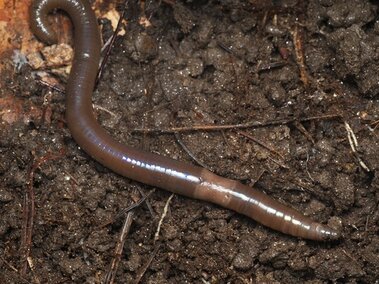
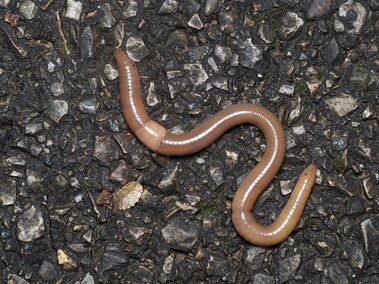
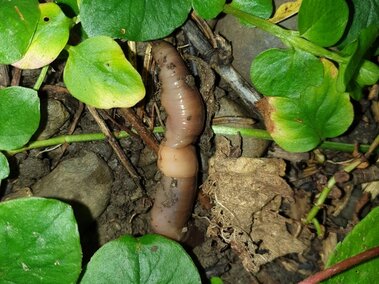
Jumping worms look very similar to other earthworms, but can be distinguished by their clitellum. When disturbed, jumping worms thrash against the ground forcefully enough to propel themselves into their air, giving them their namesake. They may move along the ground in an "S" like pattern similar to snakes.
Size
Fully grown jumping worms can grow to be more than 8 inches long.
Clitellum
Approximately 1/3 down the length of the worm from the head is the clitellum. A jumping worm's clitellum is smooth and cloudy-white when constricted, unlike other earthworms.
Eggs
Eggs are very small, black, and can over-winter.
Photos
Where Do They Live?
Jumping worms can be found in homes, landscape gardens, forests, and agricultural areas. They can be found on the surface or shallow layer of soil.
How Do They Spread?
Jumping worms were initially introduced to the United States in the late 1800s. While the exact mode of introduction is unknown, they may have been introduced in contaminated soils or by anglers using them as bait. They continue to spread via human activities, including in movement of contaminated soils, use as bait, or other consumer purposes.
How Do I Control Them?
Prevention is essential in controlling jumping worms, as there is no effective eradication strategy yet identified for jumping worm infestations.
Mechanical
You can manually remove jumping worms from your yard to help reduce populations. Seal collected jumping worms in a bag and dispose of them in the trash. Do not move jumping worms from one area to another.
Research suggests that jumping worms and their eggs may be sensitive to high temperatures and that fatality can be achieved at temperatures above 104 degrees Fahrenheit for more than 3 consecutive days. This can be achieved via compost piles or clear plastic covers. Because other living organisms may also be impacted by these efforts, consider consulting a horticulturist or landscape architect before attempting.
UNL Department of Agronomy and Horticulture Extension and Outreach
Nebraska Nursey and Landscape Association - Find a Member
Cultural
Do not buy jumping worms for any purpose and do not move soil that is home to jumping worm infestations.
Anglers should dispose all bait into the trash and never into the environment.
Help prevent jumping worm spread after engaging in outdoor activities in a few simple steps:
REMOVE plants, animals and mud from boots, gear, pets and vehicles.
CLEAN your gear before entering and leaving the recreation site.
STAY on designated roads and trails.
PlayCleanGo: Stop Invasive Species in Your Tracks
Chemical
There are no pesticides labeled for worms in the United States.
What Do I Do If I Find Them?
If you find jumping worms, you should report them to the Nebraska Invasive Species Council. For guidance on what information to include in your report, check out our reporting tips.
References and More Information
Colorado Department of Agriculture
Michigan State University Extension
National Invasive Species Information Center
Nebraska Recycling Council Compost Resources
PlayCleanGo!: Stop Invasive Species in Your Tracks
University of Minnesota Extension