General Information
Species Name: Lineria vulgaris
Also Known As: butter-and-eggs, wild snapdragon, flaxweed, ramsted, Jacob's ladder, common toadflax
Family: Scrophulariaceae (Figwort)
Growth Form: Forb
Life Span: Perennial
Flowering Dates: June-September
Origin: Europe
Noxious: No
Why Is It Invasive?
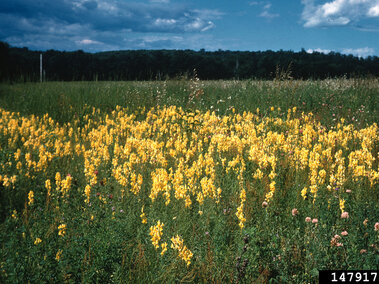
Yellow toadflax forms dense colonies and outcompetes native plants and desirable forage. It is not often eaten by livestock and is resistant to many herbicides. It may also cause soil erosion.
What Does It Look Like?
General Characteristics
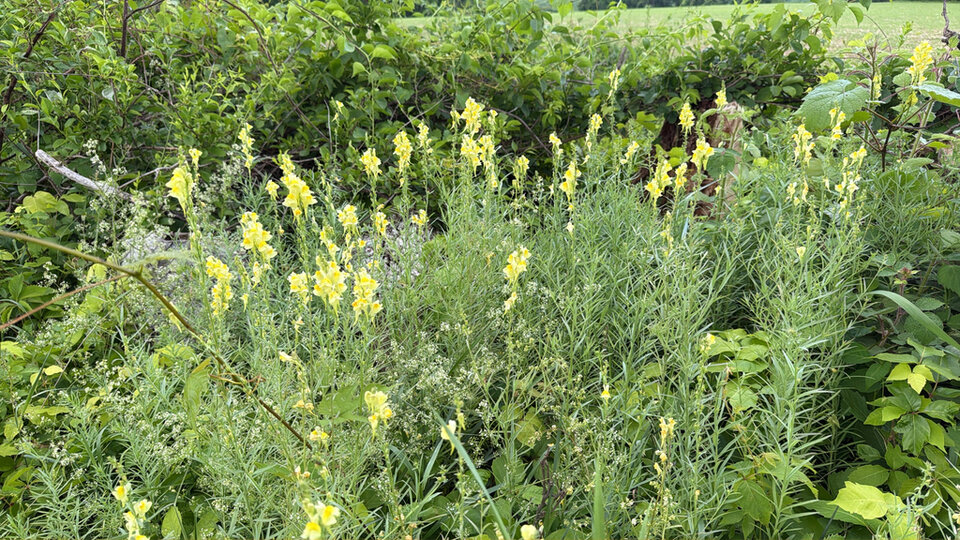
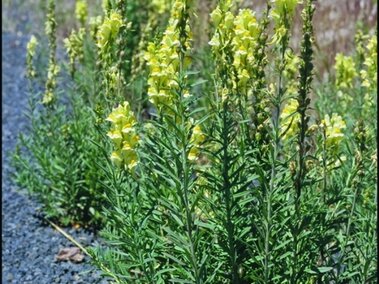
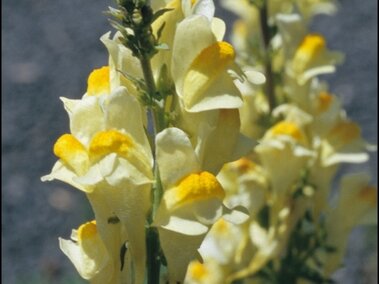
Yellow toadflax can grow up to 3 feet tall and has showy yellow and white flowers that resemble those of a snapdragon.
Flowers
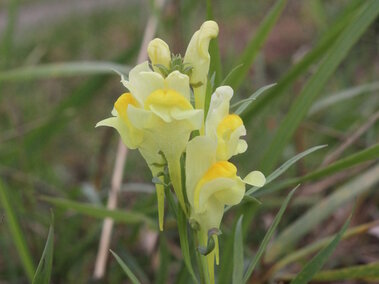
Flowers are yellow to pale cream and crowd together at the top part of the plant stem. They have hairy, orange throats and closely resemble the flowers of snapdragons.
Leaves
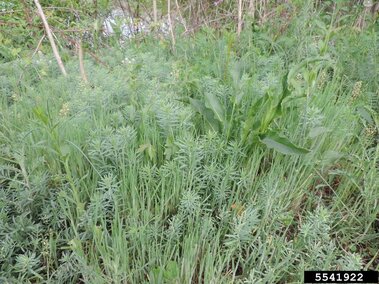
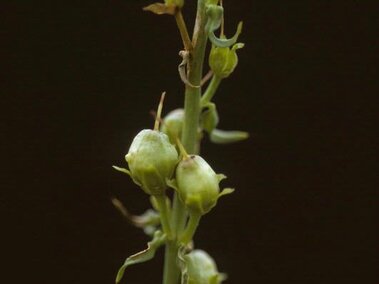
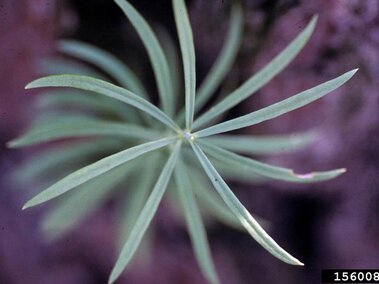
Leaves are alternately arranged and numerous. They are narrow, hairless, and have pointed tips.
Stems
Stems are erect and simple or sparingly branched. They may have sparse hairs.
Seeds
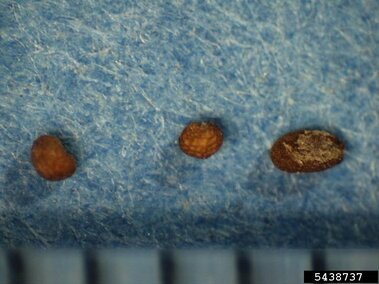
Flat, brown or black, and have a papery wing
Photos
Where Does It Grow?
Yellow toadflax invades open areas like pastures, meadows, and roadsides, especially disturbed sites. It is widely distributed across the United States.
How Does It Spread?
Yellow toadflax was initially introduced to the United States from Europe as an ornamental plant that escaped cultivation. It can reproduce by seed or by spreading rhizomes that send up new stems. The seeds can be spread through both natural and human vectors. Seeds can remain viable in soil for up to 8 years.
How Do I Control It?
Mechanical
Begin cultivating infested field in early summer and repeat every 3 weeks. Thorough cultivation for one year will eliminate most of the plants.
Please contact your county weed control authority to determine appropriate removal methods.
Cultural
Do not intentionally plant yellow toadflax for ornamental purposes and instead use a native alternative.
Help prevent seed dispersal after outdoor activity in a few simple steps:
REMOVE plants, animals and mud from boots, gear, pets and vehicles.
CLEAN your gear before entering and leaving the recreation site.
STAY on designated roads and trails.
PLANT non-invasive species.
PlayCleanGo: Stop Invasive Species in Your Tracks
Herbicide
Please refer to the 2026 Guide for Weed, Disease and Insect Management in Nebraska and/or contact your county weed control authority.
References and More Information
Alaska Natural Heritage Program
Colorado Department of Agriculture
USDA Fire Effects Information System
National Invasive Species Information Center
Nebraska Weed Control Association
North Carolina Extension Gardener
Stubbendieck, J., Coffin, M., & Dunn, C. (2019). Weeds of the Great Plains. Nebraska Department of Agriculture.