General Information
Species Name: Bothriochloa ischaemum
Also Known As: King Ranch bluestem, plains bluestem, Turkestan bluestem, Old World bluestem
Family: Poaceae (Grass)
Growth Form: Grass
Life Span: Perennial
Flowering Dates: July-October
Origin: Eurasia
Noxious: No
Why Is It Invasive?
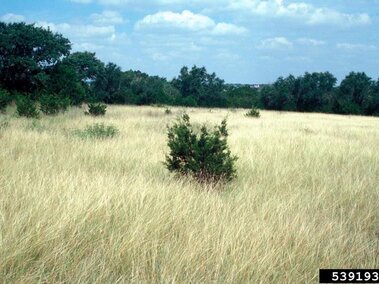
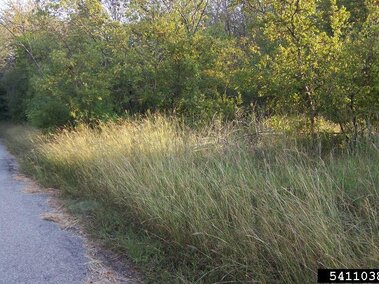
Yellow bluestem is an aggressive, rapidly spreading species that invades pastures, prairie, roadsides and disturbed sites. It forms dense stands that are hard to eradicate and is a risk for wildfires. Yellow bluestem also leaches chemicals into the soil that make the soil inhospitable for native plants.
What Does It Look Like?
General Characteristics
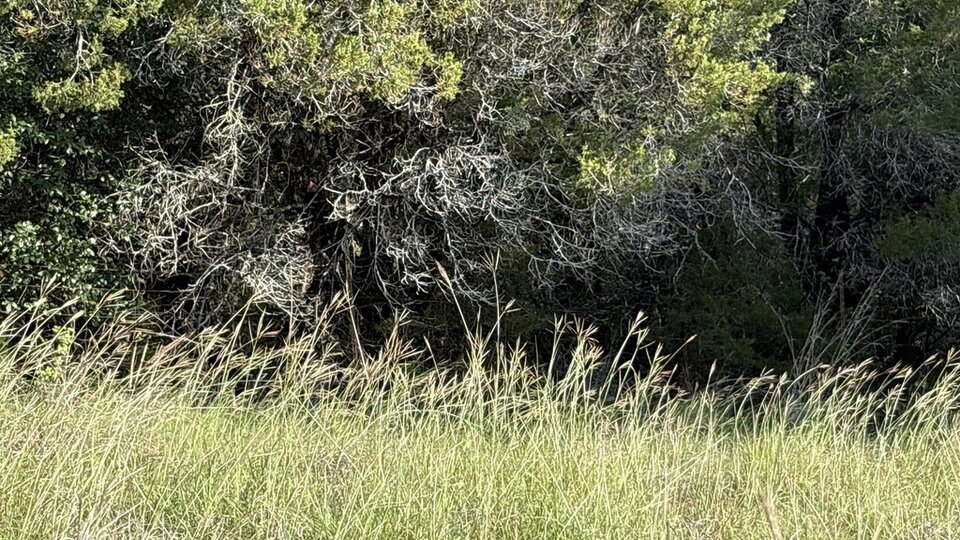
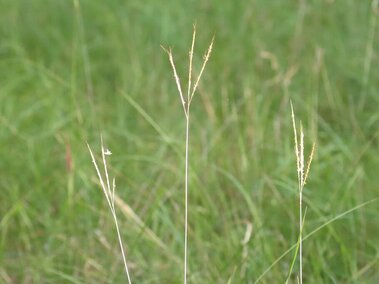
Yellow bluestem is a tall, greenish yellow clumping grass.
Flowers
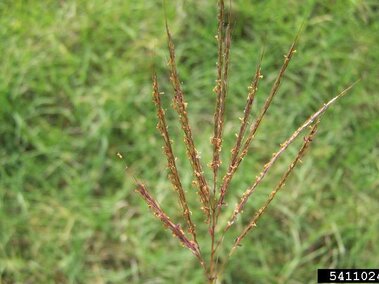
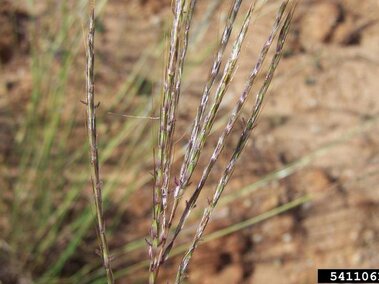
Flowers grow in long, small clusters that are reddish-purple. Clusters fan out and like the foot of a bird.
Leaves
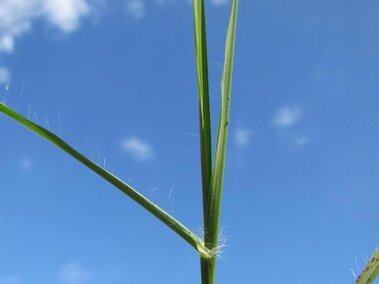
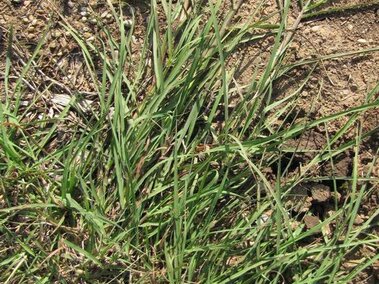
Leaves are flat or folded with scattered hairs and yellow-green in color.
Stems
Stems can grow up to 4 feet tall and are surrounded by rounded leaf sheaths at the base. Stems are green and have prominent purple nodes.
Seeds
Small, brown
Photos
Where Does It Grow?
Wild parsnip can be found throughout the northern United States and Great Plains. It grows in moist, rich soils including in rangelands, pastures, and pond and lake margins.
How Does It Spread?
Yellow bluestem reproduces through seeds and its creeping root system. Seeds can be spread by natural vectors, such as birds and wildlife, or human vectors, such as attaching to clothing, pets, and equipment. Yellow bluestem was initially introduced to the United States for forage and erosion control.
How Do I Control It?
Yellow bluestem is best controlled before going to seed.
Mechanical
Hand pulling or digging out plants may be successful for small populations. Dispose of plants in a bag and into a waste receptacle. Monitor sites frequently for regrowth and repeat as needed.
Please contact your county weed control authority to determine appropriate removal methods.
Cultural
Do not intentionally plant yellow bluestem for use as forage or erosion control.
Help prevent seed dispersal after outdoor activity in a few simple steps:
REMOVE plants, animals and mud from boots, gear, pets and vehicles.
CLEAN your gear before entering and leaving the recreation site.
STAY on designated roads and trails.
PLANT non-invasive species.
PlayCleanGo: Stop Invasive Species in Your Tracks
Herbicide
Please refer to the 2026 Guide for Weed, Disease and Insect Management in Nebraska and/or contact your county weed control authority.
References and More Information
Missouri Department of Conservation
Nebraska Weed Control Association
Oklahoma State University Extension
University of Arizona Cooperative Extension
South Dakota Grassland Coalition
Stubbendieck, J., Coffin, M., & Dunn, C. (2019). Weeds of the Great Plains. Nebraska Department of Agriculture.