General Information
Species Name: Pastinaca sativa
Family: Apiaceae (Carrot)
Growth Form: Forb
Life Span: Biennial
Flowering Dates: May-July
Origin: Europe
Toxic: Can cause photosensitization, severe sun-burn like reactions upon mild skin exposure to the sun, in livestock and humans if ingested. People swimming in areas surrounded by wild parsnip may also develop a rash.
Noxious: No
Why Is It Invasive?
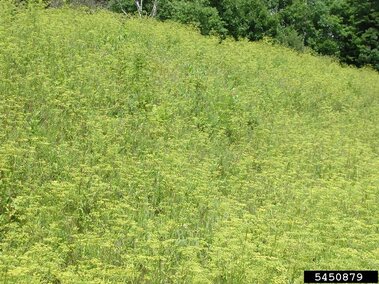
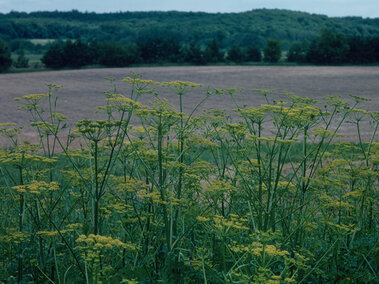
Wild parsnip produces dense stands that crowd out native plants, desirable forage, and reduces the quality of agricultural crops. It can also cause photosensitization in livestock and people when consumed.
What Does It Look Like?
General Characteristics
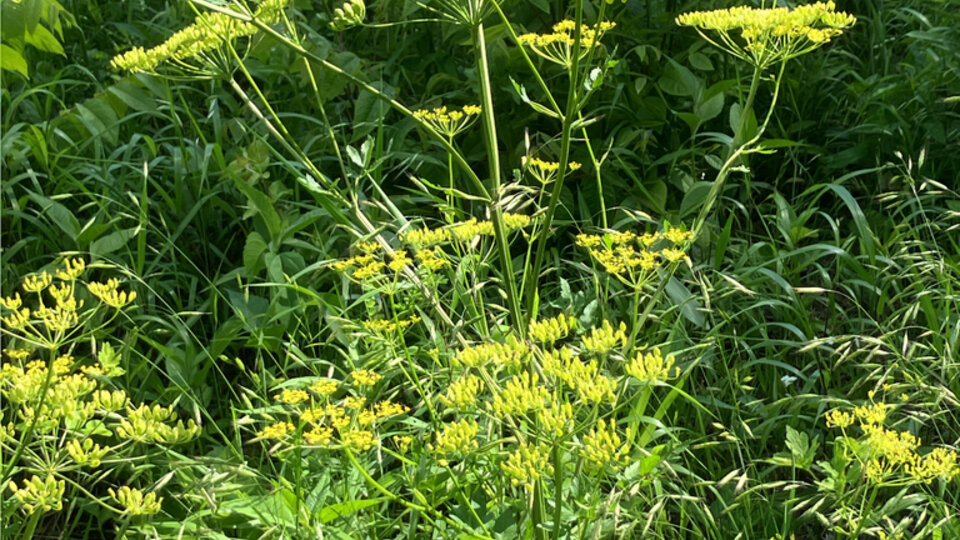
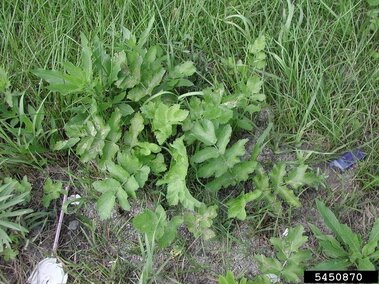
In its first year, wild parsnip appears as a rosette. In its second year, wild parsnip produces a tall stem with clusters of small yellow flowers.
Flowers
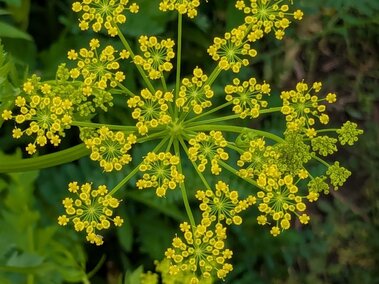
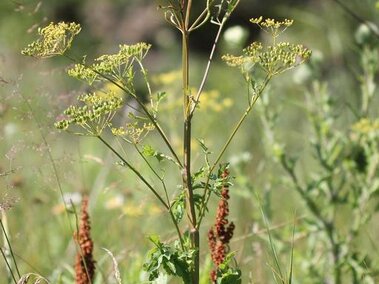
Flowers are yellow to reddish-yellow and have 5 petals. They grow in groups at the end of branched stems.
Leaves
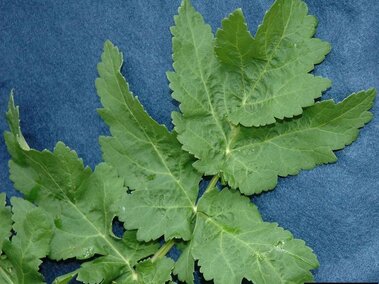
Rosettes have 5-15 broad, ovate to oblong leaves. Stem laves are alternately arranged and have 2-5 pairs of opposite, finely toothed leaflets.
Stems
Stems are erect, branching, hollow, grooved, and smooth without hair.
Seeds
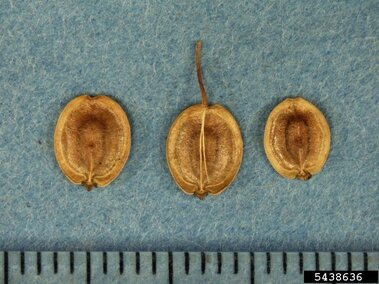
Seeds are flat on one side, yellowish, and slightly ribbed.
Photos
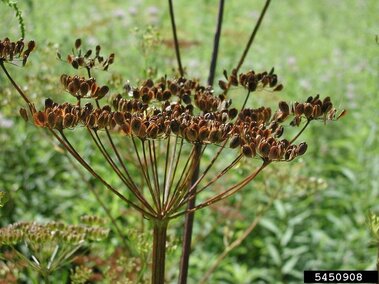
Where Does It Grow?
Wild parsnip can be found throughout the northern United States and Great Plains. It grows in moist, rich soils including in rangelands, pastures, and pond and lake margins.
How Does It Spread?
Wild parsnip spreads by seed. Seeds can be transported by natural and human vectors. Seeds can remain viable in the soil for up to 4 years.
How Do I Control It?
Always wear protective gear, such as long sleeves, long pants, and gloves when working with wild parsnip due to toxicity of sap when in contact with the skin.
Mechanical
Use a sharp spade or shovel to cut the root below the soil surface and be sure to appropriately dispose of flowering heads. Hand pulling is typically not recommended due to toxicity of sap to human skin. If attempting mechanical removal, wear protective gear such as long sleeves and gloves.
Mowing larger stands prior to flowering will kill a majority of the mature plants and reduce seed production.
Please contact your county weed control authority to determine appropriate removal methods.
Cultural
Maintain a healthy plant population and minimize disturbance to help prevent wild parsnip establishment.
Help prevent seed dispersal after outdoor activity in a few simple steps:
REMOVE plants, animals and mud from boots, gear, pets and vehicles.
CLEAN your gear before entering and leaving the recreation site.
STAY on designated roads and trails.
PLANT non-invasive species.
PlayCleanGo: Stop Invasive Species in Your Tracks
Herbicide
Please refer to the 2026 Guide for Weed, Disease and Insect Management in Nebraska and/or contact your county weed control authority.
References and More Information
Michigan Department of Natural Resources Michigan Natural Features Inventory
Minnesota Department of Agriculture
Nebraska County Designated Noxious Weeds
Nebraska Weed Control Association
North Carolina State University Extension Gardener
Stubbendieck, J., Coffin, M., & Dunn, C. (2019). Weeds of the Great Plains. Nebraska Department of Agriculture.