General Information
Species Name: Falcaria vulgaris
Also Known As: longleaf sickleweed
Family: Apiaceae (Carrot)
Growth Form: Forb
Life Span: Perennial or biennial
Flowering Dates: June-September
Origin: Eurasia
Noxious: No
Why Is It Invasive?
The exact impacts of sickleweed aren't entirely known, but it supposed that it could invade agricultural areas and reduce crop yield.
What Does It Look Like?
General Characteristics
Sickleweed is a highly-branched, rounded herb.
Flowers
Flowers are white with 5 petals that are small and arching. Flowers grow in small groups at the end of branched stems.
Leaves
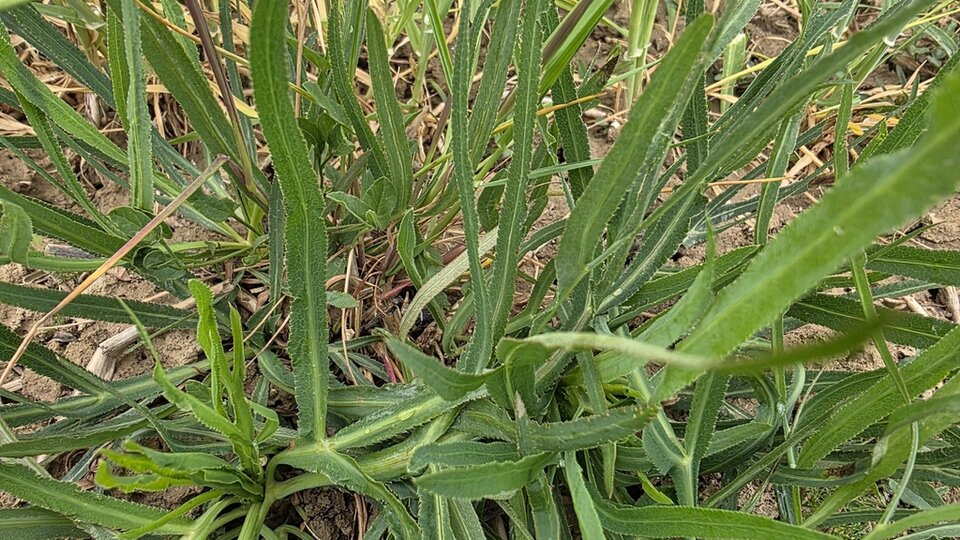
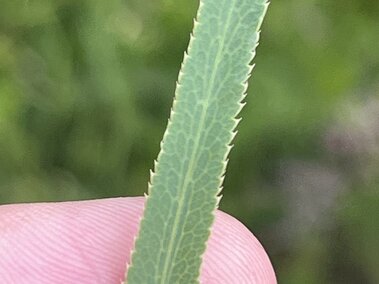
Leaves are alternately arranged and are long and thin. Leaves usually have 3 (sometimes 5) leaflets on the upper portion of the stem. Blades are finely toothed.
Stems
Stems are erect, solid, branching, and smooth without hairs.
Seeds
Inside yellowish-brown, longitudinal fruit
Photos
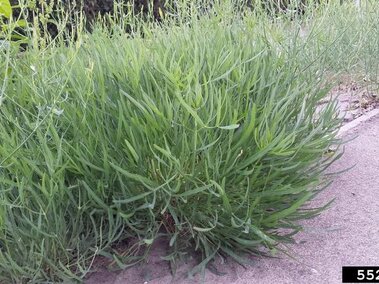
Credit: Stefan Lefnaer, Bugwood.org
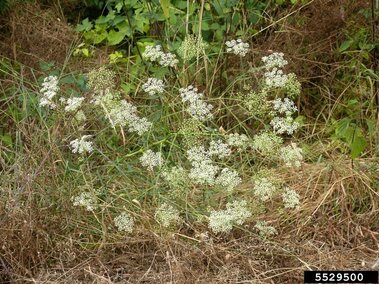
Credit: Bernd Haynold, Bugwood.org
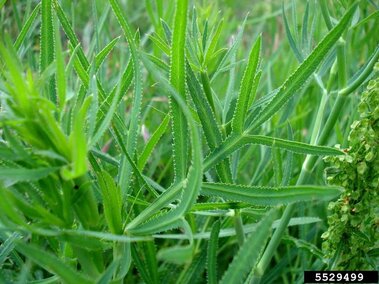
Credit: F Fornax, Bugwood.org
Where Does It Grow?
Sickleweed can be found throughout the Great Plains region in pastures, disturbed sites, roadsides, and cultivated fields. It is not commonly found in sandy soils.
How Does It Spread?
Sickleweed is spread by seed, both by natural and human vectors.
How Do I Control It?
Mechanical
Please contact your county weed control authority to determine appropriate removal methods.
Cultural
Maintain a healthy plant population and minimize disturbance to help prevent sickleweed establishment.
Help prevent seed dispersal after outdoor activity in a few simple steps:
REMOVE plants, animals and mud from boots, gear, pets and vehicles.
CLEAN your gear before entering and leaving the recreation site.
STAY on designated roads and trails.
PLANT non-invasive species.
PlayCleanGo: Stop Invasive Species in Your Tracks
Herbicide
Please refer to the 2026 Guide for Weed, Disease and Insect Management in Nebraska and/or contact your county weed control authority.
References and More Information
Nebraska Weed Control Association
USDA APHIS Weed Risk Assessment for Falcaria vulgaris
University of Wisconsin - Madison Renz Weed Science
Stubbendieck, J., Coffin, M., & Dunn, C. (2019). Weeds of the Great Plains. Nebraska Department of Agriculture.