General Information
Species Name: Sonchus arvensis
Also Known As: spiny sowthistle, perennial sow thistle
Family: Asteraceae (Sunflower)
Growth Form: Forb
Life Span: Annual
Flowering Dates: May-October
Origin: Eurasia
Noxious: No
Why Is It Invasive?
Perennial sowthistle grows in cultivated areas and reduces crop yield, increasing cultivation and management costs.
What Does It Look Like?
General Characteristics
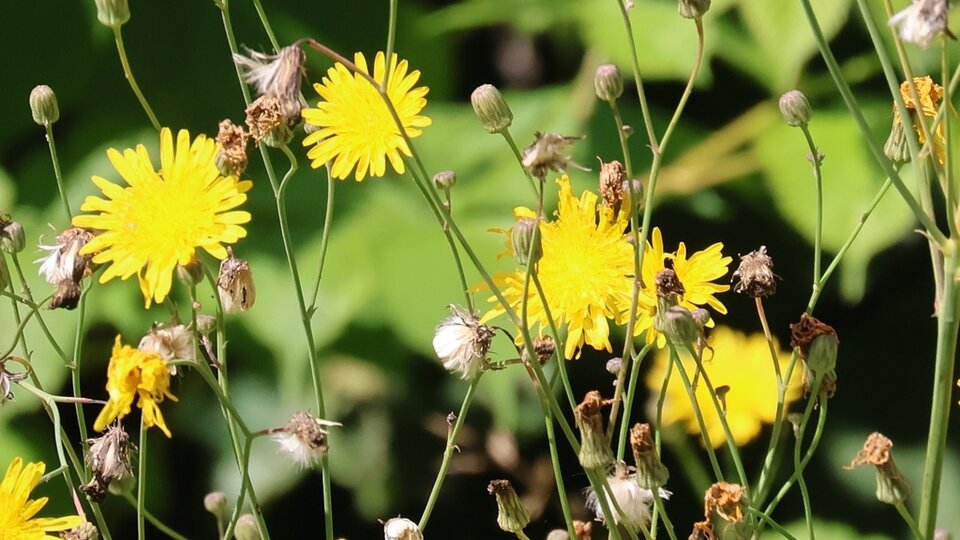
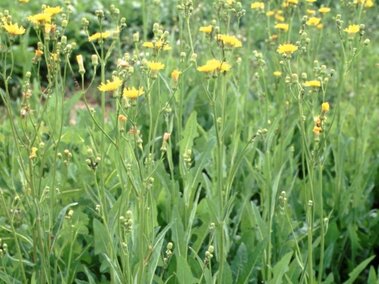
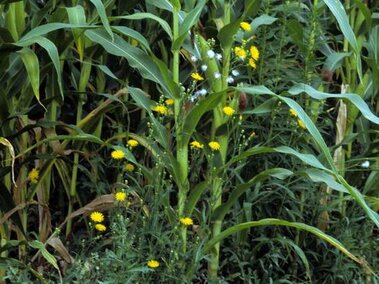
Perennial sowthistle can grow 2-5 feet tall and resembles a dandelion. It produces a while, milky sap when the plant is injured.
Flowers
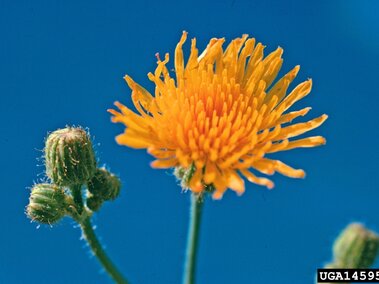
Bright yellow, between 1-2 inches wide. Flowers open after sunrise and close around noon. The base of the flowers have short, sticky hairs and bristly.
Leaves
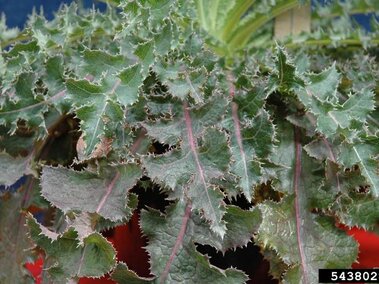
Leaves are alternately arranged and are lobed with prickly edges. Leaves become smaller in size as they move up the stem.
Stems
Stems are hollow and can reach up to 6 feet tall. Branching will occur further up the stem. Stems contain a milky juice.
Seeds
Small and ridged
Photos
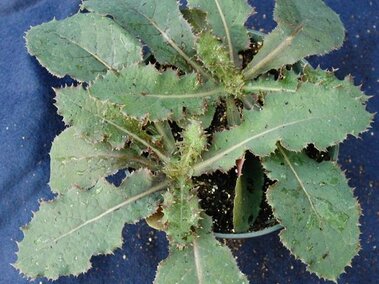
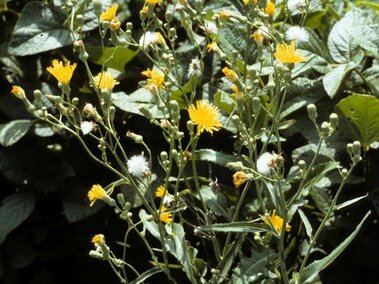
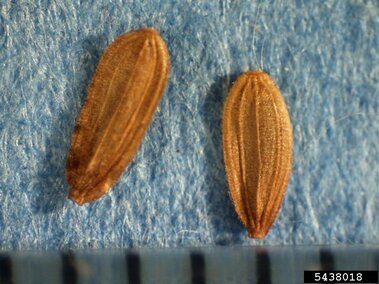
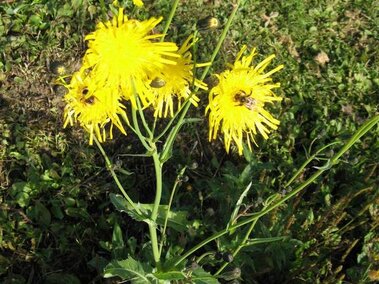
Where Does It Grow?
Perennial sowthistle can be found in cultivated fields, pastures, gardens, disturbed sites, and roadsides. It is not common in sandy soils. It is widespread to throughout the United States.
How Does It Spread?
Perennial sowthistle spreads through seeds which can be spread through natural vectors or human vectors including clinging to clothing or pet fur. It also spreads via creeping roots.
How Do I Control It?
Mechanical
Tilling and mowing can both help to control populations. The optimal time to treat is during the leaf rosette stage.
Please contact your county weed control authority to determine appropriate removal methods.
Cultural
Maintain a healthy plant population and minimize disturbance to help prevent perennial sowthistle establishment.
Help prevent seed dispersal after outdoor activity in a few simple steps:
REMOVE plants, animals and mud from boots, gear, pets and vehicles.
CLEAN your gear before entering and leaving the recreation site.
STAY on designated roads and trails.
PLANT non-invasive species.
PlayCleanGo: Stop Invasive Species in Your Tracks
Herbicide
Please refer to the 2026 Guide for Weed, Disease and Insect Management in Nebraska and/or contact your county weed control authority.
References and More Information
Colorado Department of Agriculture
Michigan State University Department of Plan, Soil, and Microbial Sciences
Nebraska County Designated Noxious Weeds
Nebraska Weed Control Association
Stubbendieck, J., Coffin, M., & Dunn, C. (2019). Weeds of the Great Plains. Nebraska Department of Agriculture.