General Information
Species Name: Iris pseudacorus
Also Known As: yellow iris, yellow flag, waterflag, pale-yellow iris, fleur-de-lys, European yellow iris
Family: Iridaceae (Iris)
Growth Form: Forb
Life Span: Perennial
Flowering Dates: May-June
Origin: Europe
Noxious: Yes. Yellow flag iris is listed as a County Designated Noxious Weed for Lincoln County. Please report to the local weed control authority if found in the following counties: Lincoln.
Why Is It Invasive?
Yellow flag iris forms dense clumps and mats that crowd out native species, decreasing wildlife habitat and negatively impacting biodiversity. Yellow flag iris can clog waterways and reshape water flow patterns. It can poison livestock and cause skin irritation in humans upon contact with skin.
What Does It Look Like?
General Characteristics
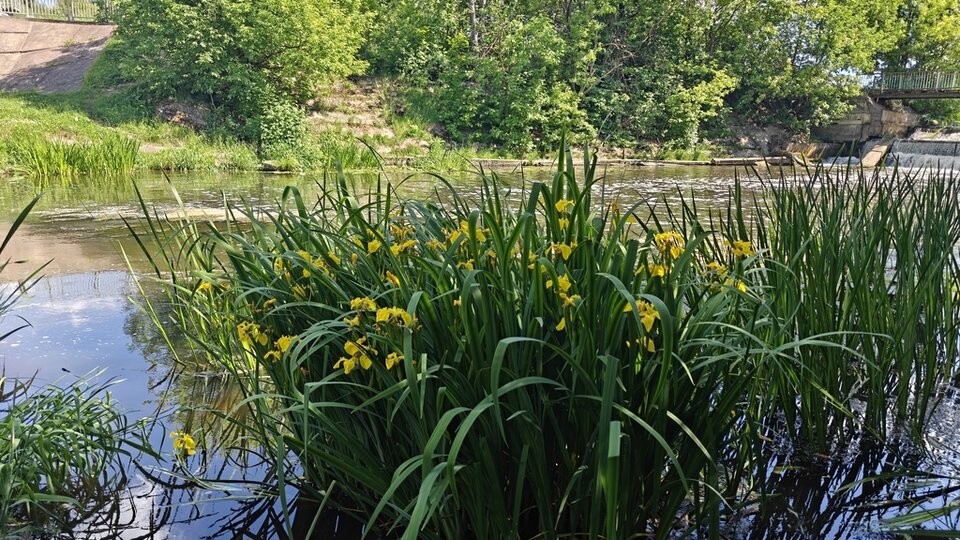
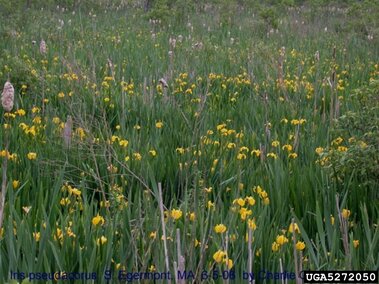
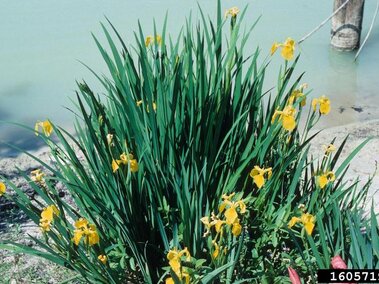
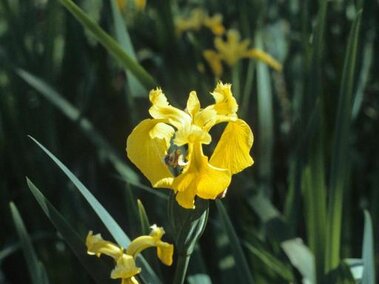
Yellow flag iris has showy yellow flowers and grows in shallow waters or along shorelines. It can reach up to 3 feet tall.
Flowers
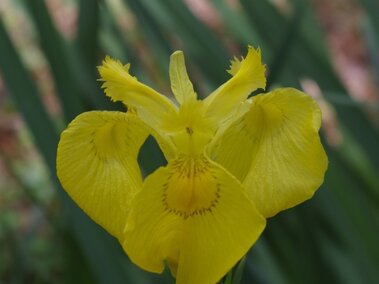
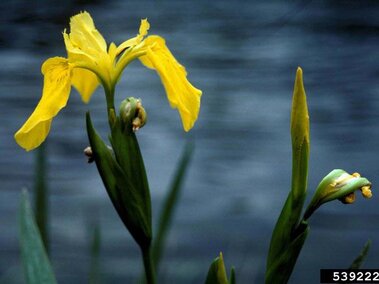
Flowers range in color from yellow to almost white. There are three petals which spread downwards. Flowers may have brownish purple mottled markings.
Leaves
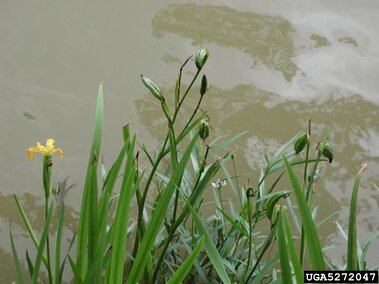
Leaves are broad, flat, and pointed at the tips. Stems get smaller as they go up the stem.
Stems
Stems are usually singly branched, solid, and grow upwards.
Seeds
Seeds are D-shaped, somewhat 3 angled, and flattened.
Photos
Where Does It Grow?
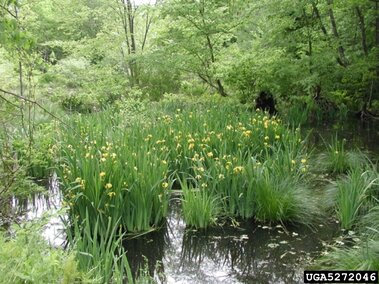
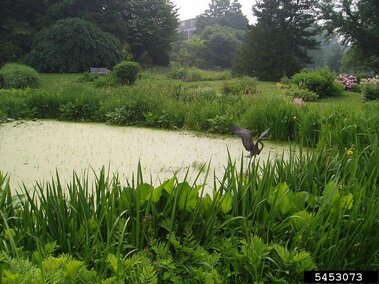
Yellow flag iris grows best in wet soils and can be found in wetlands and along shorelines of lakes and rivers. It can grow in shallow waters or meadows and somewhat salinity tolerant. Yellow flag iris is dispersed across the United States.
How Does It Spread?
Yellow flag iris was initially brough to the United States for ornamental purposes in the early 1900s but escaped cultivation. It reproduces through seed and vegetative reproduction via rhizomes. Its root system is expansive and several hundred flowering irises may be connected through rhizomes. Rhizome fragments can form new plants in suitable habitat.
How Do I Control It?
Mechanical
Small infestations can be hand-removed through digging. Ensure that all parts of the plant, especially rhizomes, have been removed and appropriately disposed of or destroyed. Gloves or other protective gear should be worn when handling due to potential skin sensitivity.
Contact your county weed control authority to determine appropriate removal methods.
Cultural
Do not plant yellow flag iris for ornamental purposes. Use a native alternative instead.
Prevent seed spread after outdoor activities in a few simple steps:
REMOVE plants, animals and mud from boots, gear, pets and vehicles.
CLEAN your gear before entering and leaving the recreation site.
STAY on designated roads and trails.
PLANT non-invasive species.
PlayCleanGo: Stop Invasive Species in Your Tracks
Chemical
Please refer to the 2026 Guide for Weed, Disease and Insect Management in Nebraska or contact your county weed control authority.
What Should I Do If I See It in Nebraska?
If you see yellow flag iris in Nebraska, you should report it to your county weed control authority. For guidance on what information to include in your report, check out our reporting tips.
References and More Information
Lincoln Soil and Water Conservation District
Nebraska County Designated Noxious Weeds
Nebraska Weed Control Association
North Carolina Extension Gardener
US Fish and Wildlife Service Yellow Flag Iris Ecological Risk Screening Summary
USGS Nonindigenous Aquatic Species Database