General Information
Species Name: Amblyomma maculatum
Family: Ixodidae (mites and ticks)
Life Cycle: Three-host lifecycle (larvae>nymph>adult)
Activity: Adults emerge in Nebraska mid-May through early August.
Origin: Gulf Coast in Mexico and the United States from Texas to South Carolina
Why Is It Invasive?
Gulf Coast ticks are known transmitters of various pathogens to humans, including Spotted Fever, Ehrlichiosis, Tularemia, Lyme Disease, and Alpha-gal Syndrome.
What Does It Look Like?
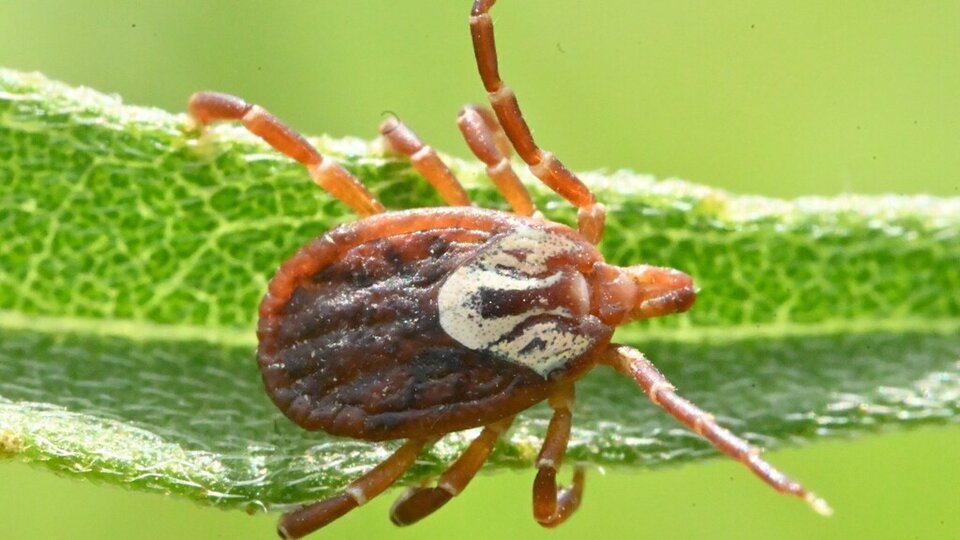
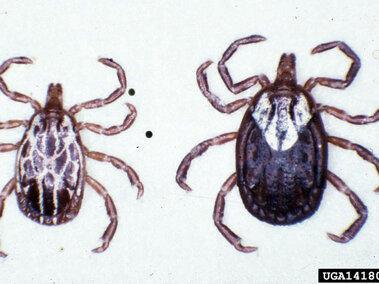
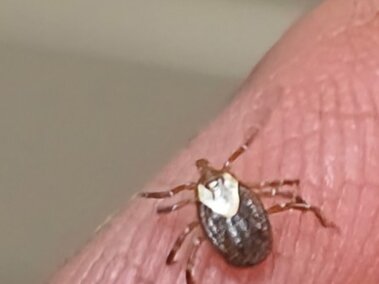
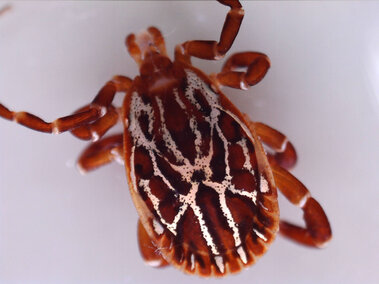
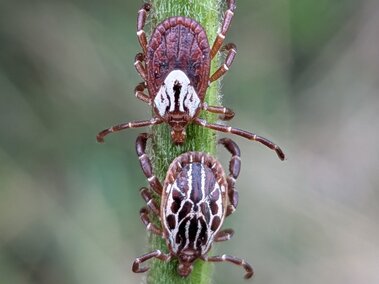
Adults are small or medium sized, reaching about 3-7mm in length, with adult females larger than adult males. Nymphs are about the size of a poppy seeds and larvae are slightly larger than the head of a pin. The bodies of Gulf Coast ticks are red and males have web-like patterned white lines on their entire bodies, whereas females have white markings on the body near the head.
Photos
Where Do They Live?
Gulf Coast ticks inhabit grasslands, prairies, and wooded areas. They are present in the United States along the Gulf Coast area and as far inland as Nebraska. Gulf Coast ticks in the larval and nymph stages can be found on small animals like birds, rodents, and rabbits, whereas adults can be found on larger animals like deer, livestock, cats, dogs, coyotes, and other carnivores. Gulf Coast ticks will attach to humans.
How Do They Spread?
Gulf Coast ticks can be spread on migrating birds they use as hosts or during the transport of infested livestock and wildlife. They can also be spread via human activities by attaching to people, pets, clothing, and equipment.
Control
It is best to prevent tick bites by taking some precautions before spending time outdoors during high tick-infestation times. Use EPA registered insect repellants containing DEET on exposed skin and clothing, following instructions carefully. Avoided heavily wooded or bushy areas and walk on trails. Make sure pets are on a veterinarian approved tick preventative program.
Upon returning indoors, check yourself, pets, and gear for ticks and promptly remove them if necessary. Remove ticks with pointy tweezer, grasping near the ticks head at the surface of the skin and pulling straight out. Monitor bite site for several days afterward.
What Do I Do if I Find Them?
If you find a Gulf Coast tick on your body, safely remove it as soon as possible. Dispose of a live tick by submersing it in alcohol, placing it in a sealed bag or container, tightly wrapping it in tape, or flushing it down the toilet.
Report tick sightings to the Tick, Tag, Go Program.
References and More Information
Pennsylvania Department of Environmental Protection
Nebraska Department of Health and Human Services Vector-Borne Disease Program