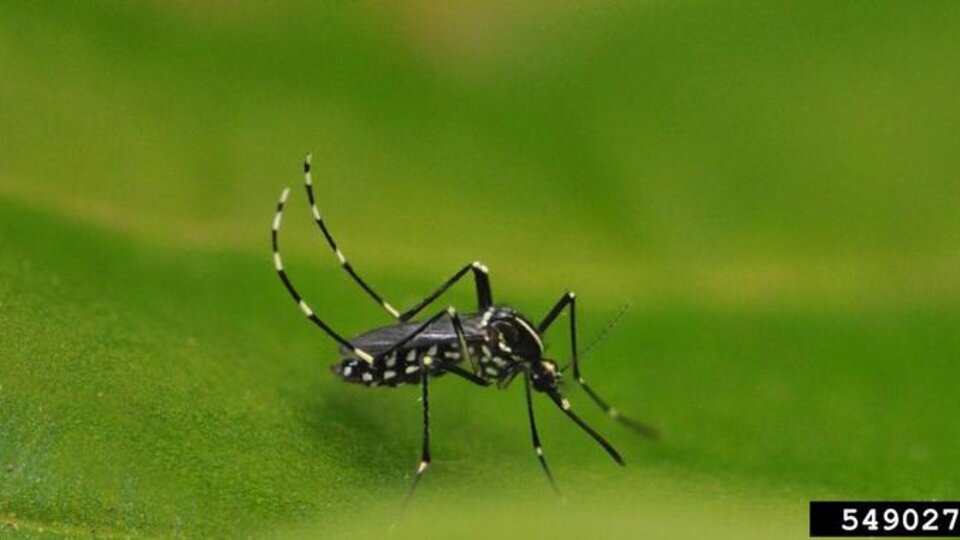
Credit: Ary Faraji, SLCMAD, Bugwood.org
General Information
Species Name: Aedes albopictus
Family: Culicidae (mosquitos)
Life Cycle: Complete (egg > larvae > pupae > adult).
Activity: Adults emerge in Nebraska mid-May through early August.
Origin: Asia
Why Is It Invasive?
Asian tiger mosquitos are not just pests, they are dangerous. They are known carriers of West Nile virus, Zika virus, Dengue Fever, and Eastern Equine Encephalitis. Asian tiger mosquitos are considered "container breeders" and lay eggs in small, contained water sources, natural or man-made. This can make them especially prominent in urban areas that may not normally have mosquitoes. They are persistent biters and bite both people and animals.
What Does It Look Like?
General Characteristics
Adult
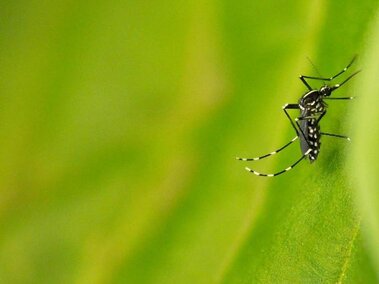
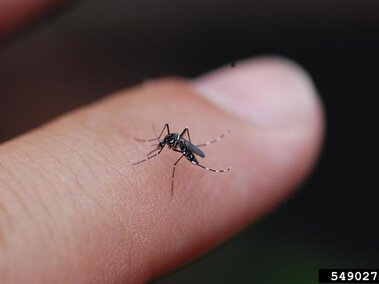
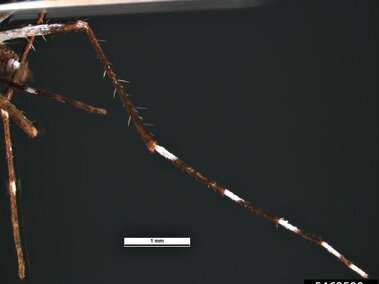
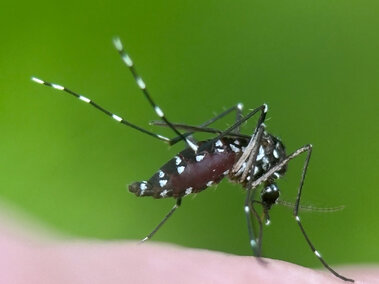
Adult Asian tiger beetles are black with distinctive white bands on the legs and white spots on the body. A single white stripe runs down the length of the back. Adults are about 1/4 inch long.
Pupal Stage
The pupae are dark brown and comma-shaped. Pupae develop in the water and have a tumbling motion in water when disturbed.
Larvae
Larvae develop in the water, are worm-like, and have a wiggling motion when swimming.
Photos
Where Do They Live?
Asian tiger mosquitoes will lay eggs in any small, water-containing vessel and typically do not move more than 300 feet away in their adulthood. They can be found in natural and urban environments. They are present in the southeastern United States, along the East and West Coasts, and into the Great Plains region.
How Do They Spread?
The Asian tiger mosquito was initially introduced to the United States in the 1980s in scrap tires with small amounts of water in them. It continues to spread throughout the country in enclosed containers with small pools of water during movement by people.
What Do I Do If I Find Them?
You can report an Asian tiger mosquito sighting. Practice personal protection to avoid bites that could potentially result in disease transmission.
How Do I Control Them?
Mechanical
Reduce mosquito breeding habitats by turning over, covering, or throwing out items that can hold water including, but not limited to, tires, buckets, planters, toys, pools, or flowerpots. Be sure to remove small pools of standing water from your home and routinely clean and replace water in outdoor items intended to hold water such as bird baths, fountains, or pet bowls.
Cultural
Do not move open containers holding even small amounts of water. Drain and dry all objects of standing water before moving them from one location to another.
Pesticides
Larvacides for mosquito control can be purchased at local hardware or home improvement stores. Follow label instructions carefully and do not treat drinking water with pesticides. You can also contact a certified pesticide applicator.
References and More Information
Chatham County Mosquito Control
Illinois Department of Public Health
National Invasive Species Information Center
Nebraska Department of Health and Human Services Vector-Borne Disease Program
University of California, Riverside Center for Invasive Species Research