General Information
Species Name: Onopordum acanthium
Also Known As: cotton thistle, woolly thistle, heraldic thistle, Scotch cotton thistle
Family: Asteraceae (Sunflower)
Growth Form: Forb
Life Span: Biennial (rarely an annual)
Flowering Dates: June-September
Origin: Eurasia
Noxious: Yes. Scotch thistle is listed as a County Designated Noxious Weed for Banner, Cheyenne, Dawes, Morrill, Sioux, and Sheridan County. Please report to the local weed control authority if found in the following counties: Banner, Cheyenne, Dawes, Morrill, Sioux, Sheridan
Why Is It Invasive?
Scotch thistle will reduce forage production in an infested area and prohibit land use by livestock, as well as preventing use by people and wildlife. Dense stands can prevent animals from grazing or having access to water.
What Does It Look Like?
General Characteristics
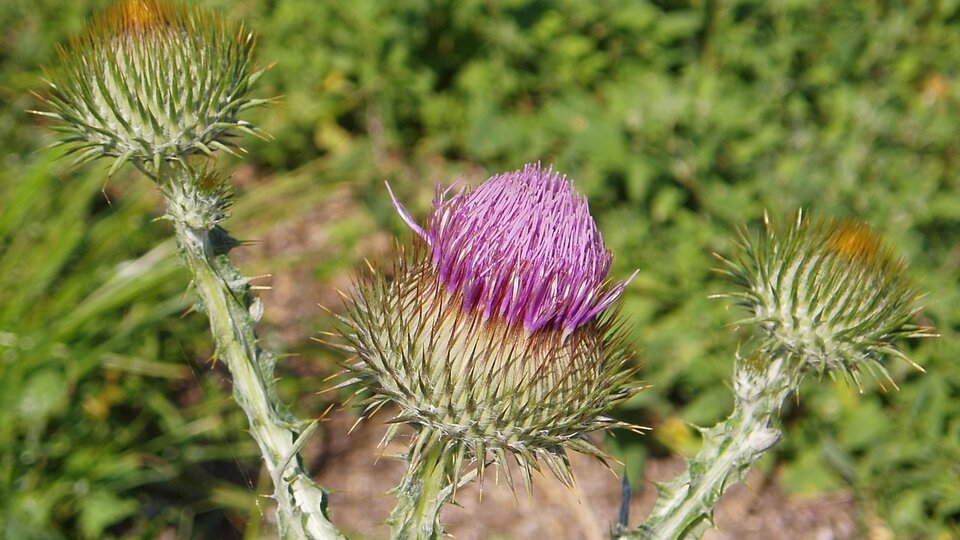
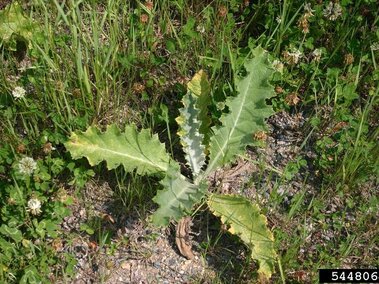
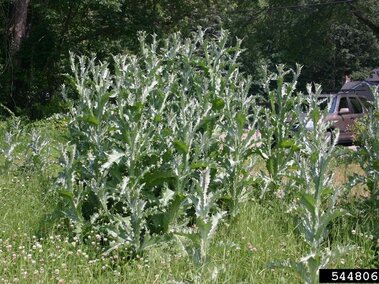
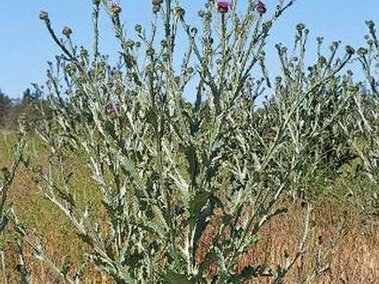
Scotch thistle appears as a rosette in its first year of growth, with long leaves reaching up to 20 inches long and 6 inches wide. In its second year, stems can grow up to 10 feet high and pink-purple flowers appear in the summer.
Flowers
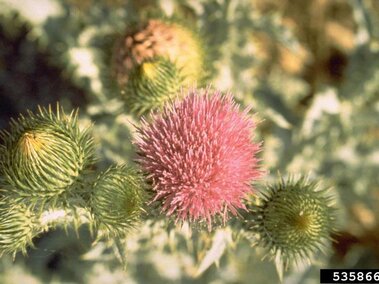
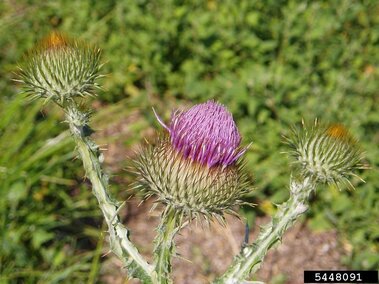
Flowers range in color from pink, purple, to red and grow in disk-shaped florets at the end of stems.
Leaves
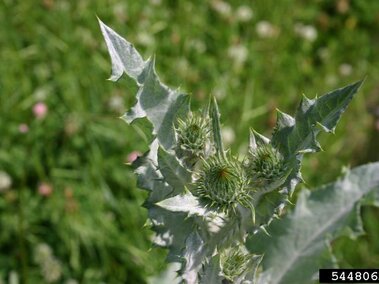
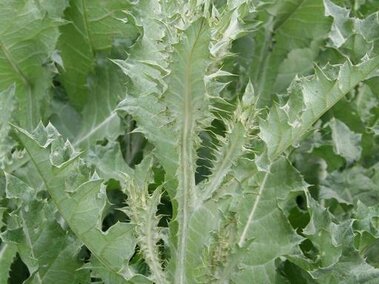
Leaves are large, growing up to 20 inches long and 6 inches wide. They are grayish-green in color and have a wavy texture. They are coarsely lobed and toothed with spines. Leaves are alternately arranged on the stem.
Stems
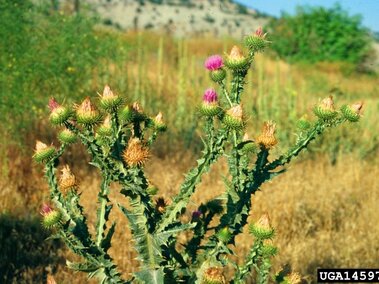
Stems are erect and can be simple or numerously branched. They are winged and very spiny.
Seeds
Seeds are small, smooth, slender, and plumed.
Photos
Where Does It Grow?
Scotch thistle establishes quickly in disturbed areas but can be successful in any type of habitat including road sides, pastures, rangeland, and meadows.
How Does It Spread?
Scotch thistle reproduces via seed that can be spread by natural or human vectors. Each plant produces up to 40,000 seeds.
How Do I Control It?
Mechanical
Mowing can help control scotch thistle and prevent seeding, but will not kill or eliminate the plant. Flowerheads that are cut when in bloom need to be bagged and appropriately disposed of to prevent seeding. Small infestations can be dug out and killed by cutting the taproot below the soil surface.
Contact your county weed control authority to determine appropriate removal methods.
Cultural
Having a well-established grass population can help prevent scotch thistle introduction. When buying hay or forage, check to make sure it is weed-free certified. Re-seed problem areas with a competitive plant community. Allowing goats and sheep to graze in infested areas may help manage the population, but other livestock will not graze on scotch thistle.
Prevent seed spread after outdoor activities in a few simple steps:
REMOVE plants, animals and mud from boots, gear, pets and vehicles.
CLEAN your gear before entering and leaving the recreation site.
STAY on designated roads and trails.
PLANT non-invasive species.
PlayCleanGo: Stop Invasive Species in Your Tracks
Chemical
Please refer to the 2026 Guide for Weed, Disease and Insect Management in Nebraska or contact your county weed control authority.
What Should I Do If I See It in Nebraska?
If you see scotch thistle in Nebraska, you should report it to your county weed control authority. For guidance on what information to include in your report, check out our reporting tips.
References and More Information
California Invasive Plant Council
Montana State University Broadwater County Extension
National Invasive Species Information Center
Nebraska County Designated Noxious Weeds
Nebraska Weed Control Association
Nebraska Weed Free Forage Program
University of Nebraska-Lincoln Institute of Agriculture and Natural Resources Cropwatch