General Information
Species Name: Cynoglossum officinale
Also Known As: dog bur, gypsyflower, rats and mice
Family: Boraginaceae (Borage)
Growth Form: Forb
Life Span: Biennial
Flowering Dates: May-July
Origin: Europe
Toxic: Yes. Poisonous to livestock when ingested, stopping reproduction of the liver cells. Fatalities may occur 6 months or more after ingesting. May cause a rash for some people upon contact with skin.
Noxious: Yes. Houndstongue is listed as a County Designated Noxious Weed for Dawes in Sheridan County. Please report to the local weed control authority if found in the following counties: Dawes and/or Sheridan.
Why Is It Invasive?
Houndstongue outcompetes native and crop plants and is poisonous to livestock when ingested. Although most livestock avoid consuming houndstongue while its alive, they may consume dead plants in hay.
What Does It Look Like?
General Characteristics
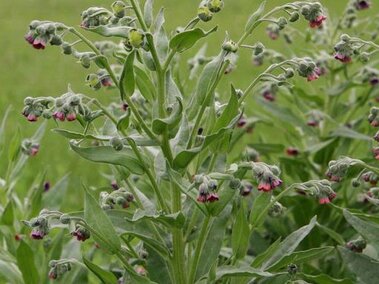
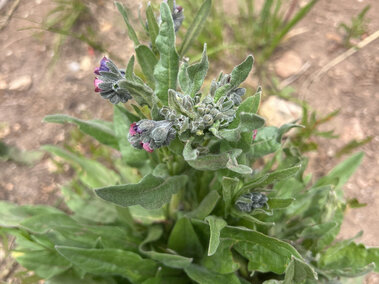
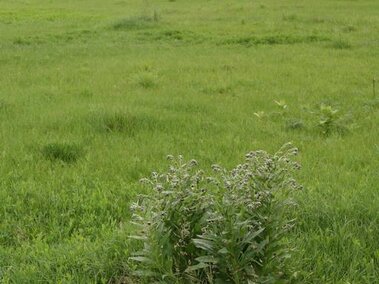
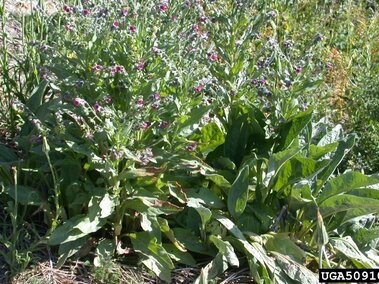
Houndstongue appears as rosette with long, velvety, leaves in its first year and then produces stems as tall as 4 feet in its second year. All parts of the plant are covered in hairs. Its roots are thick, woody, and branching. Plants may emit a musty, distinctive odor.
Flowers
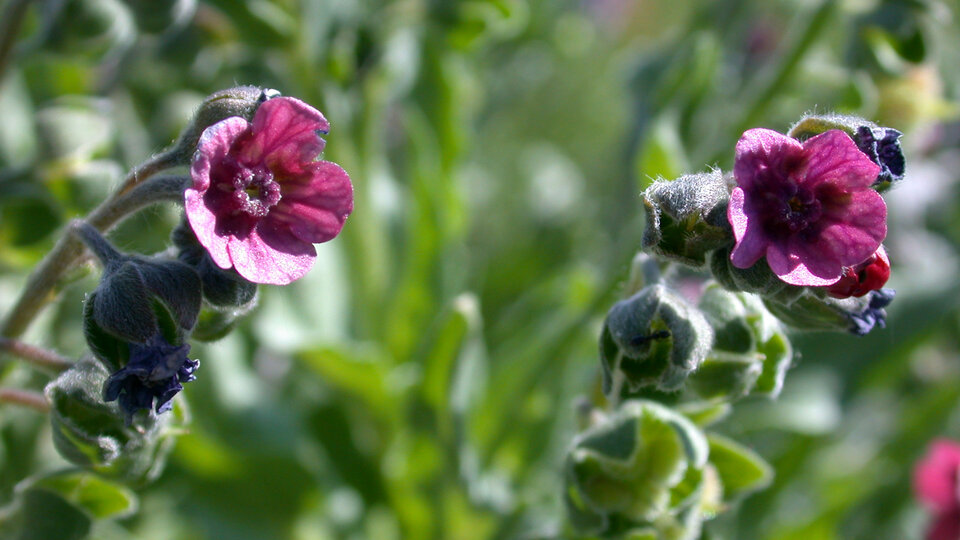
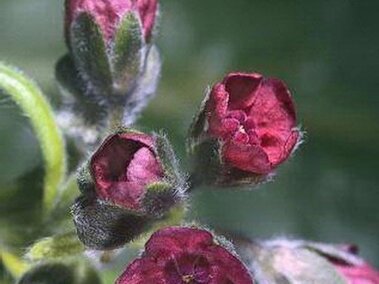
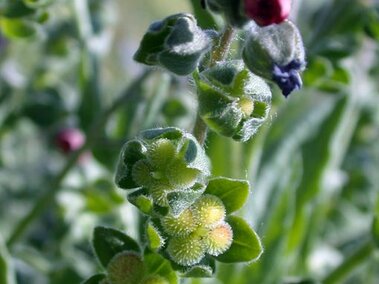
Flowers are reddish-purple and have 5 petals. Flowers grow in clusters at the ends of the upper stems.
Leaves
Leaves are alternately arranged, are rounded at the base and sharply pointed at the tip. Margins are entire and leaves are hairy and rough.
Stems
Stems are upright, branching, hairy, and coarse.
Seeds
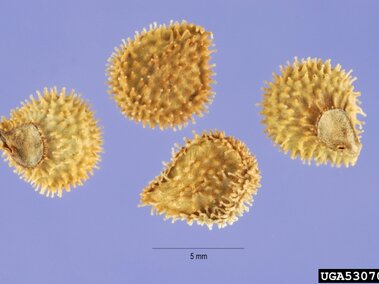
Seeds are small and encases in nutlets which have barbed hooks.
Photos
Where Does It Grow?
Houndstongue will invade disturbed areas including rangeland, roadsides, and riparian areas. It grows in open areas and is shade tolerant and thrives in wetter grasslands.
How Does It Spread?
Houndstongue reproduces by seeds, which are "velcro-like" and can get stuck to clothes, animal fur, livestock, and shoes. It was initially introduced to the United States as a contaminant in other seeds.
How Do I Control It?
Management is best done before plants go in to seed, as seeds can remain viable in the soil for 2-3 years.
Mechanical
Small infestations may be controlled or eradicated by digging out and removing the plant. Sever the root at least 2 inches below ground. Mowing is not an effective control method as it does not eliminate the underground taproot.
Contact your county weed control authority to determine appropriate removal methods.
Cultural
When buying hay or forage, check to make sure it is weed-free certified. Re-seed problem areas with a competitive plant community. Do NOT use grazing as a control method due to toxicity.
REMOVE plants, animals and mud from boots, gear, pets and vehicles.
CLEAN your gear before entering and leaving the recreation site.
STAY on designated roads and trails.
PLANT non-invasive species.
PlayCleanGo: Stop Invasive Species in Your Tracks
Chemical
Please refer to the 2026 Guide for Weed, Disease and Insect Management in Nebraska or contact your county weed control authority.
What Should I Do If I See It in Nebraska?
If you see houndstongue in Nebraska, you should report it to your county weed control authority. For guidance on what information to include in your report, check out our reporting tips.
References and More Information
Montana State University Extension Integrated Pest Management
National Invasive Species Information Center
Nebraska County Designated Noxious Weeds
Nebraska Weed Control Association
Nebraska Weed Free Forage Program
Nebraska Weed Management Coalition "The Weed Watch" Fall 2025
North American Invasive Species Management Association Fact Sheet