General Information
Species Name: Carduus acanthoides
Also Known As: spiny plumeless thistle, smallhead plumeless thistle
Family: Asteraceae (Sunflower)
Growth Form: Forb
Life Span: Biennial (or winter annual)
Flowering Dates: June - September
Origin: Eurasia
Noxious: Yes. Plumeless thistle is listed as a State Noxious Weed under the Noxious Weed Control Act in Nebraska, which means it is required by law for it to be removed from public and private land in the state.
Category 4: Noxious Aquatic Invasive Species
Why Is It Invasive?
Plumeless thistle outcompetes native species and desirable forage in pastures and rangeland. It currently infests 45,000 acres in Nebraska.
What Does It Look Like?
General Characteristics
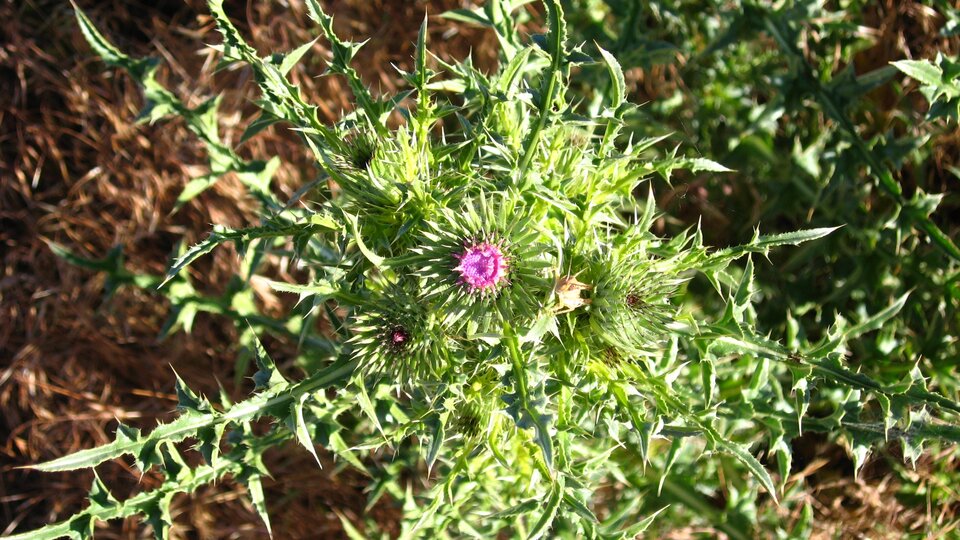
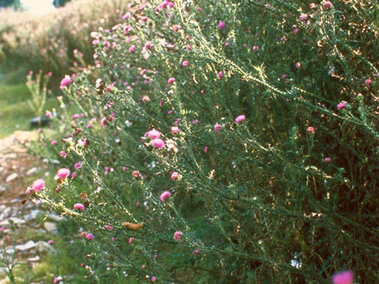
Plumeless thistle is an upright, spiky plant that can grow up to 8 feet tall.
Flowers
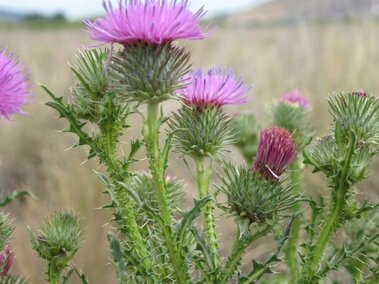
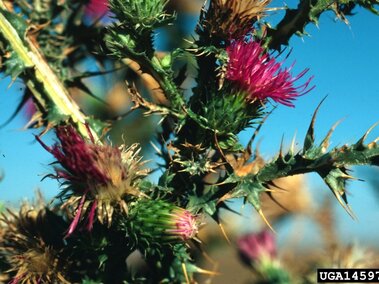
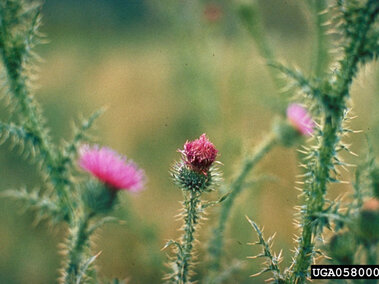
Flowers are reddish purple and may grow solitarily or in clusters of 2-3. They have spiky petals and are disk-shaped.
Leaves
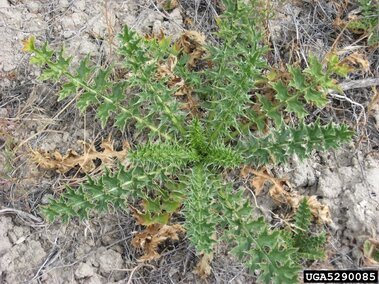
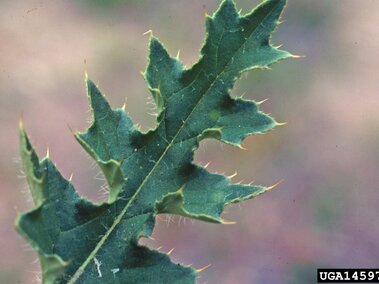
Leaves are alternately arranged, dark green, and elliptic or oblong. They are deeply lobed and almost spiky in appearance, with small hairs on the underside. There are orangeish spines along the leaf margins.
Stems
Stems are erect and branched. They are touch and have spiny wings.
Seeds
Seeds are small and smooth.
Photos
Where Does It Grow?
Plumeless thistle succeeds in a wide range of habitats, but is most commonly found in disturbed sites in pastures, rangeland, and roadsides. It is spread throughout much of the United States.
How Does It Spread?
Plumeless thistle reproduces via seeds which can be spread by either natural or human vectors. Each plant can produce nearly 10,000 seeds.
How Do I Control It?
Long-term management plans with vigilant monitoring is required for treating established populations.
Mechanical
Mowing in infested areas which have reached the bud or bloom stage can help temporarily prevent seed development. Plumeless thistle can also be removed by digging, but may require significant effort for well-established populations.
Contact your county weed control authority to determine appropriate removal methods.
Cultural
Avoid overgrazing pastures and establish a dense, well-maintained grass community.
Use only certified weed free hay.
Nebraska Weed Free Forage Program
Help prevent leafy spurge spread by checking clothing, equipment, and vehicles for seeds after being in infested or suspect areas.
REMOVE plants, animals and mud from boots, gear, pets and vehicles.
CLEAN your gear before entering and leaving the recreation site.
STAY on designated roads and trails.
PLANT non-invasive species.
Play, Clean, Go: Stop Invasive Species in Your Tracks
Chemical
Please refer to the 2026 Guide for Weed, Disease and Insect Management in Nebraska and/or contact your county weed control authority.
What Should I Do If I See It in Nebraska?
If you see plumeless thistle in Nebraska, you should report it to your county weed control authority. For guidance on what information to include in your report, check out our reporting tips.
References and More Information
Colorado Department of Agriculture
Minnesota Department of Agriculture
Nebraska Noxious Weed Plumeless Thistle Brochure
Nebraska Weed Free Forage Program