General Information
Species Name: Centaurea stoebe/maculosa
Family: Asteraceae (Sunflower)
Growth Form: Forb
Life Span: Biennial (occasionally short-lived perennial)
Flowering Dates: June - September
Origin: Eurasia
Toxic: Yes, prolonged consumption of fresh plant material may cause chewing disease in horses. Some people develop a rash after spotted knapweed contact with skin.
Noxious: Yes. Spotted knapweed is listed as a State Noxious Weed under the Noxious Weed Control Act in Nebraska, which means it is required by law for it to be removed from public and private land in the state.
Category 4: Noxious Aquatic Invasive Species
Why Is It Invasive?
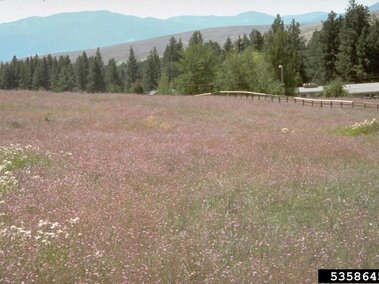
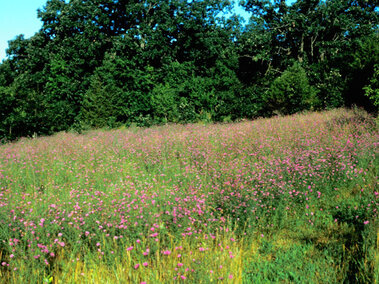
Spotted knapweed aggressively invades dry, disturbed soils, such as roadsides, rangeland, and pastures. It outcompetes native vegetation and desirable forage. Chemical released by spotted knapweed also inhibit the growth of surrounding vegetation. Spotted knapweed increases soil erosion and poses wildlife hazards. Approximately 12,000 acres of Nebraska have become infested.
What Does It Look Like?
General Characteristics
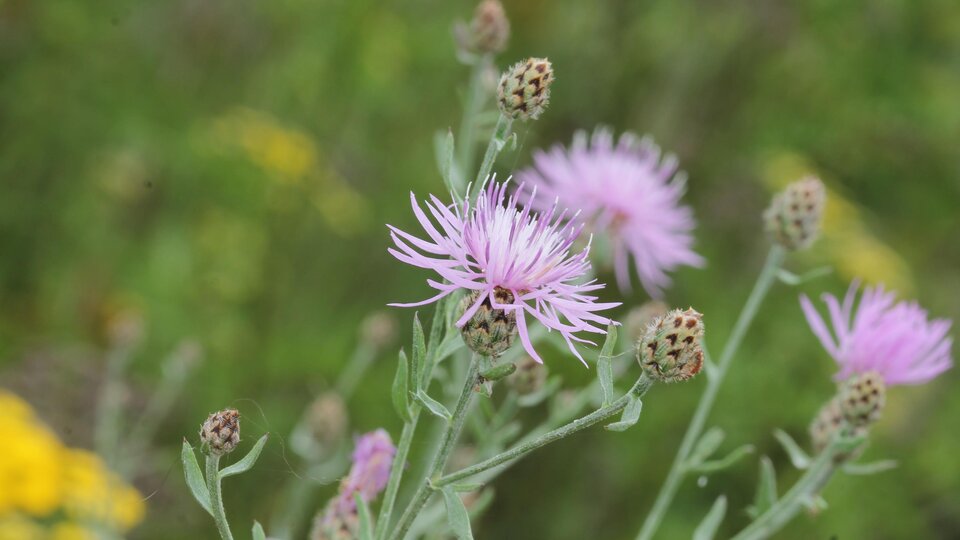
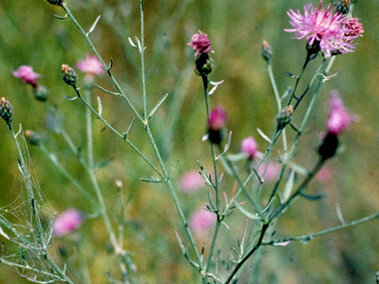
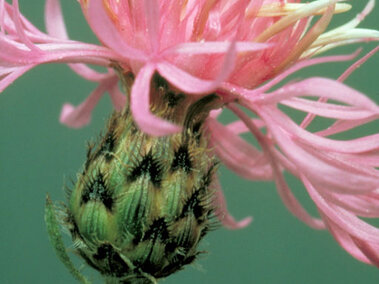
Spotted knapweed has a slightly wooly appearance and can grow up to 5 feet tall with a stout tap root. First year plants start as a cluster of lobed leaves and then produce flowering stems in the second year.
Flowers
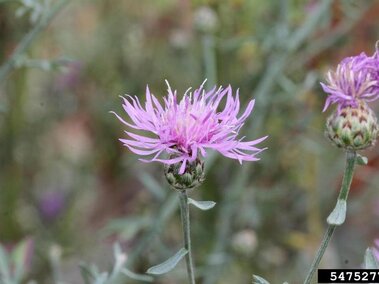
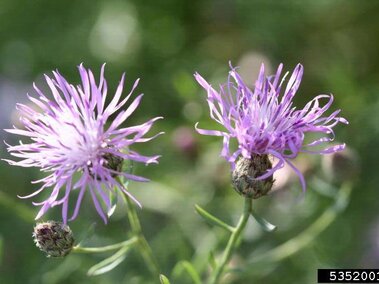
Flowers are solitary and pinkish purple or white with spiky petals.
Leaves
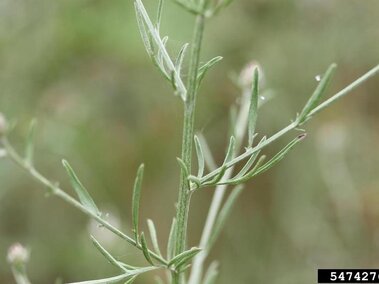
Leaves are alternately arranged and linear to oblong. They are grayish-green, often dotted with black glands, and without hair.
Stems
Stems are erect, highly branching, and have small hairs.
Seeds
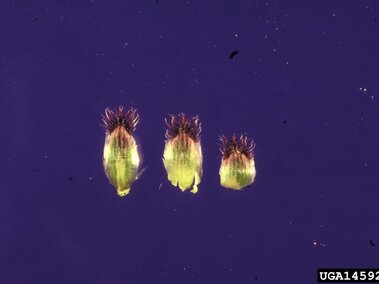
Seeds are very small, black or brown, and oval. Seeds have short bristles on one end.
Photos
Where Does It Grow?
Spotted knapweed prefers dry, sandy soils but can grow in a wide range of habitats. It can be found in pastures, meadows, rangeland, roadsides, and in sandy or gravelly floodplains. It is widespread across the United States.
How Does It Spread?
Spotted knapweed reproduces via seeds which can be spread by either natural or human vectors. Each plant produces an average of 1,000 seeds and seeds remain viable in the soil for up to 8 years. Spotted knapweed seeds were likely introduced to the United States in contaminated seed shipments of other species.
How Do I Control It?
Control methods must be repeated and a long-term management plan should be identified due to long-term seed viability in the soil. Gloves should be worn when handling spotted knapweed to avoid allergic reaction.
Mechanical
Mowing will temporarily prevent plants that have reached the budding phase from producing season, but will not completely prevent it.
Contact your county weed control authority to determine appropriate removal methods.
Cultural
Grass competition from well managed hay and rangeland will slow, but not stop, the spread of spotted knapweed. Seasonal grazing may also help slow the spread.
Use only certified weed free hay.
Nebraska Weed Free Forage Program
Help prevent spotted knapweed spread by checking clothing, equipment, and vehicles for seeds after being in infested or suspect areas.
REMOVE plants, animals and mud from boots, gear, pets and vehicles.
CLEAN your gear before entering and leaving the recreation site.
STAY on designated roads and trails.
PLANT non-invasive species.
Play, Clean, Go: Stop Invasive Species in Your Tracks
Chemical
Please refer to the 2026 Guide for Weed, Disease and Insect Management in Nebraska and/or contact your county weed control authority.
What Should I Do If I See It in Nebraska?
If you see spotted knapweed in Nebraska, you should report it to your county weed control authority. For guidance on what information to include in your report, check out our reporting tips.
References and More Information
Minnesota Department of Agriculture
Minnesota Department of Natural Resources
Nebraska Noxious Weed Knapweed Brochure
Nebraska Weed Free Forage Program
Nebraska Weed Control Association