General Information
Species Name: Lespedeza cuneata
Also Known As: sericea, Chinese lespedeza, Chinese bushclover
Family: Fabaceae (Bean)
Growth Form: Forb
Life Span: Perennial
Flowering Dates: July - October
Origin: Asia
Noxious: Yes. Sericea lespedeza is listed as a State Noxious Weed under the Noxious Weed Control Act in Nebraska, which means it is required by law for it to be removed from public and private land in the state.
Category 4: Noxious Aquatic Invasive Species
Why Is It Invasive?
Sericea lespedeza invades pastures, rangelands, and roadsides, outcompeting native vegetation and desirable forage. It is not palatable to livestock.
What Does It Look Like?
General Characteristics
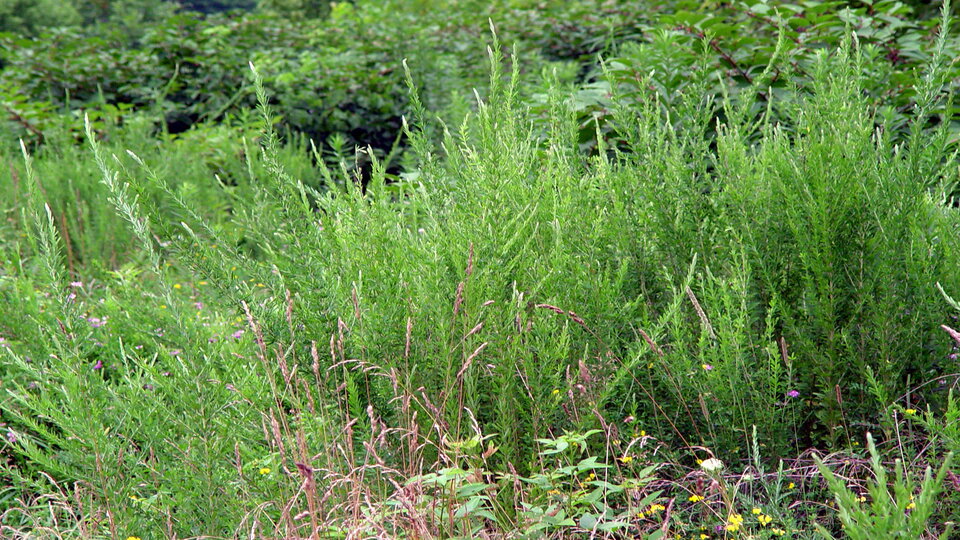
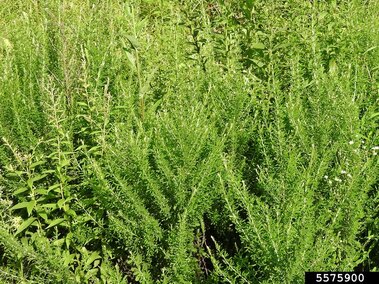
Sericea lespedeza is a warm-season perennial with woody stems and many erect, leafy branches.
Flowers
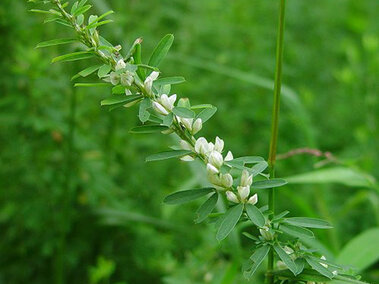
Flowers are cream or white and sometimes yellow-white with dark purple or pink veins. Flowers occur individually or in small clusters.
Leaves
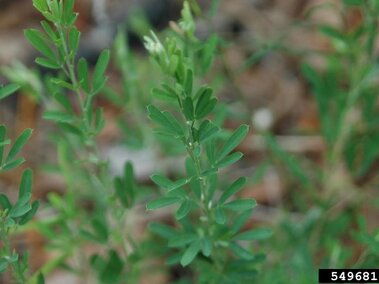
Leaves are alternately arranged and erect, with tips that are round or flat. The lower surface of the leaf has small hairs whereas the upper surface may or may not.
Stems
Stems are erect with numerous branches, slender, and grooved. Lines of hair on ridges. Mature stems are somewhat woody with small bristles or spines.
Seeds
Ellipsoid to ovoid, slightly flattened, brown to olive and often spotty patterned. Each stem can have up to a thousand seeds.
Photos

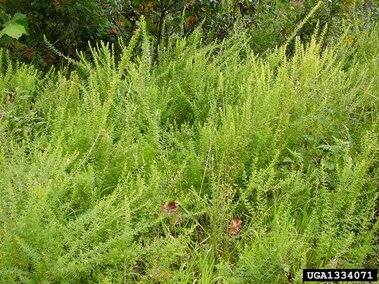
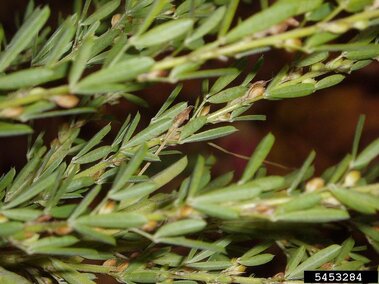
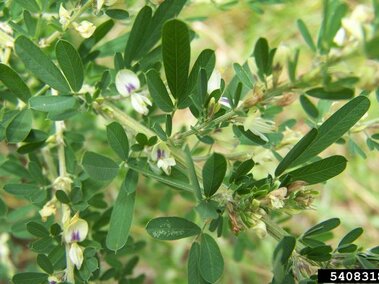
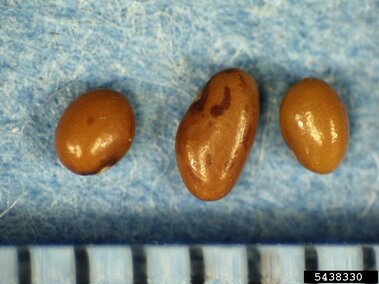
Where Does It Grow?
Sericea lespedeza can be found in much of the eastern and southern United States and some of the eastern Great Plains, including Nebraska. It can grow in pastures, rangeland, meadows, roadsides and does best in deep, fertile, well-drained clay and loamy soils. It is recognized for its drought and acidity tolerance, as well as low fertility, shallow soils.
How Does It Spread?
Sericea lespedeza reproduces via seed, with seeds that can remain viable in the soil for up to 20 years. Seeds can be spread via natural or human vectors, including in contaminated soil and hay, and during recreation activities.
How Do I Control It?
Long-term management plans are necessary to control sericea lespedeza due to seed viability lasting up to 20 years.
Mechanical
Mowing in late bud stage for 2 to 3 consecutive years from mid-July to late summer may reduce vigor of the stand. However, these activities may reduce grass competition, which is critical for maintaining healthy grasslands and reducing sericea lespedeza infestations.
Contact your county weed control authority to determine appropriate removal methods.
Cultural
Grazing with mature cattle early in the season may help control infestations. However, these activities may reduce grass competition, which is critical for maintaining healthy grasslands and reducing sericea lespedeza infestations.
Use only certified weed free hay.
Nebraska Weed Free Forage Program
Help prevent sericea lespedeza spread by checking clothing, equipment, and vehicles for seeds after being in infested or suspect areas.
REMOVE plants, animals and mud from boots, gear, pets and vehicles.
CLEAN your gear before entering and leaving the recreation site.
STAY on designated roads and trails.
PLANT non-invasive species.
Play, Clean, Go: Stop Invasive Species in Your Tracks
Chemical
Please refer to the 2025 Guide for Weed, Disease and Insect Management in Nebraska and/or contact your county weed control authority.
What Should I Do If I See It in Nebraska?
If you see sericea lespedeza in Nebraska, you should report it to your county weed control authority. For guidance on what information to include in your report, check out our reporting tips.
References and More Information
Kansas State University Department of Agronomy
Missouri Department of Conservation
Nebraska Weed Free Forage Program
Nebraska Weed Control Association
North Carolina State Extension Gardener