General Information
Species Name: Carduus nutans
Also Known As: nodding thistle, Don Krause thistle, nodding plumeless thistle
Family: Asteraceae (Sunflower)
Growth Form: Forb
Life Span: Biennial (occasionally annual)
Flowering Dates: May - August
Origin: Eurasia
Noxious: Yes. Musk thistle is listed as a State Noxious Weed under the Noxious Weed Control Act in Nebraska, which means it is required by law for it to be removed from public and private land in the state.
Category 4: Noxious Aquatic Invasive Species
Why Is It Invasive?
Musk thistle invades pastures and fields, crowding out desirable forage plants. Livestock will not graze in areas heavily infested with musk thistle. Musk thistle currently infests 280,000 acres in Nebraska, costing landowners and producers millions of dollars annually in control efforts.
What Does It Look Like?
General Characteristics
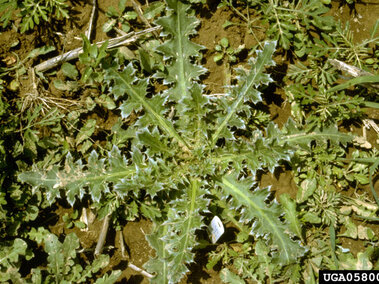
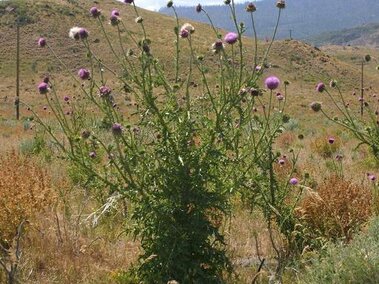
In its first year, musk thistle grows as a group of leaves near the ground. The following spring it sends up a purple flowering stalk which can grow up to 7 feet high.
Flowers
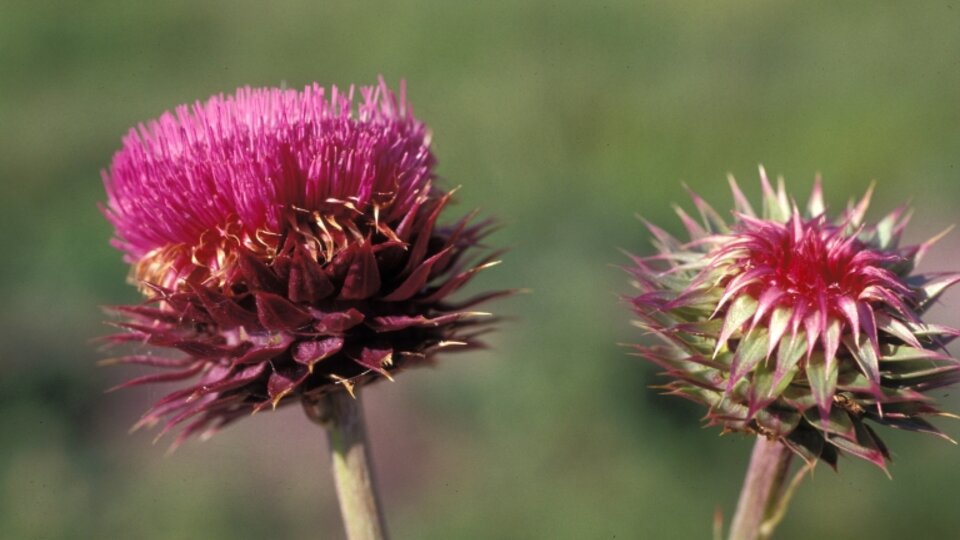
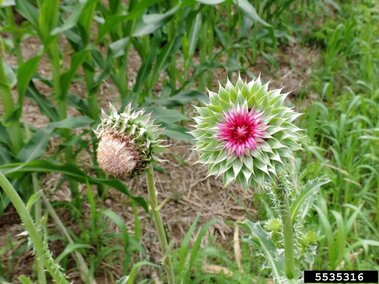
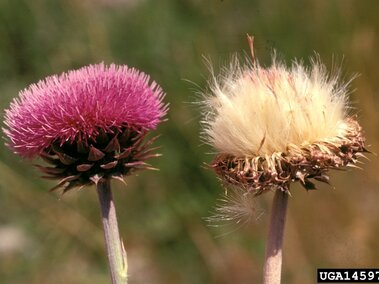
Flowers are purple with spiky petals and disk-shaped, with hundreds of flowers per plant. Flowering heads can droop to a 90 degree angle when mature.
Leaves
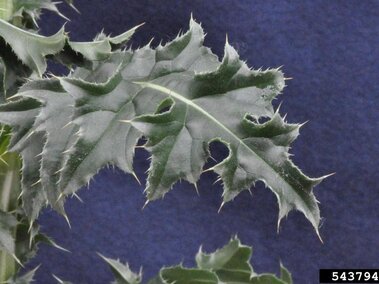
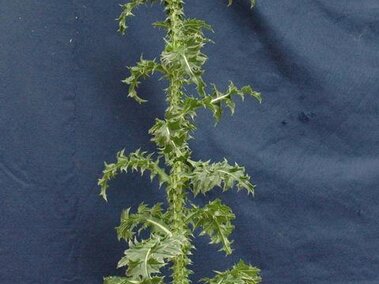
In its first year, musk thistle leaves are low to the ground, can be 10+ inches long and have deep lobes. During its second year, leaves are alternately arranged, not deeply serrated and do not have hairs.
Stems
Stems are erect and highly branched with sharp spines.
Seeds
Seeds are small with feathery, white tufts.
Photos
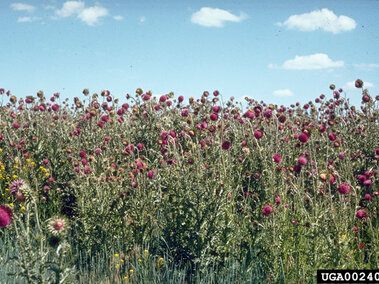
Where Does It Grow?
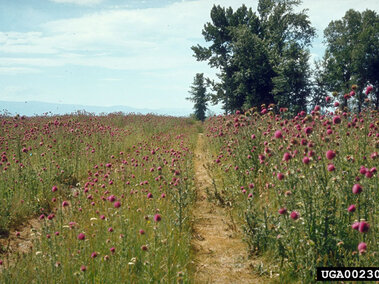
Musk thistle is widespread throughout the United States, including the Great Plains and Nebraska. It grows in pastures, meadows, rangeland, roadsides, stream banks, and other open areas. Musk thistle will grow in a variety of conditions and habitats, but disturbed sites with high sunlight are most susceptible to invasion.
How Does It Spread?
Leafy spurge reproduces exclusively by seed, which can be dispersed via natural causes or human vectors, such as hay and crop seed movement or recreation. Seeds can remain viable for up to 10-15 years. Individual plants can produce up to 10,000 seeds.
How Do I Control It?
Seeds may mature in the seed head after control efforts. Therefore, control methods must be enacted before heading or flowering heads must be collected by hand and appropriately destroyed.
Mechanical
Infested areas that have reached the bud or bloom stage can be mowed to temporarily prevent seed development. However, varying maturation among individual plants will require additional measures.
Contact your county weed control authority to determine appropriate removal methods.
Cultural
A properly managed grassland that is not overgrazed is the best control method available, but these grasslands require monitoring for musk thistle and quick intervention upon establishment.
Use only certified weed free hay.
Nebraska Weed Free Forage Program
Help prevent must thistle spread by checking clothing, equipment, and vehicles for seeds after being in infested or suspect areas.
REMOVE plants, animals and mud from boots, gear, pets and vehicles.
CLEAN your gear before entering and leaving the recreation site.
STAY on designated roads and trails.
PLANT non-invasive species.
Play, Clean, Go: Stop Invasive Species in Your Tracks
Chemical
Please refer to the 2026 Guide for Weed, Pest, and Insect Management in Nebraska or contact your county weed control authority.
What Should I Do If I See It in Nebraska?
If you see musk thistle in Nebraska, you should report it to your county weed control authority. For guidance on what information to include in your report, check out our reporting tips.
References and More Information
Colorado Department of Agriculture
Minnesota Department of Natural Resources
Missouri Department of Conservation
Montana State University Extension Integrated Pest Management
National Invasive Species Information Center
Nebraska Weed Free Forage Program