General Information
Species Name: Fallopia sachalinensis
Also Known As: Sakhalin knotweed, elephant-ear bamboo
Family: Polygonaceae (Buckwheat)
Growth Form: Forb
Life Span: Perennial
Flowering Dates: July - October
Origin: Asia
Noxious: Yes. Giant knotweed is listed as a State Noxious Weed under the Noxious Weed Control Act in Nebraska, which means it is required by law for it to be removed from public and private land in the state.
Category 4: Noxious Aquatic Invasive Species
Why Is It Invasive?
Giant knotweed forms dense colonies and outcompetes native vegetation, greatly altering ecosystems. Stands can clog small waterways and increase erosion along banks, decreasing riparian habitat quality. It spreads aggressively through rhizomes and can form a new colony from small stem fragments. Once established, it is very difficult to control.
What Does It Look Like?
General Characteristics
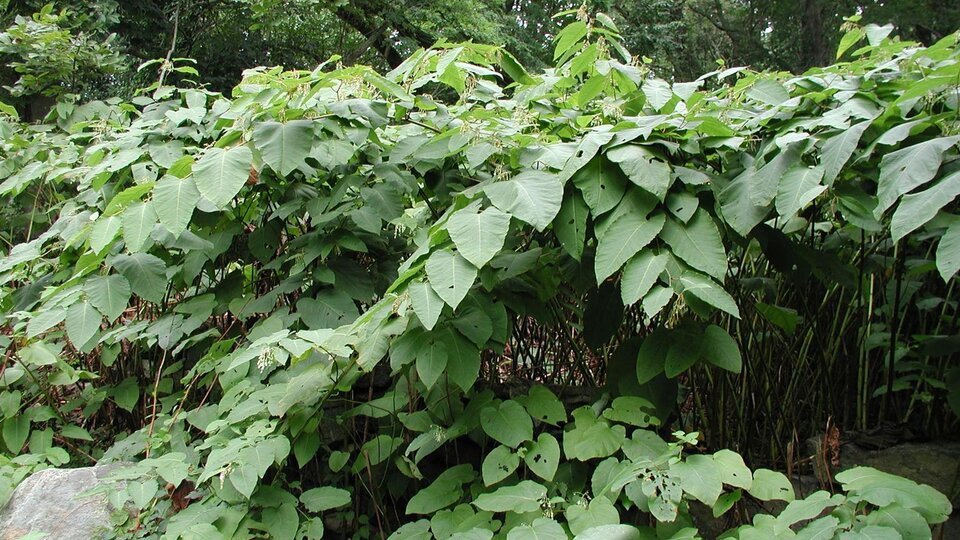
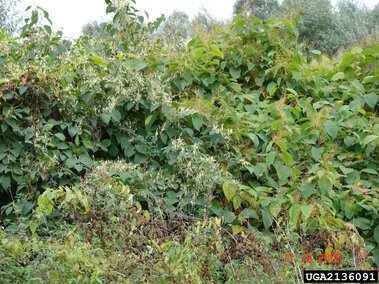
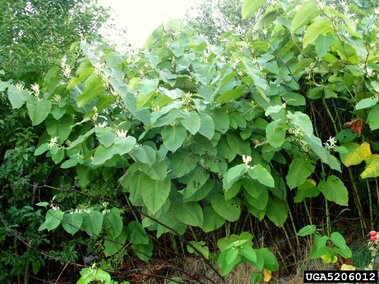
Giant knotweed is woody in appearance with large green leaves and can grow more than 10 feet tall. Roots are orange and form extensive underground networks.
Flowers
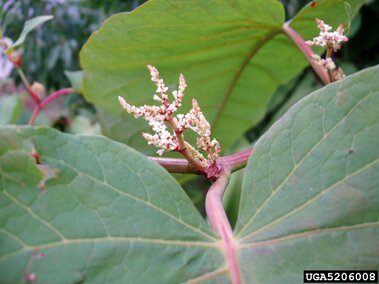
Flowers are green to green-white in color and grow in small clusters directly above the leaves.
Leaves
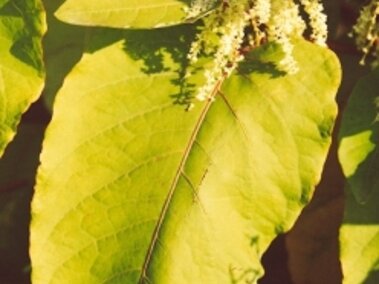
Leaves are alternately arranged and oval to heart-shaped. They are large, growing 8-16 inches (20-40cm) long. The top of the leaf is smooth without hairs whereas the bottom may have scattered, stiff hairs. Leaves may have a wavy texture.
Stems
Stems are erect, bamboo-like, and grow in a zig-zag pattern. They are smooth without hairs and light green to reddish with darker nodes. They are sparingly branched.
Seeds
Seeds are small and are not the primary vector of spread. Vegetative reproduction is the primary form of spread.
Photos
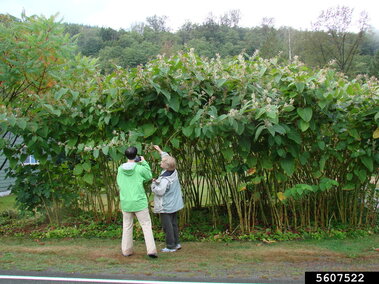
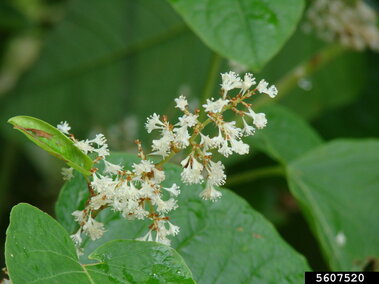
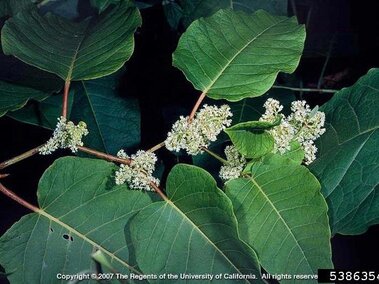
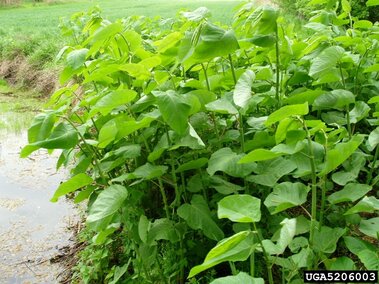
Where Does It Grow?
Giant knotweed is discontinuously spread across the United States but scarce among the Great Plains region, currently only found in Montana. Giant knotweed can be found in dry soils or riparian areas, succeeding in various soil types. It is often found in sunny areas such as meadows or roadsides and is considered shade-intolerant.
How Does It Spread?
Giant knotweed was initially introduced to the United States from Asia in the 1800s for ornamental use. It was then used for erosion control and as livestock forage. Giant knotweed's extensive underground root systems allow it to spread aggressively and rapidly. New colonies can also form from small stem or rhizome fragments. Plant parts can be spread naturally or by people, including movement or contaminated soil.
How Do I Control It?
The key to successful giant knotweed control is persistence. Multiple control methods may be necessary to achieve control, with previous infestations requiring long-term monitoring, as well as vigilance for new infestation sightings.
Mechanical
Cutting knotweed only removes the aboveground portion of the plant and can stimulate the underground rhizomes.
Contact your county weed control authority to determine appropriate removal methods.
Cultural
Prevention is key. Do not plant giant knotweed for ornamental purposes, avoid moving soil from contaminated areas, and check clothing, pets, and equipment for plant fragments after being in infested areas.
Chemical
Please refer to the 2026 Guide for Weed, Pest, and Insect Management in Nebraska or contact your county weed control authority.
What Should I Do If I See It in Nebraska?
If you see giant knotweed in Nebraska, you should report it to your county weed control authority. For guidance on what information to include in your report, check out our reporting tips.
References and More Information
Minnesota Department of Agriculture Noxious and Invasive Weeds Program
Nebraska Department of Agriculture
Nebraska Noxious Weed Brochure