General Information
Species Name: Euphorbia esula
Also Known As: wolf's milk, cypress surge
Family: Euphorbiaceae (Spurge)
Growth Form: Forb
Life Span: Perennial
Flowering Dates: May - September
Origin: Eurasia
Toxic: Yes, leafy spurge is toxic to cattle and horses when ingested. Ingestion can cause excessive salivation, colic, and diarrhea. Leafy spurge can cause blistering in some humans when coming into contact with the skin. Goats and sheep can consume leafy spurge with little to no negative effects.
Noxious: Yes. Leafy spurge is listed as a State Noxious Weed under the Noxious Weed Control Act in Nebraska, which means it is required by law for it to be removed from public and private land in the state.
Category 4: Noxious Aquatic Invasive Species
Why Is It Invasive?
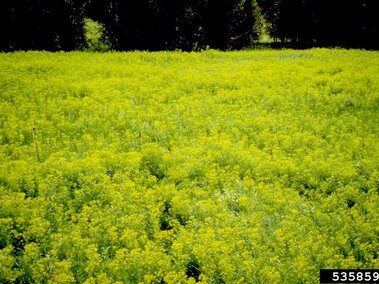
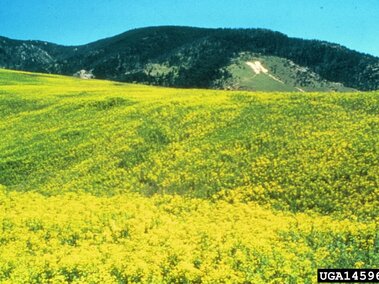
Leafy spurge currently infests 185,000 acres in Nebraska. Leafy spurge spreads aggressively and is difficult to control. It invades pastures and rangeland, crowding out native vegetation and forage. Dense leafy spurge stand can also reduce wildlife habitat. Leafy spurge is toxic to cattle and horses when ingested and can cause skin irritation in some humans during handling. Millions of dollars are spent annually in Nebraska by landowners and producers controlling leafy spurge.
What Does It Look Like?
General Characteristics
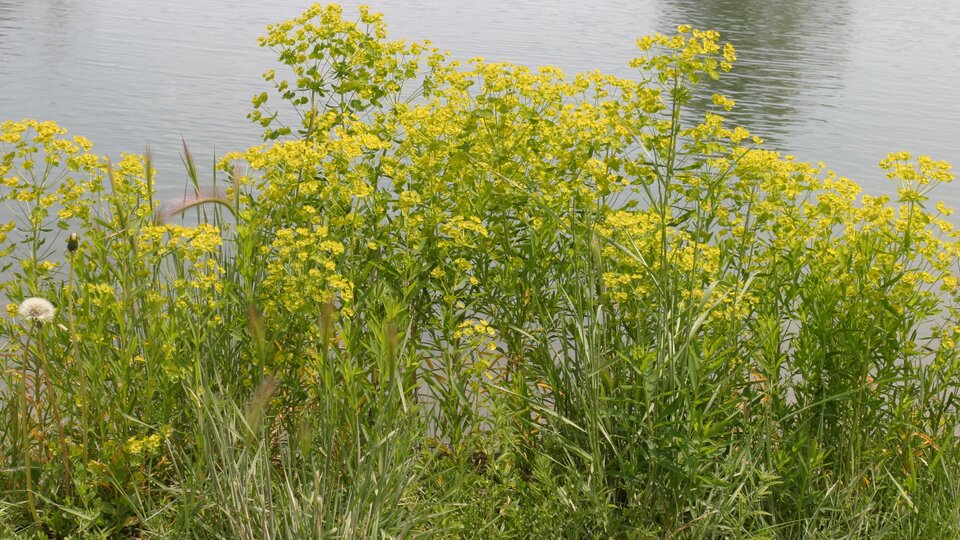
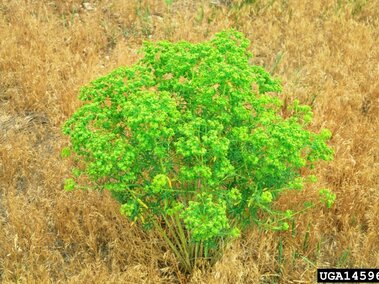
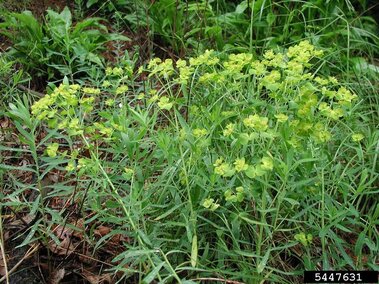
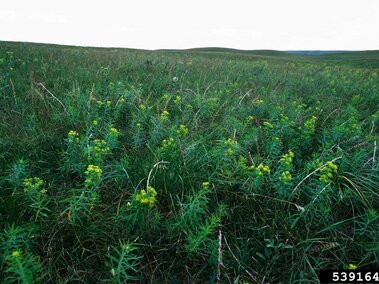
Leafy spurge grows 2-4 feet tall and has numerous flowers with a distinct yellow/green color. When stems, leaves, and flowers are cut or broken, they exude a milky latex substance.
Flowers
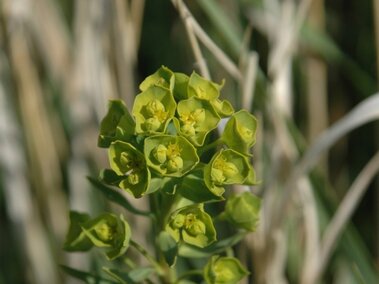
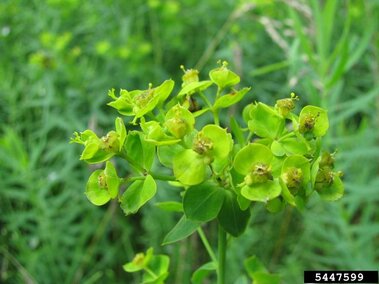
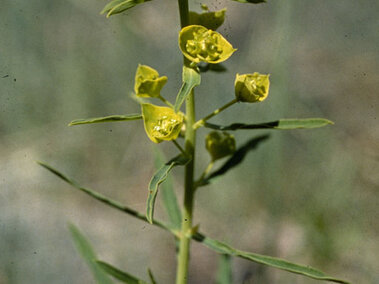
Flowers are small and have a distinct yellow/green color. Flowers grow in umbrella-shaped clusters with 7-10 flowers at the top of each stem. Unlike male flowers, female flowers are divided into 3 cells.
Leaves
Leaves are narrow, grow 1-4 inches long, have smooth edges, are lance shaped, and without hairs. Leaves are shorter on the lower part of the stem and are alternately arranged. Like the stems, leaves contain a milky latex substance that is exuded when cut.
Stems
Stems are erect, branched, and smooth without hairs. Stems contain a milky latex substance that is exuded when cut.
Seeds
Seed are ovoid to cylindric, gray to brown and smooth. Single seeds are contained in honey-scented fruits that are bumpy and have a grainy texture. Fruits are contained in 3-lobed capsules.
Photos
Where Does It Grow?
Leafy spurge has spread throughout the northern and central Great Plains and western United States. It can be found in roadsides, field, open woodlands, pastures, and meadows. It can grow in full to partial sun in a variety or soil types with varying moisture levels.
How Does It Spread?
Leafy spurge can produce vegetatively and by seed. Extensive underground root systems quickly overtake other vegetation, allowing it to spread quickly within its immediate area. Seeds are dispersed via explosive dehiscence, in which leafy spurge can project seeds up to 20 feet away from itself. Seeds are durable and can remain viable for up to 10 years. Seeds can also be dispersed by wildlife, pets, vehicles, contaminated soil and hay, and other human intervention.
How Do I Control It?
A combination of two or more control methods is the best approach when controlling leafy spurge as it will increase your odds of control. Long-term continued monitoring and follow-up control measures are essential since seeds can remain dormant for up to 10 years.
Mechanical
Mowing before flowering can reduce seed production, but will not totally eliminate infestations and can cause denser plant growth. Removing by hand is not feasible due to extensive underground root systems.
Contact your county weed control authority to determine appropriate removal methods.
Cultural
Goat and sheep grazing can help reduce leafy spurge populations. However, seed dispersal after grazing can occur through attachment on hooves and coats and in manure.
Use only certified weed free hay.
Nebraska Weed Free Forage Program
Help prevent leafy spurge spread by checking clothing, equipment, and vehicles for seeds after being in infested or suspect areas.
REMOVE plants, animals and mud from boots, gear, pets and vehicles.
CLEAN your gear before entering and leaving the recreation site.
STAY on designated roads and trails.
PLANT non-invasive species.
Play, Clean, Go: Stop Invasive Species in Your Tracks
Chemical
Please refer to the 2026 Guide for Weed, Disease and Insect Management in Nebraska and/or contact your county weed control authority.
What Should I Do If I See It in Nebraska?
If you see leafy spurge in Nebraska, you should report it to your county weed control authority. For guidance on what information to include in your report, check out our reporting tips.
References and More Information
Colorado State University Guide to Poisonous Plants
Iowa State University Extension and Outreach
Minnesota Department of Agriculture
Minnesota Department of Natural Resources
National Invasive Species Information Center
Nebraska Weed Free Forage Program